
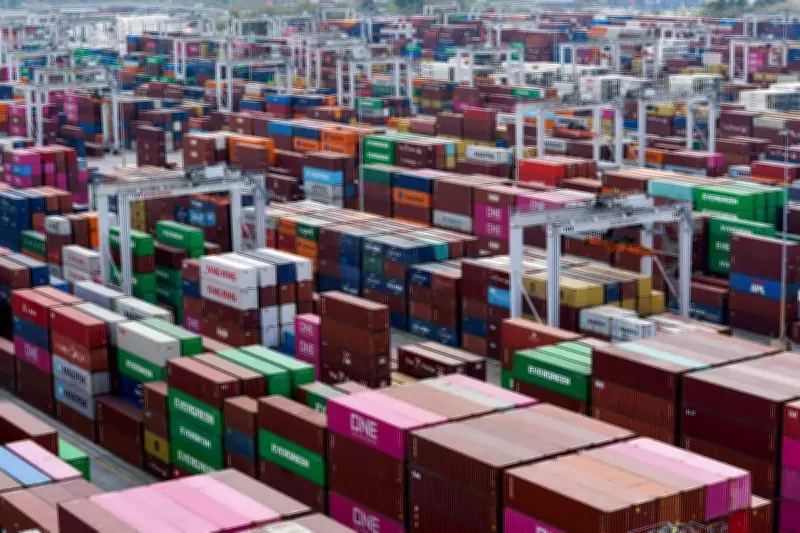
The US Court of International Trade on Thursday ruled against President Donald Trump's latest 10% global tariffs, determining that the across-the-board duties were not justified under a 1970s trade law. The decision came in a 2-1 ruling, with one judge arguing it was premature to grant victory to the small business plaintiffs who challenged the tariffs.
Background of the Tariff Dispute
The tariffs, which took effect on February 24, were challenged by small businesses that claimed the new measures were an attempt to bypass a landmark US Supreme Court decision that had struck down Trump's 2025 tariffs imposed under the International Emergency Economic Powers Act (IEEPA). In his February order, Trump invoked Section 122 of the Trade Act of 1974, a law that allows for duties for up to 150 days to correct serious balance of payments deficits or prevent an imminent depreciation of the dollar.
Court Ruling
The court found that Section 122 was not an appropriate legal basis for the types of trade deficits Trump cited in his February order. The ruling is a significant setback for the administration's trade policy, which has relied on aggressive tariff measures to address trade imbalances.
New EU Deadline
Separately, Trump announced on Thursday that he would give the European Union until July 4 to implement trade deal commitments, warning that failure to do so would result in tariffs on EU goods, including cars, being raised to much higher levels. In a post on Truth Social, Trump stated that he issued the new deadline during a great call with European Commission President Ursula von der Leyen, during which the two leaders also agreed that Iran should never possess a nuclear weapon.
EU Trade Deal Stalled
Last Friday, Trump unexpectedly announced that he would raise tariffs on EU vehicles to 25% from the previously agreed 15%, citing the EU's non-compliance with the terms of a deal struck in Scotland last July. That deal required the EU to cut tariffs on US industrial goods to zero and provide duty-free quotas on certain US farm and seafood products. However, the implementing legislation has moved slowly through the European Parliament, prompting Trump's latest ultimatum.
The combination of the court ruling and the new EU deadline underscores the ongoing tensions in global trade under the Trump administration, with legal and diplomatic battles continuing to shape international commerce.




