
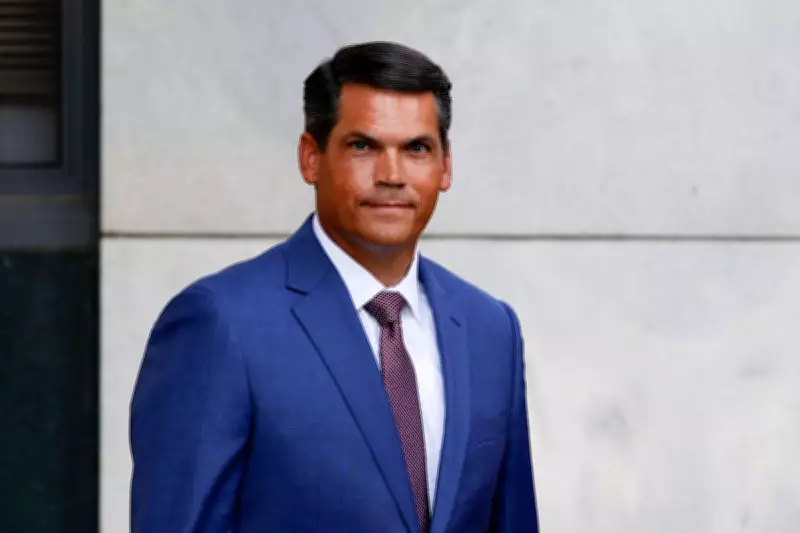
In the Georgia governor's race, Geoff Duncan's candidacy tests American politics as much as it tests his political appeal. The former Republican lieutenant governor of Georgia is now a Democratic candidate for governor, with former Biden official and Atlanta ex-mayor Keisha Lance Bottoms currently holding the lead in Tuesday's Democratic primary. A Republican is still favored to win, with billionaire Rick Jason up against Secretary of State Brad Raffensperger and Lieutenant Governor Burt Jones.
Though his candidacy might not prove successful on May 19, Duncan is asking Democratic voters to consider what the off-ramp for Republican leaders should look like in the waning days of the Trump era. Can it be as simple as switching parties and rearranging one's political values?
“I think the audience of receptive Republicans is a lot bigger than what most folks would think in the Republican party,” Duncan said. “It's not fun to have to defend Donald Trump.” He noted that the task has become increasingly difficult, even in rural parts of Georgia. “These farmers in these legislative districts have absolutely got a knife in the back from Trump,” he said. “A lot of them voted for Trump in '24, yet now they might lose their farms because of these stupid tariffs that nobody can explain.”
Brushback for opposing Trump is something the former professional baseball player knows acutely. Both Duncan and Brian Kemp, the Republican governor retiring this year, refused Trump's extraordinary demands to set aside the 2020 election results in Georgia and to call a special legislative session to declare Trump the winner. Duncan took to CNN weeks after the election to urge Trump to accept the results and focus on Georgia's two US Senate contests, rather than continue the contest and “damage the brand.” Instead, Trump added Duncan to his enemies list.
“Our family received death threats virtually every time Donald Trump went to Twitter and lied about me,” Duncan said in congressional testimony. “We were harassed by Maga disciples almost everywhere we went out in public. Our kids got picked on in school. The list goes on and on and on, all because I was telling the truth.”
Thus began Duncan's partisan apostasy. He plotted a path for conservatives in a post-Trump politics, articulated in his book GOP 2.0: How the 2020 Election Can Lead to a Better Way Forward for America's Conservative Party (2021). He testified in the Georgia racketeering case against Trump and his allies, defying Trump's demand to stay home. He began showing up at Democratic events, campaigned for Kamala Harris, and spoke at the Democratic National Convention.
Georgia has been here before. The state had an unbroken line of Democratic governors from Reconstruction until 2002, when Sonny Perdue—who switched from Democratic to Republican as a state senator in 1998—defeated Democratic Governor Roy Barnes after Barnes removed the Confederate battle flag from the state standard. Today, Duncan says he has abandoned hope for a renewed Republican party. “First and foremost, the Republican party has sailed their ship over the horizon, it's gone. There will be nothing left when Donald Trump's done with it,” he said. “Some of his minions may try to hold the pieces together. I think that's a foregone conclusion.”
The feeling is mutual. Georgia's GOP establishment has excommunicated Duncan, barring him from Republican events and even party-owned property. Party officials expunged records of his previous nominations to elected offices, symbolically recasting him as a never-Republican. After two sharp losses to Kemp, some Democrats offer a cynical electoral argument: that a straight, white, committed Christian family man and reformed Republican has a better chance of drawing cross-party voters than a field of candidates who resemble Stacey Abrams more than the last Democrat in the governor's mansion, Roy Barnes. Critics refute this by pointing to Senator Raphael Warnock, but Duncan isn't offering his relationship with the party or racial politics as a selling point. He hopes to offer his profile in political courage and experience with lawmakers and policymaking.
“I can't just campaign with a bunch of rhetoric and make a bunch of shallow promises and then show up as damaged goods like so many folks winning elections these days,” Duncan said. “I've got to actually show up and be willing to do what I said I'm going to do, and that's build consensus, solve problems, not pick fights, and stay away from just pandering just to get votes. I think that's part of the coalition that's coming together to elect us.”
Duncan wants to tap Georgia's rainy-day fund—about $17 billion—to address childcare costs and reduce poverty. Georgia is one of 10 states that hasn't expanded Medicaid; Duncan supports expansion. He would prioritize diverse hiring in state government, rejecting anti-DEI demands from the Trump administration. He would also reverse the “heartbeat law” he helped pass in 2019, which outlawed most abortions after about six weeks. “I was wrong to think a room full of legislators knew better than millions of women on the issue,” Duncan said. “They don't. I've certainly come to realize in a very real way that women have complicated medical scenarios and deep personal situations that a legislator would never totally ever be able to understand.”
Duncan's evolution on abortion raises doubts, a point he concedes. The crowded Democratic primary has been relatively free of direct confrontation, though Duncan has drawn fire. State Representative Ruwa Romman, a former candidate, told the Atlanta Journal-Constitution when Duncan switched parties: “He helped pass the same laws he now opposes. He could have expressed these thoughts for years now.” Former Republican colleagues, particularly Lieutenant Governor and gubernatorial candidate Burt Jones, have called Duncan's changes opportunistic. The two have a history: Duncan stripped Jones of a committee chairmanship in 2021; Jones later won the lieutenant governor's race.
Duncan argues for empathy and a focus on policy. Georgia must prepare for life without federal partnership. “I think that's what I hear so often in crowds across the state, day after day after day: 'Can you just go do what you're promising everybody you're going to do?'” he said. “Look, there's no stability at the federal government, there's no friends of ours in the federal government. Donald Trump certainly doesn't care about Georgia, he only cares about a status for himself in the mirror or using a sock puppet called Burt Jones.”




