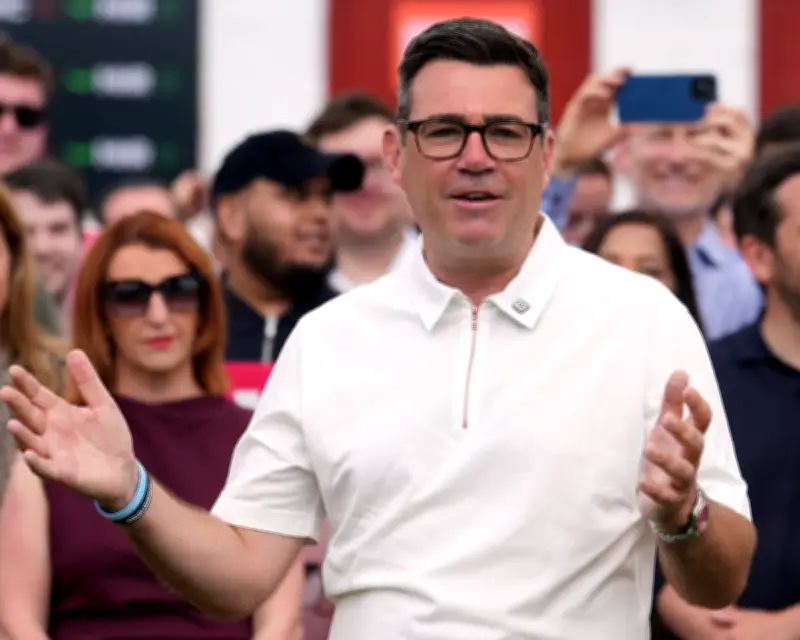
By the early hours of Friday morning, it became clear that Andy Burnham had pulled off a barnstorming victory in the Makerfield byelection, taking 55% of the vote against Reform UK's 35%, according to official results. The victory gives Burnham a path back to Westminster and positions him to challenge Prime Minister Keir Starmer for the Labour leadership and the chance to become Britain's next prime minister.
Victory Speech Signals Leadership Ambitions
In his victory speech, Burnham did little to hide his ambitions. 'This is a final chance to change,' he said. 'This is what people said directly to me on the hundreds of doorsteps that I stood on. We must hear it, we must act upon it and we must get it right. There will be no second chance.' The speech tapped into a deep sense of dissatisfaction felt by many in post-industrial regions of Britain.
Burnham's campaign was slick, fast-paced, and social media-friendly, featuring daily video clips where he spoke directly to a handheld camera. He repeatedly said that people from towns like Ashton-in-Makerfield and former coalmining villages felt neglected and left behind by Westminster. 'That changes tonight,' he declared on Friday. 'This result will bring about a country that works fairly for everywhere and for everybody.'
From Mayor to Westminster: Burnham's Political Journey
Burnham, 56, first elected as MP in 2001, served as a junior minister under Tony Blair and later as culture secretary and health secretary under Gordon Brown. After Labour lost the 2010 general election, he ran for party leader in 2010 and 2015, losing to Jeremy Corbyn. In 2017, he became mayor of Greater Manchester, a role he held for nine years, forging a second political career and earning the moniker 'king of the north' for championing the region.
His closest friend, Steve Rotheram, mayor of the Liverpool city region, said the mayoral role shaped Burnham. 'I saw the way he started to shape politics once he left Westminster,' Rotheram said. 'Before that, politics was starting to shape him.' Burnham's style transformed: he traded sharp suits and conservative ties for T-shirts and bomber jackets, and he engages directly with critics on social media, a tactic praised by supporters.
Contrast with Starmer and Challenges Ahead
Burnham's style contrasts starkly with Starmer's cautious, technocratic approach. While Starmer's public delivery is often stiff, Burnham's folksy, direct communication has boosted his popularity. However, critics warn that Burnham's people-pleasing urges could be a liability. He recently rowed back on suggestions that the UK should be less beholden to bond traders and that he would like to see the UK rejoin the EU in his lifetime.
Reform UK and the Conservatives are likely to paint Burnham as a leftwinger who will hike taxes. One Reform parliamentarian said on Friday, 'People don’t want hard socialism under Burnham.' Burnham describes himself as a democratic socialist, but during his mayoral tenure, he gained a reputation for pragmatism, adopting a 'business-friendly socialism' model he calls Manchesterism.
To trigger a leadership contest, Burnham needs the support of 80 Labour MPs. Starmer has said he would contest any challenge. Burnham's allies hope Starmer will opt for a dignified exit. If so, October's Labour conference in Liverpool, Burnham's birthplace, may become less a conference and more a coronation.