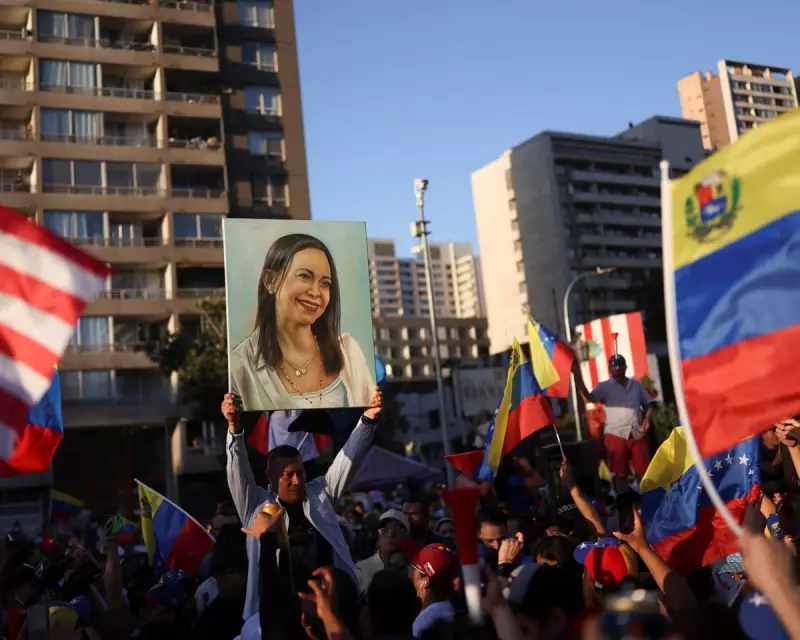
The political landscape of Venezuela remains in turmoil following the dramatic US military operation over the weekend that resulted in the removal of President Nicolás Maduro from power. The action has ignited a complex international crisis, with key figures in Venezuela and the United States now outlining their positions and plans for the country's future.
Machado's Stance and Communication with Trump
In her first televised interview since the raid, Venezuelan opposition leader and Nobel Peace Prize laureate María Corina Machado provided a crucial detail about her relationship with US leadership. Speaking on Fox News, Machado clarified that her last conversation with President Donald Trump occurred on October 10, 2025, the very day her Nobel Prize was announced, and not since.
"I'm planning to go as soon as possible back home," Machado stated when questioned about returning to Venezuela. She had travelled to Norway last month to accept the prestigious award and has not returned. Despite Trump's subsequent dismissal of her as a viable partner—claiming she lacks support and respect within Venezuela—Machado praised the US intervention, calling it "a huge step for humanity, for freedom and human dignity."
US Internal Divisions and Policy Statements
The US administration's strategy is facing significant scrutiny from both sides of the political aisle. Following a classified briefing for Congressional leaders, Chuck Schumer, the Democratic Senate minority leader, expressed strong discontent. He labelled the Trump administration's plan for 'running Venezuela' as "vague, based on wishful thinking and unsatisfying."
In contrast, Republican House Speaker Mike Johnson sought to downscale the narrative after the same briefing. He insisted, "we are not at war" and "this is not a regime change," but rather "a demand for a change of behaviour by a regime." Meanwhile, a reported classified CIA assessment presented to Trump concluded that senior Maduro loyalists, including interim president Delcy Rodríguez, were best positioned to maintain stability—a finding that appears at odds with the military action taken.
On-the-Ground Tensions and Reconstruction Proposals
Nerves remain frayed in Venezuela's capital, Caracas. On Monday night, the appearance of unidentified drones over the presidential palace prompted security forces to fill the night sky with heavy gunfire and tracer rounds, mistakenly fearing another raid.
Looking ahead, President Trump has suggested a controversial financial mechanism for rebuilding the nation. In comments to NBC News, he proposed that US taxpayers could fund the reconstruction of Venezuela's oil infrastructure. "A tremendous amount of money will have to be spent and the oil companies will spend it, and then they’ll get reimbursed by us or through revenue," he explained. In a separate development, White House adviser Stephen Miller reaffirmed to CNN the administration's interest in Greenland becoming a part of the United States, indicating a broader scope of geopolitical ambitions.
The situation continues to evolve rapidly, with the future of Venezuela hanging in the balance between domestic political aspirations, US foreign policy objectives, and the stark reality of post-intervention instability.