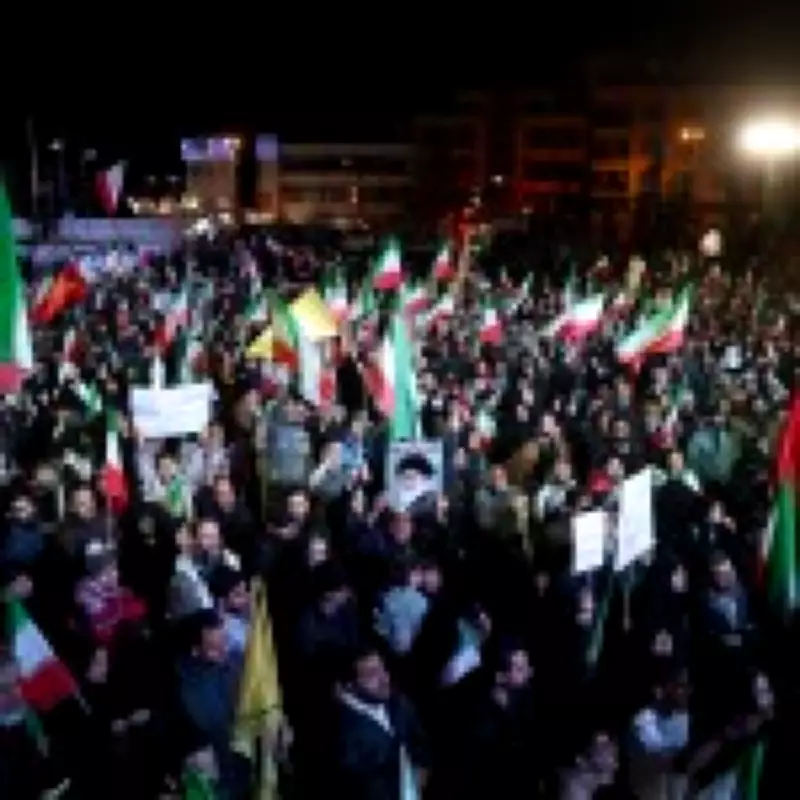
In a dramatic shift, former US President Donald Trump has consented to a provisional two-week ceasefire in the ongoing conflict with Iran, stepping back from his earlier ominous warning that "a whole civilisation will die." This decision follows Iran's submission of a detailed 10-point plan, which Trump described as "a workable basis on which to negotiate." The move was prompted by mediation efforts from Pakistan, acting as a neutral intermediary between the warring nations.
Trump's Announcement and Ceasefire Terms
Trump announced the ceasefire via a post on Truth Social, stating, "This will be a double-sided CEASEFIRE! The reason for doing so is that we have already met and exceeded all Military objectives, and are very far along with a definitive Agreement concerning Longterm PEACE with Iran, and PEACE in the Middle East." He emphasized that nearly all contentious issues from past discussions have been resolved between the United States and Iran, with the two-week period intended to finalize and formalize the agreement.
The ceasefire is conditional upon Iran reopening the critical Strait of Hormuz, a vital waterway for global oil shipments. Trump suspended his threats against Iran based on this stipulation, marking a potential turning point in the protracted conflict.
Details of Iran's 10-Point Plan
Iranian media initially published the rough outline of the 10-point plan, which includes several measures previously rejected by the United States in earlier mediation attempts. Key components of the proposal are:
- Removing all economic and political sanctions imposed on Iran.
- Granting Iran full control over the Strait of Hormuz.
- Executing a complete US military withdrawal from the Middle East region.
- Ending all attacks on Iran and its allied groups.
- Releasing frozen Iranian assets held internationally.
- Adopting a UN Security Council resolution to ensure the deal's enforcement.
Notably, some versions of the plan released in Farsi included a reference to "acceptance of enrichment," alluding to Iran's nuclear program. However, this phrase was omitted in other iterations for reasons that remain unclear.
Historical Context: Previous Demands from Both Sides
In late March, Iran rejected an earlier US peace proposal and presented its own five-point plan, vowing to defend itself unless specific conditions were met. Iran's demands at that time included:
- Halting all acts of aggression and targeted assassinations.
- Establishing robust mechanisms to prevent future attacks on Iran.
- Providing financial reparations for war-related damages.
- Ending the conflict across all fronts and involving all resistance groups.
- Securing international recognition and guarantees for Iran's authority over the Strait of Hormuz.
In response, the White House submitted a 15-point plan last month, outlining stringent requirements such as:
- Dismantling Iran's nuclear capabilities and committing to never pursue nuclear weapons.
- Handing over all enriched nuclear material and destroying existing nuclear facilities.
- Granting the International Atomic Energy Agency unrestricted access to all Iranian sites.
- Abandoning and disarming proxy groups like Hezbollah and the Houthis.
- Limiting Iran's missile arsenal to self-defensive purposes only.
- Lifting sanctions and developing a civil nuclear energy program under international oversight.
Challenges and Future Prospects
Negotiations between the US and Iran face monumental hurdles, particularly regarding Iran's ballistic missile and nuclear programs. Washington's evolving objectives have made achieving a comprehensive agreement difficult, but the current ceasefire and 10-point plan offer a glimmer of hope for de-escalation. The involvement of Pakistan as a mediator adds a layer of diplomatic credibility, potentially facilitating smoother talks in the coming weeks.
As both sides prepare for intensive discussions, the international community watches closely, aware that the outcome could significantly impact regional stability and global security. The provisional ceasefire serves as a critical pause, allowing for renewed dialogue and the possibility of a lasting peace in the Middle East.