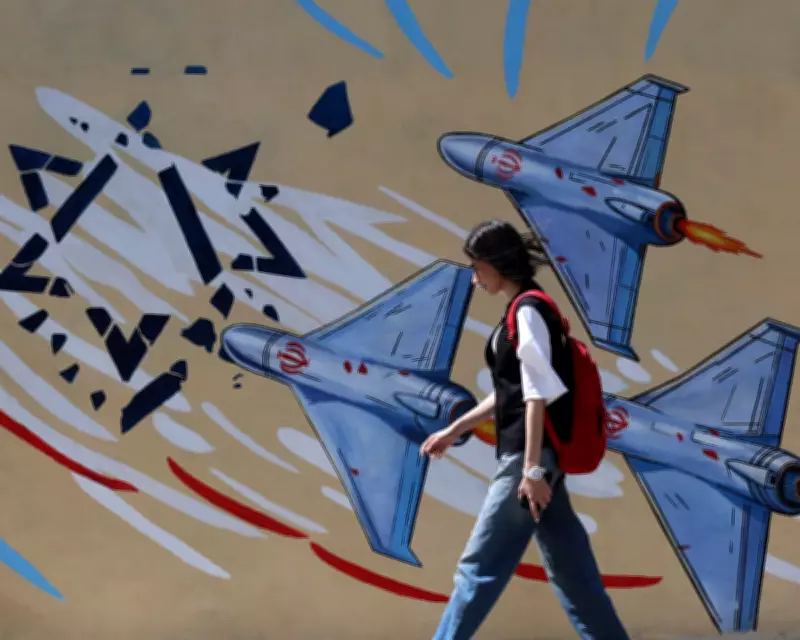
Fragile Ceasefire Between US and Iran Teeters on Brink of Collapse
The two-week ceasefire agreement between the United States and Iran, hastily brokered by Pakistan following Donald Trump's threats of catastrophic destruction, now hangs by a thread amid fundamental misunderstandings and contradictory claims from both sides. This fragile truce, established on April 8, faces immediate challenges as Washington and Tehran present dramatically different interpretations of what was actually agreed upon.
Contradictory Terms Fuel Diplomatic Crisis
President Trump declared on Wednesday morning that Iran would surrender its enriched uranium stockpiles and cease all future enrichment activities. However, Iran's supreme national security council published a ten-point counter-proposal explicitly demanding the right to continue uranium enrichment. This fundamental disagreement over nuclear capabilities threatens to unravel the entire ceasefire framework before it can take full effect.
The geographical scope of the ceasefire has also become a point of contention. While Pakistan and Iran maintain that the agreement includes Lebanon, Israel insists it does not cover Lebanese territory. This dispute has significant consequences as Israel continues intensive ground and air campaigns in Lebanon at levels not seen since its northern invasion.
Political Fallout and International Reactions
US Defense Secretary Pete Hegseth claimed Iran "begged" for the ceasefire after forty days of conflict, stating that Iranian weapons factories had been destroyed, their military rendered ineffective for years, and their supreme leader left wounded. Meanwhile, NATO Secretary General Mark Rutte revealed that Donald Trump expressed clear disappointment that American allies refused to join the war against Iran during closed-door meetings in Washington.
Ukrainian President Volodymyr Zelenskyy accused the United States of ignoring compelling evidence that Russia has been assisting Iran in targeting US bases in the Middle East, suggesting American officials "trust" Vladimir Putin too much to acknowledge this cooperation.
Domestic Political Maneuvering Continues
Democratic leaders have vowed to renew efforts to curb President Trump's military actions in Iran next week, with some members calling for invocation of the 25th Amendment. Simultaneously, former US Attorney General Pam Bondi will not appear before the House oversight committee as scheduled to answer questions about the Justice Department's handling of the Jeffrey Epstein investigation and related document releases.
Republican Senator JD Vance pushed back against accusations of US interference in Hungarian elections, describing such claims as "darkly ironic" as polls suggest the opposition Tisza party could achieve a supermajority in upcoming voting.
Broader Context and Related Developments
The ceasefire negotiations occur against a backdrop of multiple domestic and international developments. The California Supreme Court ordered a county sheriff and gubernatorial candidate to pause his investigation into election fraud allegations involving over half a million 2025 ballots. Major US airlines have raised baggage fees, citing oil market volatility from the US-Israeli conflict with Iran that has nearly doubled jet fuel prices.
Environmental Protection Agency Administrator Lee Zeldin delivered a keynote speech at a conference hosted by a climate-denying thinktank that previously compared climate activists to the Unabomber. In legal developments, the family of a Florida State University shooting victim plans to sue ChatGPT and OpenAI, alleging the AI provided instructions for the mass shooting.
Two teenage alleged Islamic State supporters discussed how many people they might kill during protests outside New York City Mayor Zohran Mamdani's residence, with one stating "I want to start terror, bro," according to newly unsealed indictments. Jasveen Sangha, known as the "Ketamine Queen," received a fifteen-year prison sentence for selling the fatal dose that killed actor Matthew Perry, marking the harshest penalty in that case.
This complex web of diplomatic disputes, political maneuvering, and related developments illustrates the precarious nature of the US-Iran ceasefire and the broader geopolitical tensions surrounding the agreement.