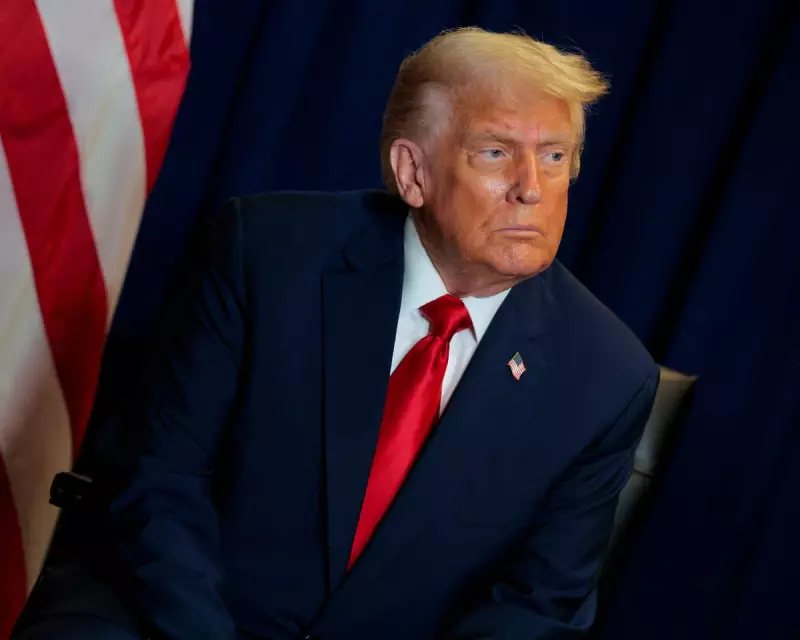
In a sweeping move that significantly scales back American involvement in global affairs, former President Donald Trump has signed an executive order withdrawing the United States from dozens of international organisations. The order, signed in September, suspends US support for 66 separate agencies, commissions, and advisory panels, many of which are affiliated with the United Nations.
A Strategic Retreat from Multilateralism
The Trump administration framed the decision as a necessary review of participation and funding for international bodies. A White House statement asserted the move was based on an assessment that found many institutions to be "redundant, mismanaged, unnecessary, wasteful, or poorly run." The State Department further claimed some were "captured by the interests of actors advancing their own agendas contrary to our own" or posed a threat to US sovereignty and prosperity.
This action continues a pattern established during Trump's presidency, where the US adopted an "à la carte" approach to multilateralism. Previous targets included the World Health Organization (WHO), the UN agency for Palestinian refugees (UNRWA), the UN Human Rights Council, and UNESCO. The administration selectively supported only those UN operations it believed aligned with its 'America First' agenda.
Daniel Forti, a senior UN analyst at the International Crisis Group, commented on the shift, stating: "I think what we’re seeing is the crystallisation of the US approach to multilateralism, which is 'my way or the highway'. It’s a very clear vision of wanting international cooperation on Washington’s own terms."
Key Targets: Climate and Population Agencies
Among the most significant withdrawals is the US exit from the UN Framework Convention on Climate Change (UNFCCC). This 1992 treaty, ratified by 198 countries, is the foundational agreement for international climate negotiations, including the landmark Paris Agreement. Trump, who has repeatedly called climate change a "hoax," had already withdrawn the US from the Paris accord soon after taking office.
Climate scientists have warned that the US departure from the UNFCCC framework could severely hinder global efforts to reduce greenhouse gas emissions. Rob Jackson, a Stanford University climate scientist who chairs the Global Carbon Project, noted it "gives other nations the excuse to delay their own actions and commitments." As one of the world's largest economies and emitters, meaningful progress on climate is difficult without US cooperation.
Another prominent agency losing US support is the UN Population Fund (UNFPA). The agency, which provides global sexual and reproductive health services, has long faced opposition from some Republican lawmakers. The Trump administration had previously cut its funding during his first term, alleging involvement in "coercive abortion practices," claims a subsequent State Department review found no evidence to support. Funding was later restored by President Joe Biden in January 2021.
Broader Implications and Ongoing Reviews
The mass withdrawal represents a dramatic departure from the engagement policies of both Republican and Democratic predecessors. It has forced the UN, which is already undergoing internal reforms, to implement staffing and programme cuts. Furthermore, numerous non-governmental organisations have reported project closures due to parallel cuts in US foreign assistance through agencies like USAID.
Despite this broad retreat, US officials indicated a desire to focus resources on UN initiatives where they see strategic value, particularly in areas of competition with China. These include standard-setting bodies like the International Telecommunications Union and the International Maritime Organization.
The list of organisations the US will exit is extensive and eclectic, including:
- The Carbon Free Energy Compact
- The United Nations University
- The International Cotton Advisory Committee
- The International Tropical Timber Organization
- The Partnership for Atlantic Cooperation
The State Department has confirmed that additional reviews of US participation in international bodies are still ongoing, suggesting further withdrawals could follow. This policy solidifies a transactional and unilateral vision of America's role on the world stage, with profound consequences for international cooperation on issues from the environment to public health.