The United Nations' top human rights official has issued a stark warning that the recent US military action in Venezuela, ordered by former President Donald Trump, has dangerously undermined global security and the rule of law.
A Breach of Foundational International Law
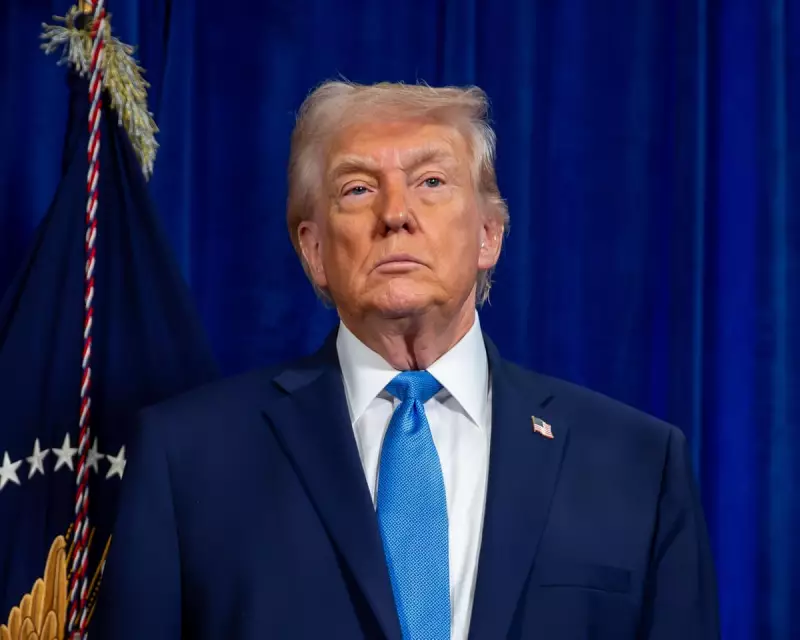
In a powerful statement, UN High Commissioner for Human Rights Volker Türk expressed deep disturbance over the events of 3 January 2026, when Trump, speaking from Palm Beach, Florida, discussed the capture of Venezuelan leader Nicolás Maduro. Türk argued that the operation violates a core principle established after the Second World War and the Holocaust: that states cannot use force to pursue political aims.
"This weakens the only mechanism we have to prevent world conflict, namely the UN," Türk stated. He firmly rejected emerging narratives that seek to justify the intervention as a response to Maduro's government's human rights record, a record his office has consistently documented and condemned.
Human Rights Cannot Be a Pretext for Force
Türk's office has long reported on serious abuses in Venezuela, including unfair trials, arbitrary detention, and the persecution of political opponents. He emphasised that the international community had lawful tools—like diplomatic pressure and accountability mechanisms—to address these issues, but they were not deployed effectively.
"Far from being a victory for human rights, this military intervention – in contravention of Venezuelan sovereignty and the UN charter – damages the architecture of international security, making every country less safe," he wrote. The action, he fears, signals that powerful nations can act with impunity, setting a perilous precedent.
Dire Consequences and a Plea for the Future
Drawing lessons from history, Türk warned that regime change often leads to greater chaos and violence. He expressed profound sympathy for the Venezuelan people, separated families, and those awaiting news of loved ones during the holiday season.
"Human rights need to be central to Venezuela’s future – not an afterthought, taking a back seat to negotiations around the exploitation of fossil fuels," he insisted. The country's path must be decided by its own citizens through justice and healing, not further militarisation.
In his concluding appeal, Türk called on the global community to move beyond lip service and staunchly defend the UN Charter. The alternative, he cautioned, would have terrible and far-reaching consequences for international order and the safety of people worldwide.