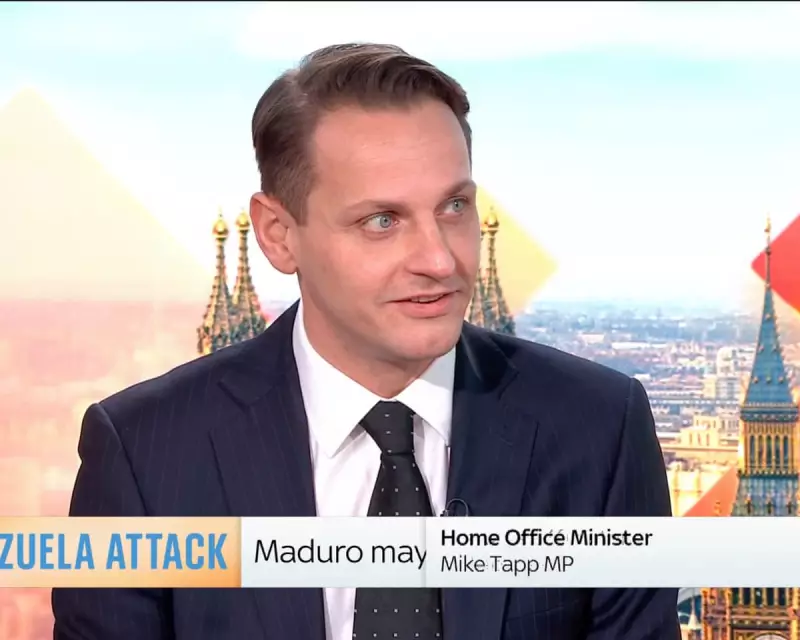
A palpable sense of panic was visible in the eyes of junior Home Office minister Mike Tapp during a live television interview this week, encapsulating the UK government's profound diplomatic discomfort. The source of the anxiety? The United States' sudden military intervention in Venezuela and the looming spectre of further regime change operations, potentially including Greenland.
A Nobel Ambition and a Question of International Law
The crisis was triggered by President Donald Trump's authorised operation to oust Venezuelan leader Nicolás Maduro, an action the US President has openly framed as a pre-emptive strike to prevent larger conflicts. While the move has put Trump firmly in contention for a Nobel Peace Prize in his view, it has sent shockwaves through the international community, forcing allies like the UK into a delicate balancing act.
The core dilemma for Prime Minister Keir Starmer has been how to address a clear breach of international law by a critical ally without damaging the transatlantic relationship. Starmer's response has been a steadfast refusal to condemn the US action, repeatedly stating he does not have all the facts—despite Trump's public boasting about the operation's details. His approach has been characterised by observers as a 'see no evil, hear no evil' strategy, insisting the matter is ultimately for the US to decide.
Ministerial Missteps and the Greenland Gaffe
The government's position unravelled further during the Monday morning media round, when Sky News presenter Sophy Ridge questioned Mike Tapp on rumours of US interest in similar actions against Greenland, which is under Danish jurisdiction. The junior minister was visibly unprepared, having received no briefing on the subject.
Floundering live on air, Tapp defaulted to the government's core directive: avoid upsetting Washington. He suggested Greenland could look after itself and even implied an American takeover might bring commercial benefits like KFC and Walmart, a statement that appeared to sacrifice Danish interests for geopolitical expediency. The moment highlighted the fragility of the UK's stated principles when faced with American power.
Political Divisions and a Fractured Consensus
While the Prime Minister and senior figures like Business Secretary Kemi Badenoch have embraced this cautious, non-confrontational stance, significant dissent exists. Labour's Emily Thornberry, alongside Liberal Democrat MPs and left-wing Labour members, has argued that one can disapprove of Maduro while still condemning the illegal means of his removal.
Interestingly, Nigel Farage also acknowledged the breach of international law, though he framed the destruction of the existing world order as a positive outcome of Brexit. The Conservative opposition has largely mirrored Starmer's moral relativism, prioritising the alliance with the US above consistent application of legal norms.
In a later attempt at damage control, Starmer slightly refined his position, drawing a rhetorical line at Greenland while maintaining his ambivalence on Venezuela. The episode leaves the UK government appearing reactive and sycophantic, struggling to define an independent foreign policy in the face of a resurgent and unpredictable American administration. As global powers rewrite the rules, the UK's place in the new order remains uncertain and fraught with panic.