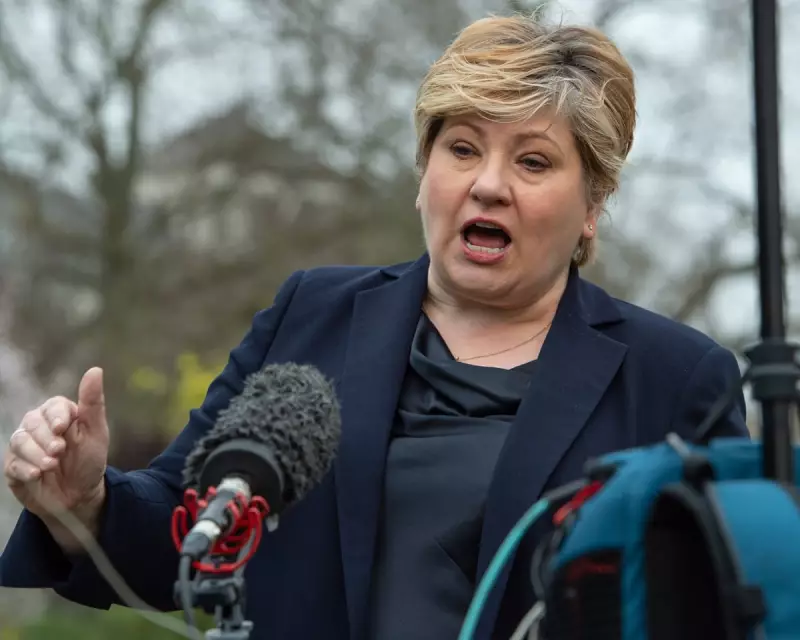
Senior Labour MP Emily Thornberry has issued a stark warning that the failure of Western governments to condemn the United States' military intervention in Venezuela could encourage China and Russia to take similar aggressive actions against other nations.
A Dangerous Precedent for Global Powers
Thornberry, who chairs the influential Commons Foreign Affairs Committee, expressed deep concern that the norms of international law are at risk of breaking down. Her primary fear stems from the US operation over the weekend, which resulted in the removal of Venezuelan President Nicolás Maduro and his transfer to New York.
The UK government, led by Keir Starmer, has so far refrained from condemning the action. Speaking on Monday, Home Affairs Minister Mike Tapp stated it was for the US to explain the legal basis for its move, adding that it was too early for the UK to form a definitive view.
The Risk of Spheres of Influence Escalation
In an interview with Times Radio, Thornberry articulated her core objection. "My primary problem is that, in any event, there is no legal basis for this and it sets a really bad precedent," she said. She specifically pointed to major powers like China and Russia, who might now feel justified in acting within their own perceived spheres of influence.
"They may also think: 'Well, we've got spheres of influence, why can't we do things like that within our sphere of influence, like Ukraine or Taiwan?'" Thornberry argued. She warned it becomes "quite difficult" to oppose such actions if the US faces no consequences and scant criticism from allied Western governments.
The Power and Necessity of Condemnation
Thornberry emphasised that formal condemnation from the international community, even without punitive measures, holds significant power. "To a certain extent the force of international law is that people generally accept that this is the way that you should behave, and if you don't behave in that way, then there is an international condemnation," she explained.
She countered the notion that governments are indifferent to global opinion, stating, "[It] may not sound like a great deal, but although governments always say they don't care, they do care. They do care a lot." Without this collective reproach, she fears "international law almost moves on" and such extraordinary interventions become normalised.
While acknowledging the diplomatic difficulty and the importance of maintaining the UK-US alliance, Thornberry insisted the British government must be clearer. "We need to be clearer that this has been a breach of international law, and we do not agree that they should have done it," she stated, adding unequivocally, "You just can't go around snatching leaders from different countries... it will just end in anarchy."
Meanwhile, Conservative leader Kemi Badenoch adopted a more ambiguous stance in an interview with ITV's Good Morning Britain. She declined to either condemn or condone President Trump's actions, describing them as "certainly unorthodox" and raising "lots of interesting questions about the world that we live in."
Foreign Secretary Yvette Cooper was expected to deliver a statement to the House of Commons later on Monday, which was anticipated to provide the government's more detailed formal response to the escalating international crisis.