Starmer's Diplomatic Dilemma Deepens as UK Fencesits on US Iran Strikes
Prime Minister Keir Starmer finds himself in an increasingly precarious diplomatic position following recent US missile strikes on Iran. The UK government has adopted a fence-sitting stance, declining to endorse the actions while also refusing to condemn them, a move that has placed severe strain on the so-called "special relationship" with the United States.
The Strain on US-UK Relations
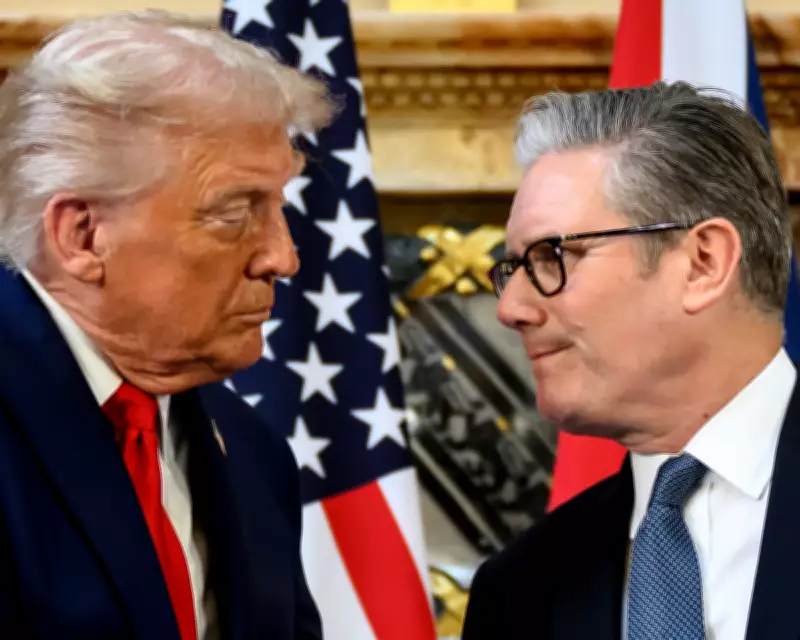
It was perhaps naive for Number 10 to ever position Keir Starmer as a "Donald Trump whisperer" capable of influencing the unpredictable US president. Recent months have seen the relationship tested over issues such as the UK's decision to relinquish sovereignty of the Chagos Islands and European countries' refusal to back Trump's bid for Greenland. Now, with the bombing of Iran and the assassination of its leader, Starmer appears to have had minimal sway over Trump, who proceeded regardless of the UK's refusal to allow the use of its military bases.
Defence Secretary John Healey struggled to articulate a moral or legal opinion on Trump's military actions when pressed repeatedly on Sunday. The UK's current position is that it played no role in the missile strikes but will not mourn Ayatollah Ali Khamenei, whose regime has "menaced" Western nations. This ambivalent stance is becoming increasingly difficult to maintain as pressure mounts from within Starmer's own party and the broader political landscape.
Starmer's Strategy of Caution
From the outset, Starmer's strategy has been to maintain closeness with Trump. His team celebrated a successful two-hour first meeting with the then Republican presidential candidate in New York eighteen months ago, where Trump praised Starmer as "very nice" and "popular." This approach has included honoring Trump with a state visit and refraining from criticizing the illegal capture of Venezuela's president, Nicolás Maduro. Even when disagreements arise, Starmer has avoided public confrontation, with his strongest opposition limited to defending British troops in Afghanistan after Trump's comments about NATO forces.
The prime minister now faces a critical question: should the UK government shift course, align more closely with Europe, and adopt a more robust stance against the US president? This move is advocated by some within his party and on the progressive left, who argue it would serve both national and international interests. Additionally, there may come a point where distancing himself from Trump becomes politically advantageous for Starmer, especially following the Gorton and Denton byelection, where Labour's support dropped due to anger over his slow criticism of Israel's actions in Gaza.
The Future of the Special Relationship
In 2024, Starmer asserted that the "special relationship" with the US transcends individual officeholders. However, the current situation may necessitate an exception for Trump. As calls grow from figures like the Green party's Zack Polanski, who labels the Iran strikes illegal, and the Lib Dems, who urge standing up to Trump's bullying tactics, Starmer's diplomatic balancing act is under intense scrutiny. The UK's calculated avoidance of criticizing the US president, despite clear disagreements and legal concerns raised by the attorney general, highlights the complexities of maintaining this historic alliance in turbulent times.