Iran's Military Challenge: Rhetoric vs. Reality in US Conflict
An Iranian missile successfully penetrating American defenses could dramatically alter the strategic calculus for the United States, potentially increasing the financial and human costs of the ongoing conflict in the Middle East. However, a weakened Tehran is facing mounting pressure to translate its aggressive rhetoric into tangible military achievements, as time appears to be running out for the regime to demonstrate its capabilities on the battlefield.
Limited Impact Despite Extensive Attacks
Iranian forces have launched hundreds of drones and missiles in multiple waves across the region, yet these assaults have failed to inflict significant damage on key American assets, such as warships or military bases. In stark contrast, coordinated strikes by the United States and Israel have already devastated critical regime targets within Iran, including the elimination of Supreme Leader Ali Khamenei, Army Chief of Staff General Abdol Rahim Mousavi, and Defense Minister General Aziz Nasirzadeh.
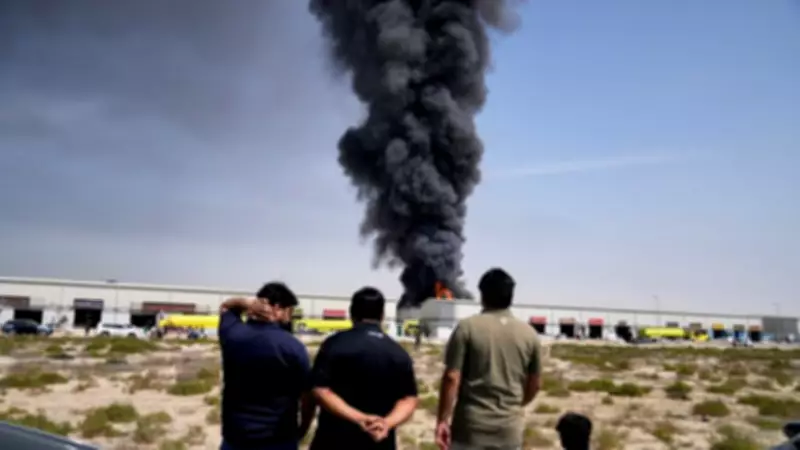
The conflict has resulted in the deaths of three US service members, highlighting the human toll of the escalating tensions. Smoke has been observed rising from locations like a warehouse in Sharjah City, UAE, but the majority of Iranian drones and missiles have been intercepted and neutralized by defense systems.
Questions Over Iran's Military Capabilities
As the war enters its early stages, the Islamic Revolutionary Guard Corps has vowed to deliver "severe, decisive and regret-inducing punishment" against its adversaries. However, the passage of time without substantial military successes raises serious doubts about Iran's ability to effectively locate, target, and strike mobile US and Israeli assets, including warships and aircraft.
General Sir Richard Barrons, a former senior UK military officer, pointed out that Iran's options are severely constrained by the loss of top leadership and the vulnerability of its missile launch sites to counterattacks. Previous US and Israeli operations have also degraded Iran's missile stockpiles and air defenses, further blunting the regime's offensive and defensive capacities.
Civilian Areas Caught in the Crossfire
UK Defence Secretary John Healey has warned that a wounded Iran may resort to more erratic and indiscriminate tactics, with little regard for civilian safety. Attacks have impacted numerous countries across the Gulf region, including Israel, Qatar, the United Arab Emirates, Bahrain, Kuwait, Jordan, and Iraq, where several American bases are situated.
While many munitions have been intercepted, falling debris poses a deadly risk to populated areas. Civilian and tourist locations have been inadvertently targeted, such as Dubai International Airport, one of the world's busiest hubs, where all flights have been suspended, and a luxury hotel entrance. These incidents have caused widespread fear but have not impaired the operational abilities of US and Israeli forces to continue their strikes against Iran.
Strategic Implications and Global Concerns
A high-priority target for Iran remains the two American aircraft carrier strike groups, led by the USS Gerald R. Ford and the USS Abraham Lincoln, believed to be positioned south of Cyprus. Attempts to target these vessels may explain recent missile launches toward the Mediterranean island, though British bases there were not the primary focus.
General Barrons suggested that Iran, if outmatched in conventional warfare, might seek alternative methods to retaliate, such as closing the Strait of Hormuz. This vital chokepoint for global oil and gas exports is already experiencing disruptions, with tankers being targeted off the coast of Oman, potentially impacting economies worldwide.
President Trump's strategy hinges on the assumption that Iran lacks the capability to withstand overwhelming American firepower. While this may hold true, the analysis underscores that a single successful Iranian missile strike could force a reassessment of this calculation, significantly escalating the costs for Washington in terms of resources, strategy, and regional stability.