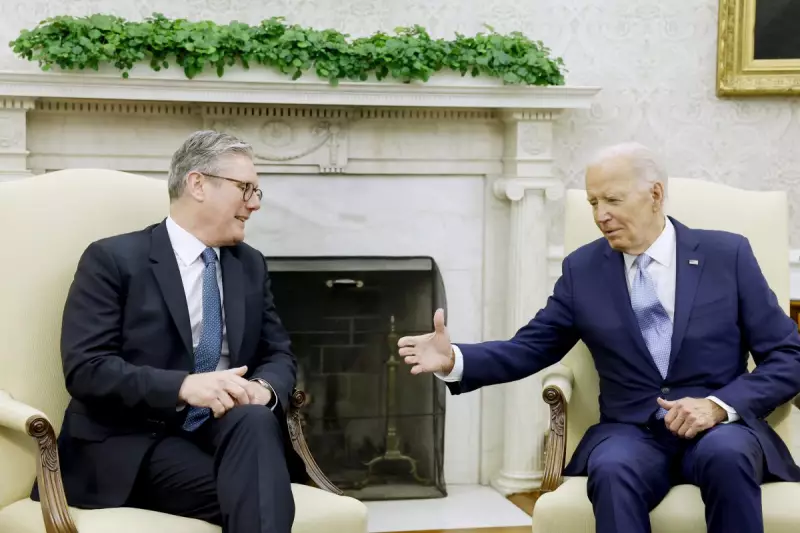
Prime Minister Keir Starmer has aligned the United Kingdom with European allies in a pointed warning to US President Donald Trump to abandon any ambitions of annexing Greenland. This move signals a significant cooling in relations between the two leaders and underscores growing tensions between Washington and its traditional Western partners.
A United Front Against US Intervention
In a strongly-worded statement issued on Tuesday, 6th January 2026, European leaders collectively defended NATO member Denmark's sovereignty over the vast Arctic island. The statement, endorsed by Starmer, French President Emmanuel Macron, and German Chancellor Friedrich Merz, asserted that the issue of control was solely for Denmark and Greenland to decide, independent of US intervention.
The declaration was made ahead of a crucial 'Coalition of the Willing' meeting in Paris, focusing on post-ceasefire security for Ukraine. By linking the Greenland issue to NATO principles, the leaders framed Trump's territorial ambitions as a challenge to the established international order.
Trump's Ambitions and Military Posturing
President Trump's long-standing interest in acquiring Greenland, prized for its mineral wealth and strategic Arctic position, has been thrust back into the spotlight. This follows the successful capture of former Venezuelan leader Nicolas Maduro by US forces last weekend, an operation that starkly demonstrated American military capability.
Adding fuel to the fire, Trump's deputy chief of staff, Stephen Miller, openly questioned whether any global power would dare to engage "militarily" should the US decide to seize the territory. This rhetoric has been interpreted as a direct test of Western resolve.
Starmer's Delicate Diplomatic Balancing Act
The Greenland statement represents the strongest position Keir Starmer has taken in opposition to President Trump's worldview. Until now, the Prime Minister has carefully avoided direct confrontation, maintaining a delicate line to preserve crucial diplomatic and trade links with the UK's closest ally.
The two leaders have previously held "disagreements," as Trump himself has noted, on issues ranging from the Israel-Palestine conflict and North Sea oil drilling to illegal migration and the governance of London under Mayor Sadiq Khan. Notably, the UK government has so far declined to state whether the US operation in Venezuela breached international law, unlike France and Brazil.
Domestic Troubles Amplified by Foreign Policy Row
This fresh diplomatic crisis arrives at a challenging time for Starmer's domestic agenda. A YouGov poll released on Tuesday showed the Conservative Party jumping above Labour in voting intentions for the first time since the General Election.
The poll revealed Labour languishing nine points behind Reform UK and only narrowly ahead of the Liberal Democrats and the Green Party. Starmer had intended to start the year focusing on the cost-of-living crisis, but this high-stakes foreign policy row with Trump has derailed his plans to control the news narrative ahead of critical local elections in May.
Consequently, President Trump's actions are piling additional political pressure on a Prime Minister already facing significant electoral headwinds, making the management of this transatlantic rift a delicate and urgent priority.