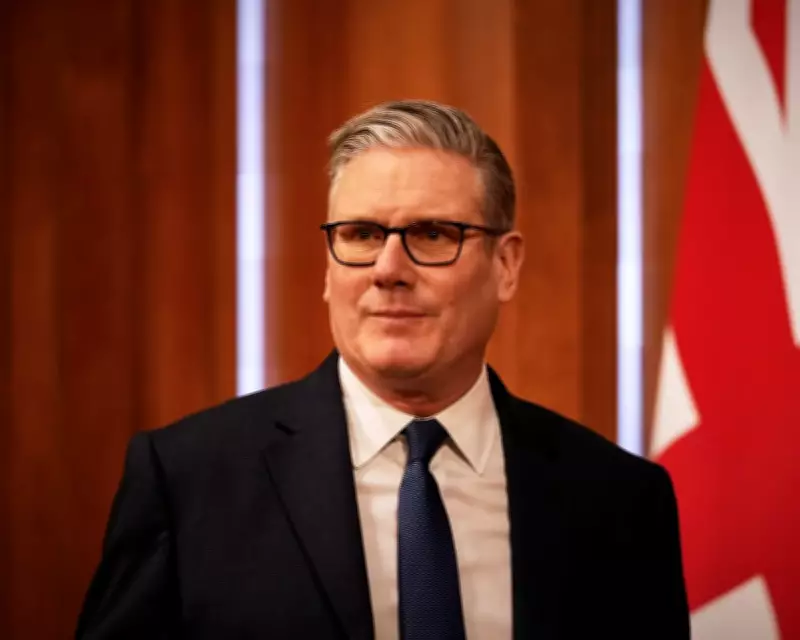
UK Prime Minister Keir Starmer Lands in Saudi Arabia to Support Fragile US-Iran Ceasefire
Prime Minister Keir Starmer has arrived in Saudi Arabia for critical diplomatic meetings with Gulf leaders, focusing on efforts to sustain the newly announced two-week ceasefire between the United States and Iran. The visit, which commenced on Wednesday, follows the ceasefire agreement reached on Tuesday evening, averting a self-imposed deadline set by US President Donald Trump that threatened widespread destruction if Iran did not comply.
Starmer Welcomes Ceasefire as a Moment of Relief
In a statement on Wednesday, Starmer expressed his support for the ceasefire, declaring, "I welcome the ceasefire agreement reached overnight, which will bring a moment of relief to the region and the world." He emphasized the need for collective action, adding, "Together with our partners we must do all we can to support and sustain this ceasefire, turn it into a lasting agreement and reopen the strait of Hormuz." Downing Street confirmed that the prime minister's discussions will center on diplomatic initiatives to uphold the ceasefire, achieve a lasting resolution to the conflict, and safeguard the UK and global economy.
Mounting Pressure and International Coordination
Starmer's trip, planned prior to the ceasefire announcement, occurs amid increasing pressure to restrict US access to British airbases. This follows Trump's stark warning that "a whole civilization will die" if Tehran failed to meet his demands and allow commercial shipping through the Strait of Hormuz. A joint statement from world leaders, including the UK, pledged to "contribute to ensuring freedom of navigation in the strait of Hormuz" and urged all parties to implement the ceasefire, extending to Lebanon where Israel conducted airstrikes on Wednesday.
The statement, signed by France, Italy, Germany, Canada, Denmark, the Netherlands, Spain, and European Commission and Council presidents, called for "quick progress towards a substantive negotiated settlement" to protect Iranian civilians and regional security. Starmer is also expected to acknowledge armed forces from the UK and allied nations stationed in the area.
Diplomatic Efforts and Continued Tensions
Trump's remarks faced criticism from legal experts and international officials, including the pope, who warned they could constitute war crimes, though Downing Street did not directly condemn them. British Foreign Secretary Yvette Cooper reportedly spoke with US Secretary of State Marco Rubio after Trump's comments, advocating for a swift conflict resolution while backing negotiations to prevent escalation.
Cooper and Rubio also discussed international measures to reopen the Strait of Hormuz, highlighted by a UK-led meeting chaired by Cooper that assembled over 40 countries to pursue reopening strategies. This coalition convened in London last week to explore economic and diplomatic pressures on Iran to open the vital oil and gas shipping route, closed since US-Israel attacks began.
Ceasefire Challenges and Market Reactions
Despite the provisional ceasefire, attacks persisted post-agreement, with Kuwait, the United Arab Emirates, Qatar, and Israel reporting missile and drone strikes. By Wednesday morning, oil prices had sharply declined while stocks surged following the ceasefire news. Conflicting statements emerged as Israeli Prime Minister Benjamin Netanyahu endorsed the US decision to suspend attacks against Iran for two weeks but clarified that the ceasefire excluded combat against Hezbollah forces in Lebanon.
In contrast, Pakistan's Prime Minister Shebaz Sharif previously stated the ceasefire extended to Lebanon. Pakistan, sharing a border with Iran and whose army chief maintains close ties with Trump, led last-minute diplomatic efforts on Tuesday to facilitate the agreement.