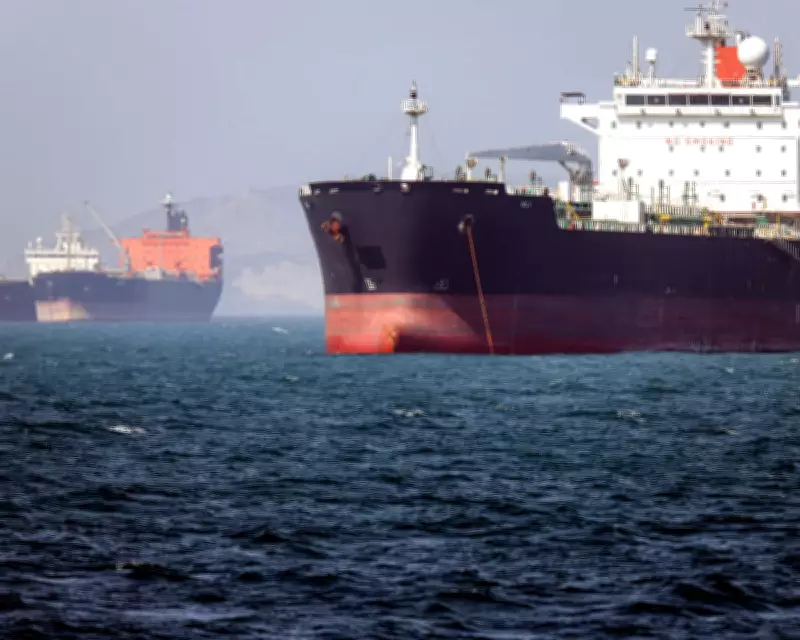
Saudi Arabia's refusal to allow the United States to use its bases and airspace for a military escort of oil tankers through the Strait of Hormuz was the key factor behind Donald Trump's decision to shelve the plan, known as Project Freedom, just days after its launch. Riyadh informed the White House that it would not permit the use of Prince Sultan airbase for the operation, which the US had billed as the successor to the bombing campaign Operation Epic Fury.
Saudi Objections Persist Despite Personal Call
Despite a personal phone call between Crown Prince Mohammed bin Salman and Trump, Saudi Arabia maintained its objections, according to NBC News. The confrontation, which Riyadh has not denied, underscores the kingdom's desire for a permanent end to the damaging US-Israel war on Iran on almost any terms, contrasting with its more assertive Gulf neighbor, the United Arab Emirates.
UAE Frustration with Saudi Caution
In a sign of the Emirates' frustration with Riyadh's caution, the UAE has already left the Saudi-dominated oil producers' club OPEC and is now considering leaving the Arab League as well. The UAE, a signatory to the Abraham Accords, has long been closer to Israel, but tensions within the Gulf have widened as the war has dragged on, causing significant damage to their economies and international image. The Emirates are particularly angry that they have been the biggest target for Iran's attacks and feel there has been insufficient solidarity across the Gulf.
Risks of Naval Confrontation
Saudi Arabia also feared that Project Freedom lacked clear terms of engagement and could escalate into a risky naval confrontation between Iran and the US, effectively ending the ceasefire that had been partially in force since April 7. Iran had explicitly stated that it would treat any US military escort of oil tankers or attacks on Iranian shipping as ceasefire breaches, exposing Gulf states to further attacks. An end to the ceasefire would not only result in a naval conflict in the Strait of Hormuz but also lead Tehran to resume its damaging drone and missile attacks on US bases in the Gulf and regional energy installations, which have likely caused more damage to Gulf infrastructure than previously reported.
Saudi Lack of Confidence in Trump
The Saudi intervention also reflects Riyadh's lack of confidence in how Trump has handled the conflict. Riyadh often felt like an aggrieved but powerless victim of a conflict it never advocated for. It was neither impressed by the degree of protection the US provided from Iranian attacks nor by the coherence of White House strategy. One Saudi diplomat noted that it was obvious for a long time that the US had landed itself in a conflict it could neither escalate nor exit.
Trump's Reversal and Messaging
On Tuesday, after spending two days building up the significance of Project Freedom, Trump posted a message reversing course, claiming the operation was halted for a short period by mutual agreement because great progress had been made toward a deal with Iran, partly due to China's intervention. He said the suspension would allow time to see whether an agreement could be reached. Trump made no reference to Saudi objections or the denial of airspace. His surprise decision undercut a day of heavy messaging by US Secretary of State Marco Rubio, Defense Secretary Pete Hegseth, and Chairman of the Joint Chiefs of Staff Gen. Dan Caine, all of whom had said the operation would finally guarantee freedom of navigation for hundreds of ships stranded in the strait. The plan had been for the US blockade of Iranian ports to continue.
Potential Houthi Involvement
Saudi Arabia may have also been concerned that Project Freedom would draw the Houthis in Yemen into the conflict. Riyadh has been working hard behind the scenes to keep the armed political and religious group out of the war. Closure of the Red Sea route through Houthi interventions would only worsen the threat to essential oil supplies worldwide. The Saudis had reached an agreement with Iran that safeguarded their pipeline to Yanbu, ensuring they could export up to 50% of their output via the Red Sea. In contrast, the Emirates have been much bolder than Riyadh in trying to get their oil tankers past the Iranian blockade, often turning off their transponders to avoid detection.
Impact on Saudi-Emirati Relations
Riyadh's intervention, which has reduced Trump's options to break the blockade, is likely to prompt a further deterioration in Saudi-Emirati relations. Riyadh was already concerned that deepening UAE-Israel ties could extend to a small number of Israeli troops operating on Emirati soil. Saudi Arabia, with a much larger population, must tread more carefully regarding Israel. Along with France, it has led efforts to revive the concept of a two-state solution, where a Palestinian state is recognized internationally. Saudi Arabia also has separate disputes with the UAE in Yemen, Somalia, and Sudan, none of which will be resolved if the US settles with Iran on terms that the Emirates and Israel believe fail the minimal objectives of Tehran's critics.