A Personal Reckoning at the Russian Embassy
One morning in May 2025, Sergey Radchenko walked briskly down Bayswater Road in London, heading towards the Russian embassy. The formidable outer wall, topped with razor wire and crowd control barriers, stood as a stark symbol of the tensions that had escalated since Russia's invasion of Ukraine. Unlike the early days of the war, when angry protesters besieged the embassy, only a lone man protested feebly from across the street. The blue and yellow Ukrainian flags that once dotted British streets had faded from view, but for Radchenko, the conflict remained a deeply personal burden.
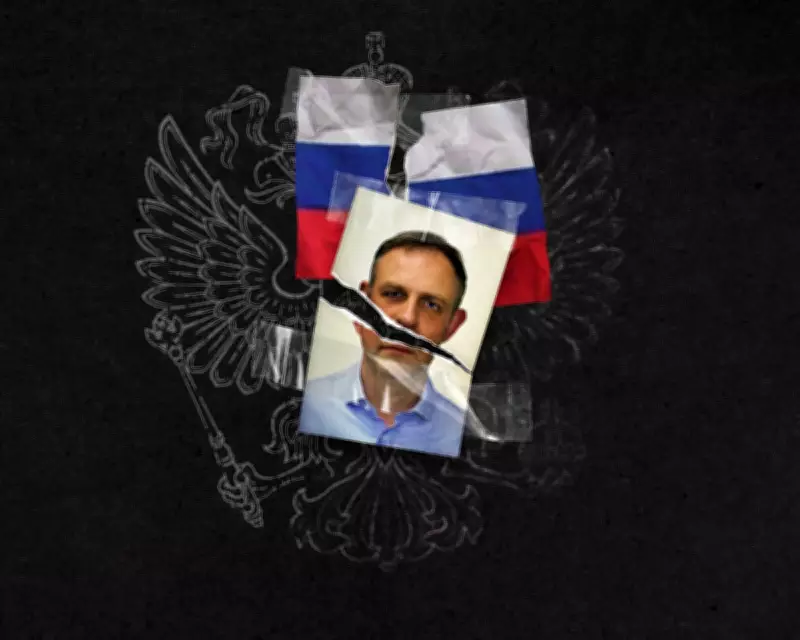
Feeling uneasy, he was ushered inside by a guard who patted him down and checked his backpack. This routine was familiar from previous visits, including one in March 2000 to vote in Russian presidential elections. This time, however, Radchenko had an altogether different purpose: he was there to renounce his Russian citizenship, a decision born out of guilt and a desire to sever ties with a regime he could no longer support.
From Sakhalin to Global Nomad
Born in 1980 to parents of Ukrainian descent, Radchenko grew up on Sakhalin, a remote island in Russia's far east. Described by Anton Chekhov as a "gloomy little world," Sakhalin was a place of forbidding cliffs and dark skies, a remnant of Russia's penal colony past. In his youth, the island was still crumbling, with dilapidated Soviet-era buildings mingling with ramshackle Japanese structures, reflecting its contested history.
At age 15, Radchenko secured a place on a US-funded exchange programme that took him to east Texas. The experience was transformative, exposing him to a world of freedom and democracy far removed from Sakhalin. While other participants, like Margarita Simonyan, returned to Russia and became propagandists for Vladimir Putin, Radchenko chose a different path. He became a nomad, exploring cultures, learning languages, and feeling like "post-Soviet flotsam" carried by the currents of time.
He studied international relations at the London School of Economics during a period of optimism about globalisation, but restlessness led him to Mongolia, where he lived among herdsmen, and later to China, where he taught at the University of Nottingham's campus. Throughout his travels, he remained legally tied to Russia through his passport, even as his identity became increasingly fluid.
The Turning Point: War and Guilt
When Russia invaded Ukraine in February 2022, Radchenko woke up in a cold sweat, his heart sinking as news stories revealed cities in ruins, dead civilians, and desperate refugees. He had misjudged Putin's willingness to raise murder to the level of national policy, a failure that filled him with shame. As a historian, he recognised Putin's obsession with restoring the Great Empire, but he hadn't anticipated the brutality of the full-scale invasion.
Radchenko felt a profound sense of guilt by association. Holding a Russian passport meant that atrocities in Ukraine were being committed in his name. He tweeted about feeling like he had "woken up in a puddle of s**t and vomit," and later posted in Russian accepting his share of collective responsibility for the bloodbath. Yet, doubts crept in: was collective responsibility fundamentally illiberal? He turned to philosophy, reading Karl Jaspers' On the Question of German Guilt and Hannah Arendt's essays, wrestling with the nuances of political and moral guilt.
The Bureaucratic Battle
Renouncing Russian citizenship proved to be a daunting bureaucratic challenge. The process required collecting multiple spravkas—official notes proving tax payments, lack of criminal convictions, and non-residency in Russia. For Radchenko, traveling to Russia was not an option due to fears of arrest; under Putin's laws, criticising the war or donating to Ukraine could lead to decades in prison.
He worked through proxies in Russia, facing frustrations as documents expired and had to be reobtained. In May 2025, he finally handed over his paperwork at the embassy, paying a £150 fee in cash—a practice he suspected was used to pay spies. The embassy official told him to wait six months for a decision from Moscow.
During this period, Radchenko visited Ukraine for the first time since the war began, standing in silence at a makeshift memorial in Kyiv's Maidan Square. It was there that he received an email from the Russian embassy: his request to renounce citizenship had been approved. However, the process wasn't over. He had to return his passports in exchange for an official spravka.
A Final Act of Defiance
On 15 October 2025, Radchenko brought his stack of Russian passports to the embassy. As a parting prank, he wrote "Goodbye, and thanks for all the fish!" in one, a reference to Douglas Adams that the official didn't appreciate. This led to months of delays and correspondence, with Radchenko even filing a legalistic complaint to the Russian Foreign Ministry.
Finally, in January 2026, he was summoned back to the embassy. After a brief wait, he was handed the spravka confirming the cessation of his Russian citizenship. As he left the building, he felt a sense of liberation, having crossed what he metaphorically called a "death gully." The sun had come out, and while he still had to learn who he was, he knew who he wasn't: a citizen of Putin's Russia.
Radchenko's journey highlights the complex interplay of identity, guilt, and political responsibility in an era of conflict. By renouncing his citizenship, he took a stand against a regime he views as tyrannical, embracing his British identity and the broader values of the West. His story serves as a poignant reminder of the personal costs of war and the enduring search for belonging in a fractured world.