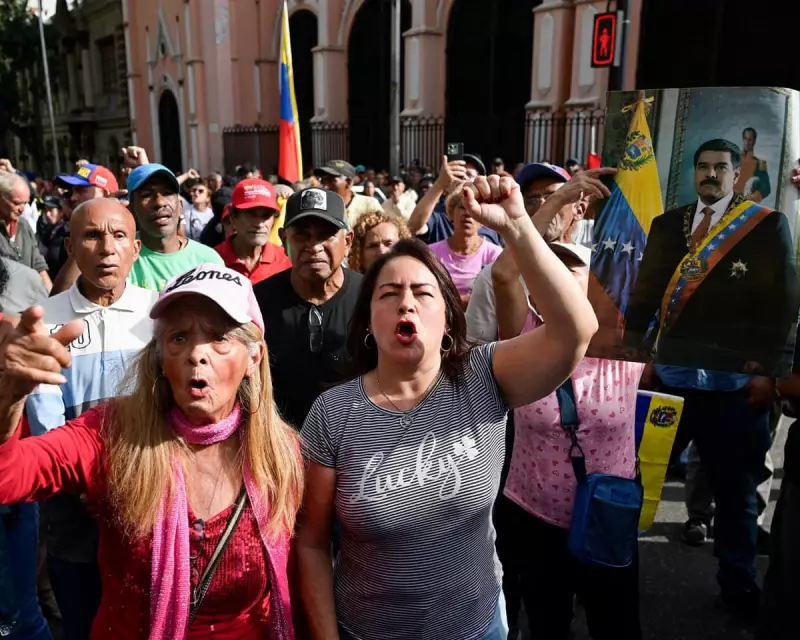
The start of 2026 has been marked by an event that threatens to unravel the fragile fabric of international order. On 3 January 2026, United States forces captured Venezuelan President Nicolás Maduro and his wife, Cilia Flores, in what amounts to a de facto coup. The action, ordered by President Donald Trump, was met with pro-government protests in the streets of Caracas but with startlingly muted condemnation from much of the international community.
A Brazen Act With No Justification
Unlike past military interventions, such as the Iraq war, the US administration made little effort to build a legal or moral case for invading Venezuela and abducting its head of state. The triumphalist rhetoric from Washington was starkly devoid of diplomatic pretence. US Defence Secretary Pete Hegseth declared Maduro had "effed around and found out", boasting that "America can project our will anywhere, any time". President Trump was equally blunt, stating the US would now "run Venezuela" and secure a "presence" pertaining to its oil.
The charges levelled against Maduro, including "narco-terrorism" and conspiracy, were widely seen as a thin pretext. Their credibility was further undermined by Trump's record of pardoning other international figures convicted on serious drug charges, such as Honduras's former president Juan Orlando Hernández. The message was clear: this was not about law enforcement, but a raw demonstration of power, symbolised by social media montages casting Trump as a "gangster in chief".
The Deafening Silence of the International Community
The global response has done little to challenge this new reality. Instead of robust defence of sovereignty and international law, world leaders have retreated into cautious, procedural language. UK Labour leader Keir Starmer said the situation was "fast moving" and he would "establish all the facts", even as Maduro was paraded in Brooklyn. EU Commission President Ursula von der Leyen and foreign policy chief Kaja Kallas issued statements about "monitoring" and respecting international law, but stopped short of naming the US as the violator.
This pattern of equivocation was epitomised by British Foreign Secretary Yvette Cooper. In a tweet, she first reiterated the UK's rejection of Maduro's legitimacy before offering generic support for international law, with no acknowledgment that it had just been shattered by a key ally. The effect is to normalise the extraordinary and implicitly condone the action by focusing criticism solely on Maduro's character.
A Green Light for Global Predators
The consequences of this feeble reaction are likely to be severe and far-reaching. The Venezuela incident shreds the last pretence that there are enforceable rules against unilateral regime change or annexation. It creates a perilous precedent that other powerful states with regional ambitions are sure to note.
Vladimir Putin in Russia and Xi Jinping in China now see their own doctrines of discretionary military action mirrored and validated by Washington. China's military drills around Taiwan and Russia's war in Ukraine gain a new layer of perceived legitimacy. In the Middle East, competition between powers like Saudi Arabia and the United Arab Emirates is intensifying, with the UAE already acting with impunity in conflicts like Sudan's. Trump's own threats regarding Iran and even an annexation of Greenland move from the realm of fantasy to tangible possibility.
The tepid calls for a "peaceful transition" in Venezuela are a fantasy. The established norm of non-intervention has been broken, and silence from those who claim to uphold the rules is not neutrality—it is complicity. As columnist Nesrine Malik argues, this cowardice and historical illiteracy will have consequences. The fences that maintained a fragile global settlement are being dismantled. The world has entered an era where might makes right, and the failure to loudly condemn the first act of gangsterism only invites the next.