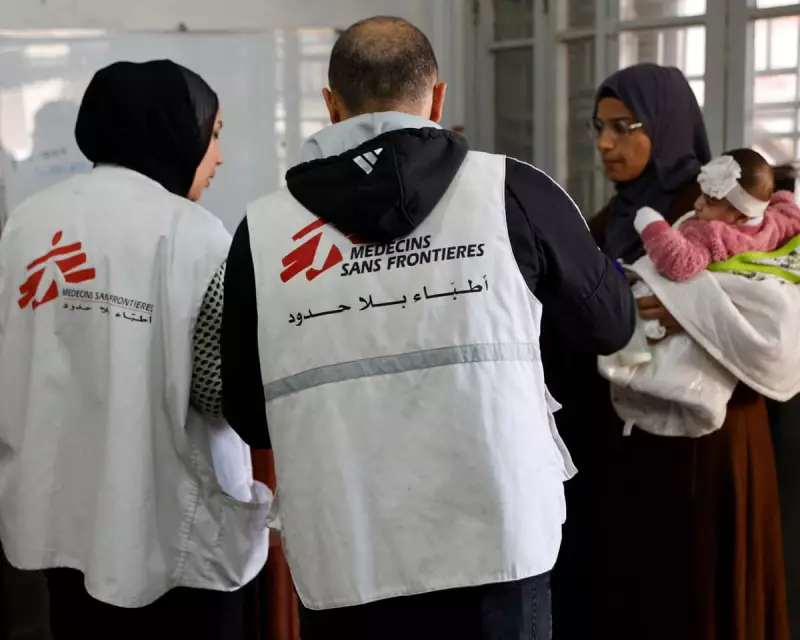
Humanitarian experts and diplomats are issuing stark warnings that Israel's decision to ban dozens of aid organisations from operating in Gaza will have "catastrophic" consequences, putting Palestinian lives at immediate risk.
New Regulations Force NGOs to Cease Operations
On Tuesday, Israel's Ministry of Diaspora Affairs informed thirty-seven non-governmental organisations (NGOs) active in Gaza that they must halt all operations within the territory within 60 days. The order comes unless these groups comply with stringent new regulations, which include the disclosure of personal details for all staff members.
The Israeli ministry stated the measures aim to prevent NGOs from employing individuals with links to extremist groups, arguing this is necessary to stop Hamas from exploiting international aid. Israel has repeatedly accused Hamas of diverting aid supplies for military purposes, though it has provided limited public evidence to substantiate these claims.
Aid Agencies Warn of Imminent Service Collapse
Aid organisations have reacted with alarm, stating they have engaged with Israeli officials for months to find a workable solution. Athena Rayburn, executive director of the Association of International Development Agencies, said her members already conduct extensive vetting. "It would be disastrous for us to have any armed combatants or people linked to armed groups among our staff," she explained.
Rayburn warned the ban would trigger a "catastrophic collapse of humanitarian services", adding that Israeli authorities have been made fully aware of the potential consequences. The affected NGOs represent a critical part of the aid infrastructure, with many contracted by the United Nations to run essential services like basic health clinics, malnutrition screening, and shelter support.
One senior UN official said the move would "cripple" relief operations, compounding the existing impact of Israeli laws banning UNRWA, the main UN agency for Palestinians, from Gaza.
Dispute Over Impact and Feasibility
Israeli officials downplayed the ban's effect, claiming the targeted NGOs supply only 15% of the assistance entering Gaza. However, aid officials countered this figure is misleading, as many of the organisations provide specialised services that larger entities rely upon.
Médecins Sans Frontières (MSF), a major medical aid provider facing the ban, rejected Israeli allegations that individuals affiliated with it have links to Hamas and Palestinian Islamic Jihad. The organisation stated the accusations are unsubstantiated and that it would never knowingly employ anyone engaged in military activity.
Shaina Low of the Norwegian Refugee Council said meeting the new requirements would be impossible. "It's all a distraction from actually getting aid to the people who need it," she stated. Aid workers also expressed grave security and legal concerns about sharing staff details, citing past attacks on humanitarian personnel in Gaza.
The crisis unfolds as Gaza grapples with the aftermath of a two-year war. Recent storms have destroyed tents sheltering an estimated 500,000 people, while food remains expensive and clean water scarce. The situation directly challenges the October ceasefire agreement, which obliges Israel to allow "full aid" into the territory.
International criticism is mounting. Volker Türk, the UN human rights chief, labelled Israel's move "outrageous", warning it makes "an already intolerable situation even worse". The European Union also stated the new NGO registration law "cannot be implemented in its current form".