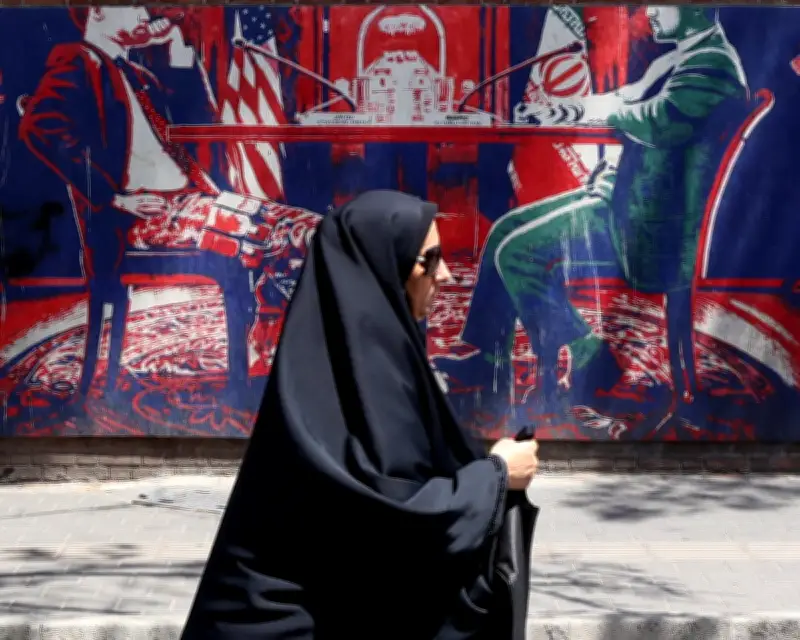
Iran and the United States have reported progress in indirect nuclear negotiations, with Pakistan and Qatar serving as mediators. The talks, held in Doha, focused on curbing Iran's nuclear program in exchange for sanctions relief, according to officials familiar with the discussions.
Mediation efforts yield cautious optimism
Pakistan's role as a facilitator was confirmed by Iranian Foreign Ministry spokesperson Nasser Kanaani, who stated that “the atmosphere of the talks was constructive and progress was made on several key issues.” A US State Department spokesperson echoed this, noting that “the discussions were serious and forward-looking.”
The negotiations come amid heightened tensions in the Middle East, with Iran's nuclear enrichment activities continuing to draw international concern. The International Atomic Energy Agency (IAEA) reported in May that Iran’s stockpile of enriched uranium had reached 4,500 kilograms, exceeding the limits set by the 2015 nuclear deal.
Qatar's diplomatic role expands
Qatar has increasingly positioned itself as a mediator in regional conflicts, leveraging its relationships with both Washington and Tehran. The Gulf state hosted the latest round of talks, which included delegations from Iran and the US, though the two sides did not meet directly.
“Qatar's mediation has been instrumental in bridging gaps between the parties,” said a senior Qatari official, speaking on condition of anonymity. “We are committed to facilitating a peaceful resolution that ensures regional stability.”
Lebanon's Hezbollah issue looms
The talks also touched on the situation in Lebanon, where the Iran-backed Hezbollah group holds significant political and military power. Israeli officials have expressed concern that any nuclear deal could free up Iranian resources to support Hezbollah, potentially destabilizing the region further.
“Iran's nuclear ambitions are a threat to the entire region, and any agreement must address its destabilizing activities in Lebanon and elsewhere,” said an Israeli government source, who requested anonymity due to the sensitivity of the matter.
Path forward remains uncertain
Despite the reported progress, significant hurdles remain. The US has insisted on stringent verification measures, while Iran demands the lifting of all sanctions imposed since 2018. The next round of talks is expected to take place in July, with Pakistan and Qatar continuing their mediation roles.
“We are cautiously optimistic, but there is still a long way to go,” said Ali Vaez, Iran project director at the International Crisis Group. “Both sides need to show flexibility to reach a mutually acceptable agreement.”