France Escalates Diplomatic Dispute with US Ambassador Over Meeting No-Show
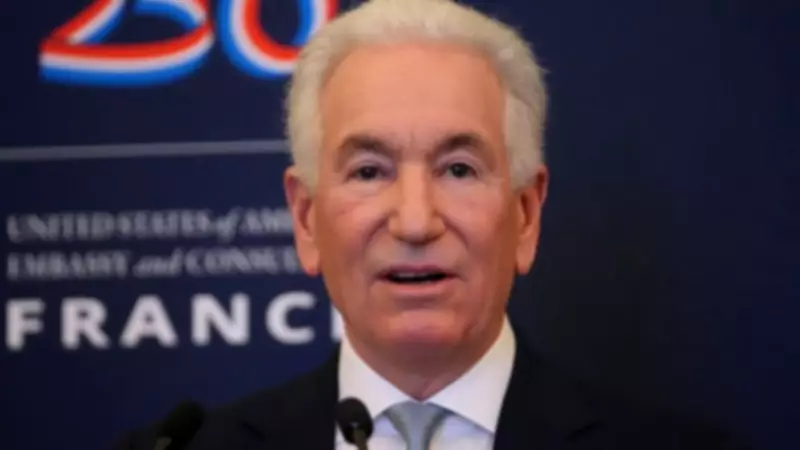
The diplomatic relationship between France and the United States has deteriorated significantly following a second instance where US Ambassador to Paris Charles Kushner failed to attend a scheduled meeting with French officials. The French government has now taken the extraordinary step of blocking Ambassador Kushner's access to government members until he complies with their summons.
Second Summons Ignored
French Foreign Minister Jean-Noel Barrot had summoned Ambassador Kushner for a Monday evening meeting to demand an explanation for recent comments made by the US Embassy regarding the death of Quentin Deranque, a 23-year-old student killed during clashes between far-right and far-left groups in Lyon earlier this month. Instead of attending personally, Kushner cited a prior engagement and sent a deputy in his place.
Minister Barrot expressed clear indignation at the ambassador's absence, describing it as "a surprise" and stating unequivocally that "it will, naturally, affect his capacity to exercise his mission in our country." The French Ministry went further, accusing Kushner of demonstrating an "apparent failure to grasp the basic requirements of the ambassadorial mission."
Controversial Social Media Posts
The diplomatic crisis originated from social media posts by the US State Department's counterterrorism bureau following Deranque's death. The posts, which were shared in both English and French by the US Embassy in Paris, stated that "reports, corroborated by the French Minister of the Interior, that Quentin Deranque was killed by left-wing militants, should concern us all."
The statement continued with the assertion that "violent radical leftism is on the rise and its role in Quentin Deranque's death demonstrates the threat it poses to public safety." These comments sparked immediate controversy in France, where officials rejected what they viewed as foreign interference in domestic political matters.
French Government's Firm Response
Foreign Minister Barrot emphasized that France "must have an explanation" from Ambassador Kushner regarding the embassy's statements. He firmly declared, "We don't accept that foreign countries can come and interfere, invite themselves, into the national political debate." The French government has made clear its position that the incident should not be exploited for political purposes by external actors.
The situation has gained additional significance as approximately 3,000 people participated in a memorial march for Deranque on Saturday, highlighting the deep political tensions within French society that the killing has exposed.
Pattern of Non-Attendance
This marks the second time Ambassador Kushner has failed to respond to a French summons. Last August, French officials summoned him after he sent a letter alleging insufficient French efforts to combat antisemitism. On that occasion as well, Kushner did not appear personally, instead sending a representative to meet with French officials.
Background of the Ambassador
The 71-year-old businessman, who is the father of Donald Trump's son-in-law Jared Kushner, was controversially appointed as US ambassador to France by former President Trump last year. His appointment followed a 2020 presidential pardon from Trump after Kushner had pleaded guilty to charges of tax evasion and making illegal campaign donations years earlier.
The relationship between Trump and Kushner extends beyond politics, with their children Ivanka Trump and Jared Kushner having married in 2019, creating familial ties that preceded the diplomatic appointment. This personal connection has added layers of complexity to the current diplomatic impasse between France and the United States.
The French government's decision to restrict Ambassador Kushner's access to officials represents a significant escalation in diplomatic tensions, with potential implications for broader Franco-American relations and cooperation on international matters.