European Leaders Welcome US-Iran Ceasefire Agreement
European leaders have expressed relief and cautious optimism following the announcement of a provisional ceasefire agreement between the United States and Iran. The deal, which includes a temporary reopening of the strategically vital Strait of Hormuz, has been hailed as a critical step back from the brink of wider regional conflict.
Joint Statement from Ten European Nations
In a significant show of unity, ten European leaders issued a joint statement welcoming the ceasefire. The signatories included the heads of government from Germany, France, the United Kingdom, Italy, Spain, Canada, Denmark, and the Netherlands, alongside the leaders of the European Council and European Commission.
The statement urged "quick progress towards a substantive negotiated settlement," emphasizing that such an agreement would be "crucial to protect the civilian population of Iran" and ensure regional security. The leaders warned that a lasting settlement could "avert a severe global energy crisis," highlighting the economic stakes involved.
The European leaders explicitly called for the ceasefire to be implemented "including in Lebanon," where tensions between Israel and Hezbollah have continued despite the broader agreement.
Macron's Diplomatic Push
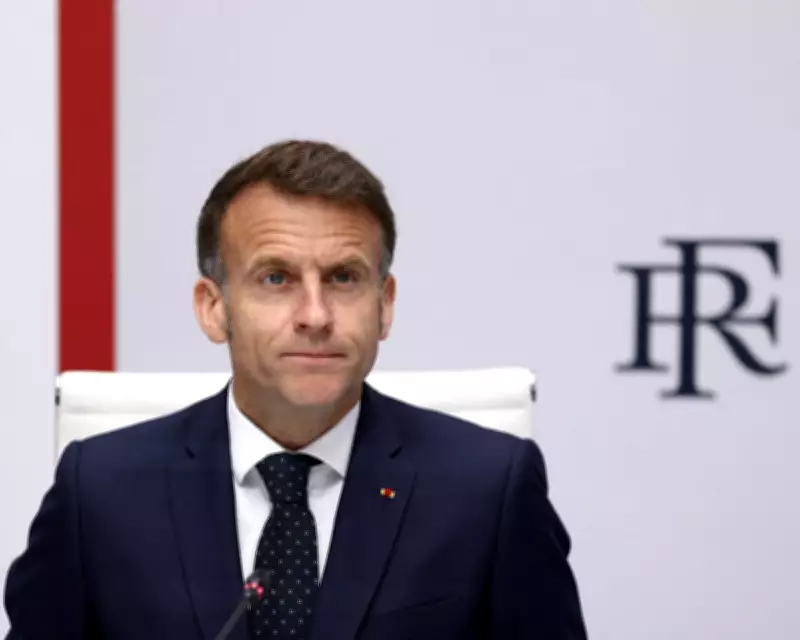
French President Emmanuel Macron, who attended a meeting of France's defence and security council following the ceasefire announcement, welcomed the deal but stressed the importance of including Lebanon. Macron noted that approximately fifteen countries were mobilizing "under French leadership" to facilitate the resumption of maritime traffic through the Strait of Hormuz.
The strait, through which approximately one-fifth of the world's oil typically flows, has been a focal point of regional tensions. Macron's emphasis on Lebanon reflects France's historical ties to the nation, which was once a French protectorate.
Mixed Reactions from European Capitals
Spanish Prime Minister Pedro Sánchez, who has been among the most vocal Western critics of former US President Donald Trump's policies toward Iran, offered a characteristically blunt assessment. In a post on social media platform X, Sánchez stated: "Ceasefires are always good news – especially if they lead to a just and lasting peace. But this momentary relief cannot make us forget the chaos, the destruction, and the lives lost."
He added pointedly: "We will not applaud those who set the world on fire just because they show up with a bucket."
German Chancellor Friedrich Merz welcomed the ceasefire while calling for a permanent resolution to the conflict. "The goal now is to negotiate a durable end to the war in the next days," Merz declared in an official statement. "This can only be achieved by diplomacy."
British and EU Diplomatic Efforts
UK Prime Minister Keir Starmer, who was traveling to the Gulf region on Wednesday, wrote on X: "Together with our partners we must do all we can to support and sustain this ceasefire, turn it into a lasting agreement and reopen the Strait of Hormuz." Starmer, like Merz, carefully avoided direct criticism of Trump, despite European allies having previously drawn Trump's ire for refusing to support military actions.
EU Foreign Policy Chief Kaja Kallas, en route to Saudi Arabia, described the agreement as a "step back from the brink" after weeks of escalating tensions. "It creates a much-needed chance to tone down threats, stop missiles, restart shipping and create space for diplomacy towards a lasting agreement," Kallas stated, joining the chorus calling for the strait's reopening.
Calls for Humanitarian Support
European Council President António Costa urged all parties to uphold the ceasefire terms "in order to achieve sustainable peace in the region." Costa's statement followed his earlier warning that targeting civilian infrastructure, "namely energy facilities," would be "illegal and unacceptable." While not naming Trump directly, Costa's remarks came after the former US president had threatened to destroy Iran's power plants and bridges.
Jan Egeland, Secretary General of the Norwegian Refugee Council, celebrated the ceasefire as "wonderful news" for civilians on both sides of the Gulf. However, Egeland highlighted the disparity in international funding priorities, asking: "Now we can scale up relief to the millions of refugees and displaced in Iran. But we have only some funding from Scandinavians. How come there are easily billions for war but no funding for the victims of the war?"
Ongoing Challenges and Regional Dynamics
The Israeli military confirmed on Wednesday that it was continuing "fighting and ground operations" against Hezbollah in Lebanon, despite Pakistan's assertion that Lebanon was included in the ceasefire agreement. This discrepancy underscores the fragile nature of the provisional deal and the complex regional dynamics at play.
The US and Iran agreed to a two-week conditional ceasefire on Tuesday, following last-minute diplomatic efforts facilitated by Pakistan. The agreement includes the temporary reopening of the Strait of Hormuz, a critical waterway for global energy supplies.
As European leaders welcome this diplomatic breakthrough, their collective focus remains on transforming this provisional ceasefire into a permanent, comprehensive peace agreement that addresses both immediate security concerns and long-term stability in the Middle East.