Chagos Leader Vows to Keep Up Desert Island Protest as Deal Faces Jeopardy
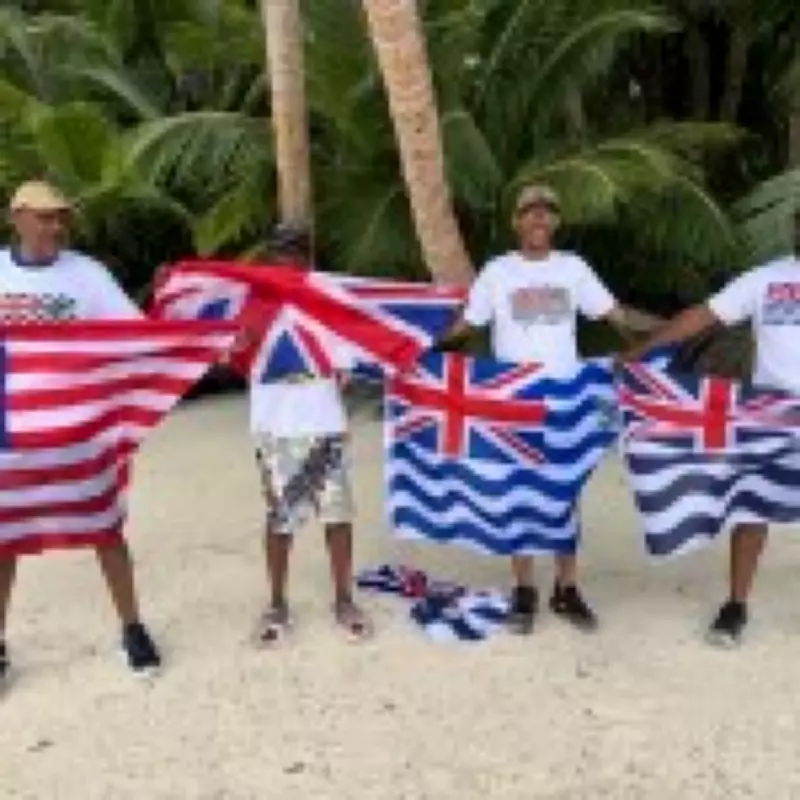
In a dramatic standoff, six Chagossians camping on the remote desert islands of the Chagos archipelago have declared their unwavering commitment to remain, with their leader claiming that 600 more people are prepared to join them. This comes after the UK government shelved a deal to transfer the Chagos Islands to Mauritius, a move influenced by opposition from former US President Donald Trump.
Defiance Amid Collapsed Agreement
Misley Mandarin, the self-styled 'first minister' of the islands, told Metro that his group has 'not won the war yet' following the government's decision to halt efforts to hand over the territory. He asserted that officials are attempting to pressure the islanders to leave voluntarily by denying them essential supplies, such as solar panels for clean water, mosquito nets, and bedding. Mandarin described this as a tactic to express frustration over the collapsing deal and to make life so difficult that the Chagossians depart on their own accord.
The indigenous Chagossians, who were evicted in the 1960s to make way for a military base, say hundreds more are willing to endure water scarcity, harsh conditions, and threats of expulsion to resettle their ancestral homeland. Their lawyer has accused Prime Minister Keir Starmer and the British government of acts that amount 'to ethnic cleansing and potentially crimes against humanity' for trying to remove the six men currently on the island.
Historical Context and Legal Battles
The Chagos Islands have been under British control since 1814, but last year, the UK government agreed to transfer sovereignty to Mauritius while leasing back the UK-US installation on Diego Garcia. However, Sir Keir has now abandoned legislation to implement this plan from this year's King's Speech, after Trump labeled the move an 'act of great stupidity'. Mandarin, speaking from Île du Coin where he and others landed in February, celebrated the news 'with cautiousness', emphasizing that the struggle is far from over.
Legal challenges have played a crucial role in this dispute. The Foreign Office's attempts to evict the exiled islanders were halted by a court ruling that allowed them to stay temporarily. Additionally, a judge ruled that Chagossians expelled in the 1960s have the right of abode on their homeland. James Tumbridge, the attorney general for the Chagossian government, has made an urgent submission to the UN human rights commissioner, calling for intervention to safeguard the rights of those camping on the islands.
Daily Struggles and International Reactions
Life on the equatorial Chagos archipelago is challenging, with Mandarin noting that water is very scarce and the group must travel to a single well on the island. They spend their time fishing, planting vegetables, and cleaning the beach to survive. Despite these hardships, Mandarin remains resolute, stating, 'We're going to stay however long it takes. This is our home now.'
In response, Health Secretary Wes Streeting stated on Sky News that the Chagos Islands deal is not dead, emphasizing the goal to secure the islands for British and American interests. A government source told The Times that the agreement is 'the best way to protect the long-term future of the base' but will not proceed without Trump's backing. Regarding the confiscated supplies, a BIOT source claimed that additional items were present without prior declaration, and the administration is ready to discuss reasonable goods for safety and security reasons.
As tensions escalate, the Chagossians' protest highlights ongoing issues of indigenous rights and international diplomacy, with Mandarin vowing to continue the fight until the deal is completely killed or Starmer is no longer prime minister.