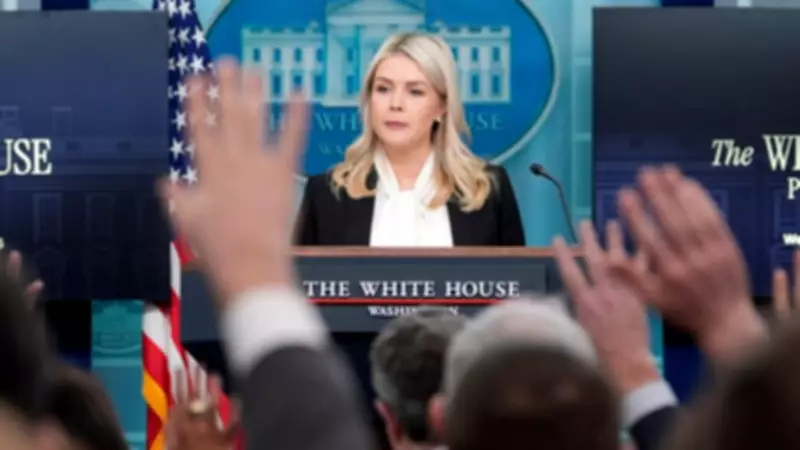
In a White House briefing, press secretary Karoline Leavitt significantly downplayed the notion of regime change in Iran, despite previous comments from Donald Trump that had highlighted it as a rationale for military action. This shift in messaging came on the fifth day of US operations against Iran, with the administration outlining clear objectives: destroying Iran's navy, eliminating its ballistic missile capacity, neutralizing its regional proxies to protect Americans, and preventing any nuclear weapon acquisition.
Absence of Regime Change Focus
Notably absent from the briefing was any discussion of "regime change" or plans for the future of the Iranian people. Leavitt offered no indication of US support for a popular uprising in Iran or any mechanisms to facilitate such an event. When asked about the Iranian people, she stated, "We hope that freedom rests in their hands," without providing details on how this freedom might be achieved.
Military Strategy and Objectives
Leavitt emphasized that the US military action aims for a "quick and effective" success, though she declined to specify a timeframe. She clarified that while ground troops are not currently part of the plan, their use has not been ruled out entirely. Regarding reports that the Trump administration was considering Kurdish forces to inspire an uprising, Leavitt dismissed these as "completely false and should not be written."
She defined victory in terms of US interests, stating, "Victory will be determined by the commander in chief once the goals and objectives that we have repeatedly laid out are fully realized." This focus on military outcomes over political change marks a distinct pivot from earlier rhetoric.
Context and Motivations
The briefing followed statements from Secretary of State Marco Rubio, who indicated that the US military action was prompted by Israel's plans to attack Iran, leading to speculation that Trump was pressured into a pre-emptive strike. However, Leavitt attributed Trump's decision to a "good feeling" that Iran intended to strike US assets and personnel in the region, underscoring a proactive rather than reactive stance.
Between military and political updates, it appears the US administration is satisfied with the progress made so far, prioritizing tactical achievements over broader geopolitical shifts. This approach contrasts with Trump's earlier emphasis on regime change, highlighting evolving strategies in the conflict.