
The United States has escalated its warnings to citizens in Israel, urging them to depart the country without delay as the threat of a military strike on Iran intensifies. This advisory, issued by the Department of State, emphasizes that Americans should "consider leaving Israel while commercial flights are available" and strongly discourages any travel to the region.
Heightened Tensions and Diplomatic Efforts
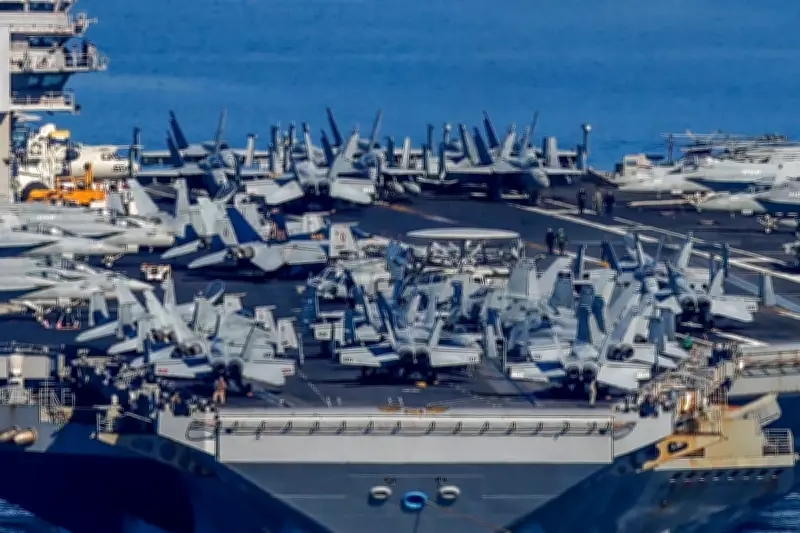
This urgent call comes in the wake of inconclusive talks between the US and Iran regarding Tehran's nuclear programme, with further discussions slated for next week. President Donald Trump has mobilized two carrier strike groups, including the USS Gerald R Ford, positioning them within striking range of Iran. These naval forces are on standby, ready to act if Iran is perceived as not engaging seriously in negotiations to halt its nuclear activities.
Evacuation Orders and Embassy Guidance
In a move underscoring the gravity of the situation, the US has authorized the departure of non-essential government workers and their families from Israel. Ambassador Mike Huckabee reinforced this directive in an early-morning email to embassy staff, urging those wishing to leave to "do so TODAY." He warned that this could lead to high demand for airline seats, advising personnel to secure flights to any destination as a first step toward returning to Washington, DC.
Mediation and Military Concerns
Amid these developments, Oman's Foreign Minister Badr Albusaidi, a key mediator in the US-Iran talks, has flown to Washington in what appears to be a last-ditch effort to dissuade the Trump administration from military action. He is scheduled to brief Vice-President JD Vance, known for his opposition to military interventions, arguing that sufficient progress has been made to warrant caution. Vance has publicly stated that prolonged Middle Eastern conflicts are unlikely, though he remains uncertain about Trump's stance on a potential strike.
Nuclear Standoff and Technical Details
The core of the dispute revolves around Iran's nuclear programme. Iran has resisted US demands to export its stockpile of highly enriched uranium and insists on retaining its right to domestic enrichment. Last July, the Iranian parliament passed legislation banning cooperation with the International Atomic Energy Agency (IAEA) until its enrichment rights are recognized. However, Iran has offered to limit enrichment to 20% purity or lower for medical purposes at its Tehran research reactor, which relies on Russian fuel.
Iran's nuclear infrastructure includes facilities such as the Bushehr plant on the Persian coast, the Middle East's first civilian nuclear power station, also supplied by Russia. The issue of Iran's 400kg stockpile of 60% enriched uranium could be addressed through dilution, as was done under the 2015 nuclear agreement. Technical-level talks are planned for next week in Vienna at the IAEA headquarters, where Director General Rafael Grossi is expected to provide updates on access to Iranian nuclear sites, potentially boosting his candidacy for UN Secretary General.
As tensions mount, the international community watches closely, with the US military presence in the region serving as a stark reminder of the potential for escalation. The coming days will be critical in determining whether diplomatic channels can prevail over the specter of conflict.




