
US Military Claims Unprecedented Strikes on Iran, Surpassing 2003 Iraq Campaign
The United States military has asserted that its initial 24-hour assault on Iran involved nearly double the number of strikes compared to the infamous "shock-and-awe" campaign launched against Iraq in 2003. According to Admiral Brad Cooper of US Central Command, close to 2,000 targets have been hit since the conflict began five days ago, marking what he described as "the largest firepower buildup in the region in a generation."
Naval Dominance and Escalating Tensions
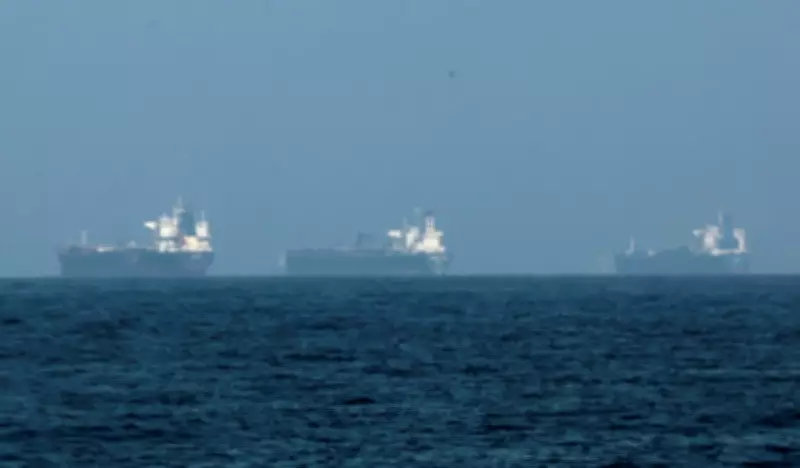
In a bold declaration, Admiral Cooper announced that the US is effectively sinking "all of the Iranian navy," with 17 Iranian ships already destroyed. He emphasized that for decades, Iran has harassed international shipping, but now, "there is not a single Iranian ship underway in the Arabian Gulf, Strait of Hormuz, or Gulf of Oman." President Donald Trump reinforced this stance, stating that the US navy could begin escorting oil tankers through the Strait of Hormuz if necessary, as part of aggressive measures to contain soaring energy prices triggered by the war.
Humanitarian and Global Economic Fallout
The Iranian Red Crescent Society reports at least 787 fatalities since the conflict erupted, with a devastating strike on a girls' elementary school in Minab on Saturday claiming up to 168 lives, marking the worst mass casualty event of the US-Israeli military assault so far. The conflict has also led to significant displacement, with the United Nations noting at least 30,000 people forced from their homes in Lebanon due to heavy Israeli airstrikes.
Global oil and gas prices have spiked dramatically as the war halts energy exports from the Middle East. Tehran's attacks on ships and energy facilities, coupled with navigation closures in the Gulf, have forced production stoppages from Qatar to Iraq, causing turbulence on international markets. In Tokyo, the Nikkei 225 fell by about 1.7% during early trading, while Seoul's Kospi dropped 3.1% after a 7.2% plunge on Tuesday. Wall Street, however, appears set to open flat in New York, according to pre-market trading data.
Political Reactions and Diplomatic Strains
President Trump has vehemently denied suggestions that he was pressured by Israel into attacking Iran, countering claims with, "No. I might have forced their hand." This comes amid simmering anti-Israel backlash in Congress and among his own Maga supporters. Trump also expressed dissatisfaction with British Prime Minister Keir Starmer, criticizing the UK for not joining the attack and delaying US access to bases, remarking, "This is not Winston Churchill that we're dealing with."
In contrast, Canadian Prime Minister Mark Carney called for rapid de-escalation on Wednesday, urging all parties to respect international rules of engagement. Israel has launched a "broad wave" of strikes targeting Iranian launch sites, defense systems, and additional infrastructure, further intensifying the conflict.
As the Middle East crisis enters its fifth day, the situation remains fluid, with ongoing developments expected to shape regional and global dynamics in the coming hours.




