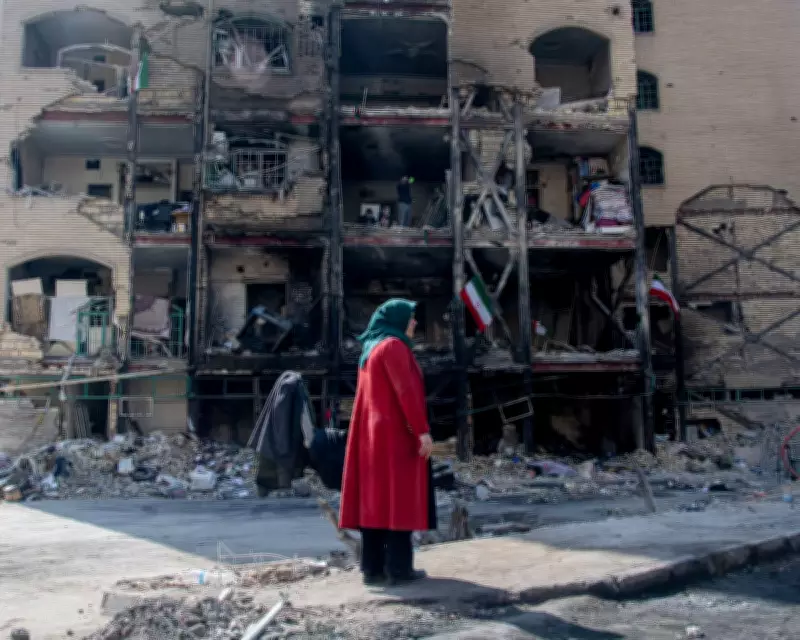
US-Israel War on Iran Enters Second Week with Escalating Regional Conflict
The ongoing military confrontation between the United States, Israel, and Iran has intensified as it moves into its second week, marked by a significant expansion of hostilities across the Middle East. Former US President Donald Trump has issued a stark demand for Tehran's unconditional surrender, while Israel and Iran have exchanged fresh assaults, including strikes on Lebanon and Iranian territory.
Diplomatic Efforts and Military Actions Clash
Trump's declaration, made via social media on Friday, came shortly after Iran's president hinted at mediation efforts by unnamed countries, briefly suggesting a potential diplomatic resolution. However, this glimmer of hope was quickly overshadowed by renewed violence. In Israel, explosions reverberated as defense systems activated to intercept incoming Iranian fire, while multiple Gulf states—including the United Arab Emirates, Kuwait, Qatar, Bahrain, and Saudi Arabia—reported new drone and missile attacks.
Israel has dramatically escalated the conflict in Lebanon, launching heavy bombardments on Beirut after ordering an unprecedented evacuation of the city's southern suburbs. Smoke and flames were seen rising from the Dahieh suburb following an Israeli airstrike, highlighting the severe impact on civilian areas. Simultaneously, Israel targeted Iran with a new wave of attacks, claiming that 50 warplanes struck a leadership bunker beneath the destroyed Tehran compound of the late Supreme Leader Ayatollah Ali Khamenei. Early Saturday, Iran's Mehrabad airport was also hit, according to reports from the semi-official Tasnim news agency.
Intelligence Sharing and Economic Fallout
Amid the turmoil, reports indicate that Russia has been sharing intelligence with Iran regarding US targets in the region. In response, US Defense Secretary Pete Hegseth stated that the US is not concerned and is meticulously tracking all developments to inform battle strategies. The Israeli military asserts that it has crippled 80% of Iran's air-defense systems and disabled over 60% of its missile launchers during the first week of the campaign.
The conflict has triggered significant economic repercussions. European and US stock indexes plummeted on Friday, driven by Trump's surrender ultimatum and fears of a prolonged war. Oil prices surged to multi-year highs as the critical Strait of Hormuz shipping lane was effectively shut down, disrupting global energy supplies.
Humanitarian Crisis and Political Stalemate
The human cost of the war continues to mount. Iranian UN Ambassador Amir Saeid Iravani reported at least 1,332 fatalities in Iran since the initial US-Israel strikes on February 28, citing the Iranian Red Crescent Society. In Lebanon, the health ministry has confirmed 123 deaths and 683 injuries from Israeli attacks, with approximately 300,000 people displaced in just four days, according to the Norwegian Refugee Council. On the Israeli side, 11 people have been killed by Iranian attacks, and at least six US service members have lost their lives.
Political tensions remain high, with Trump insisting on a role in selecting Iran's new supreme leader, a demand firmly rejected by Iravani, who emphasized that leadership decisions will be made without any foreign interference. As the conflict shows no signs of abating, the international community watches closely, grappling with the escalating humanitarian and economic consequences.