
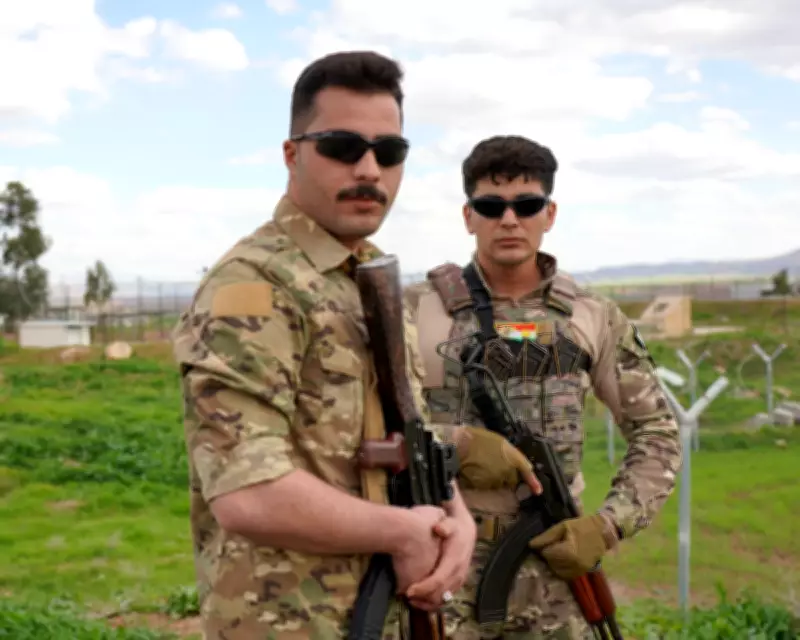
US and Israeli Airstrikes Intensify Along Iran-Iraq Border, Backing Kurdish Mobilization
Recent waves of airstrikes have targeted military positions, frontier posts, and police stations in northern Iran near the Iraqi border, indicating a coordinated effort by the United States and Israel to open a new front in their conflict with Tehran. This escalation appears to be paving the way for Kurdish peshmerga fighters to cross into Iran from northern Iraq, with US officials reportedly ready to provide air support for such operations.
Kurdish Groups Prepare for Cross-Border Operations
Kurdish officials from Iran dissident groups based in northern Iraq have confirmed preparations for potential military actions inside Iran. Khalil Nadiri of the Kurdistan Freedom Party (PAK) stated that forces have moved near the Iranian border in Sulaymaniyah province and are on standby, following contacts with US officials. Additionally, Baloch militant groups have reportedly shifted from Pakistan into Iran, further complicating the regional dynamics.
Experts caution that backing armed ethnic communities in Iran could "open up a hornet's nest," exacerbating internal divisions and increasing the risk of a chaotic civil war if the current regime collapses. Alia Brahimi of the Atlantic Council warned that outsourcing ground fighting to separatist groups might reduce US influence and could rally Iranian public support around the Tehran regime.
Historical Context and Strategic Moves
The US has a history of utilizing Kurdish fighters as auxiliaries, notably during the 2003 Iraq invasion and the fight against Islamic State from 2014 to 2019. Recent drone attacks and airstrikes along the border suggest an effort to create "access points" for Kurdish fighters to establish strongholds in Iran, according to former US defense officials. This strategy mirrors past operations in Afghanistan, Syria, and Iraq, where small teams directed airstrikes with local forces.
Donald Trump has reportedly engaged with leaders of Iranian Kurdish factions, expressing openness to supporting groups willing to oppose the regime. Meanwhile, Israeli military spokespersons have acknowledged operations in western Iran to degrade capabilities and create pathways to Tehran.
Regional Reactions and Neutrality Claims
Support for Kurdish armed groups is likely to provoke concern in neighboring countries like Turkey, Iraq, and Syria, which have significant Kurdish minorities. Barbara Leaf, former assistant secretary of state, predicted strong reactions from regional leaders, including Turkey's Recep Erdoğan. Qubad Talabani, deputy prime minister of Iraq's Kurdistan region, emphasized neutrality, stating the region is not part of the current conflict.
In Iran, Kurdish and Baloch minorities have long opposed the regime, with recent coalition formations aiming to overthrow Tehran. The Democratic Party of Iranian Kurdistan (KDPI) has called on Iranian military personnel to abandon their posts, citing threats from US and Israeli strikes.
Potential Outcomes and Expert Warnings
Analysts highlight the dangers of inconsistent US policies, referencing past betrayals of Syrian Kurds. Nasser Bouledai, an Iranian Baloch leader, urged for permanent support to minorities against the regime. The conflict's early stages already show escalating violence, with separatist groups claiming attacks on Iranian forces.
As airstrikes continue and Kurdish mobilization accelerates, the situation remains volatile, with experts warning that without clear strategic objectives, the US-Israel approach could lead to unintended consequences, including a broader regional conflict.




