
US-Israeli Missile Strike Targets Iran's Leadership Assembly Building in Qom
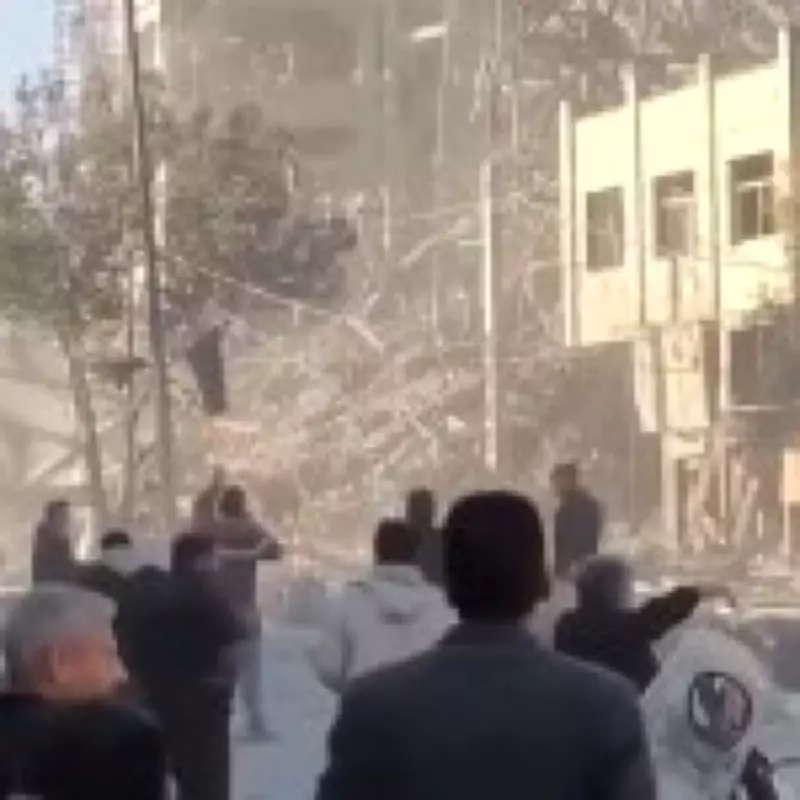
In a significant escalation of regional hostilities, a coordinated missile strike by the United States and Israel has demolished the building housing Iran's Assembly of Experts in the holy city of Qom. This critical body is responsible for appointing and supervising the supreme leader of Iran, a role left vacant after the recent death of Ayatollah Ali Khamenei.
Attack on Leadership Infrastructure
Local Iranian media outlets reported that the building suffered severe damage during the strikes, though conflicting accounts emerged regarding its operational status at the time of the attack. The Tasnim news agency, closely aligned with Iran's Revolutionary Guard, stated unequivocally that 'the American-Zionist criminals attacked the Assembly of Experts building in Qom.' However, the Mehr news agency presented a contrasting narrative, claiming the building was not currently in use for assembly meetings.
Casualty figures remain unclear as rescue operations continue in the aftermath of the bombardment. This assault follows earlier strikes on Monday that targeted the main headquarters of the Assembly of Experts in Tehran, indicating a systematic campaign against Iran's leadership selection infrastructure.
Transition Process Amidst Conflict
The attack occurs during a delicate transition period for Iran's political system. Following confirmation of Khamenei's death during previous US-Israeli attacks, Iran announced on Sunday the commencement of a formal transition process. This involves establishing an interim leadership council comprising the president, the head of the judiciary, and a jurist from the Guardian Council—the body that oversees legislation and vets electoral candidates.
Ali Larijani, Iran's top security chief, is expected to play a central role in this transitional arrangement. The interim council will govern the nation while a permanent successor to the supreme leader is identified and installed through constitutional processes.
Regional Conflict Escalates
The strike against Iran's leadership assembly represents just one facet of a rapidly expanding regional conflict. In retaliatory measures, Iran expanded its targeting today, striking the US embassy in Saudi Arabia as Washington began evacuating diplomatic personnel from the Middle East. The conflict has entered its fourth day with no signs of de-escalation, as Israel deployed new ground troops into Lebanon and explosions were reported in Tehran.
US President Donald Trump characterized the ongoing air campaign against Iran as merely the beginning of a conflict that has already severely disrupted global oil and gas supplies, international shipping lanes, and air travel networks. Hundreds of casualties have been reported, with the vast majority occurring in Iran. When questioned about the conflict's duration, Trump suggested it could persist for four to five weeks, though he emphasized American preparedness for a longer engagement.
Strategic Implications
The targeting of Iran's leadership selection mechanism raises profound questions about the conflict's trajectory and potential resolution. The Assembly of Experts represents a cornerstone of Iran's political system, and its incapacitation could significantly complicate the succession process. Meanwhile, the broader conflict continues to spiral, with Iran's closure of the Strait of Hormuz threatening further disruption to global energy markets and international trade routes.
As regional tensions reach unprecedented levels, the international community watches anxiously for developments that could either contain or further expand a conflict that has already claimed hundreds of lives and threatens to destabilize the entire Middle East region.




