
The Escalating US-Iran Conflict and Its Regional Fallout
The military confrontation between the United States and Iran has rapidly evolved into a broader regional war, with Tehran launching attacks against American-aligned Arab nations. This expansion aims to pressure the Trump administration into accepting a ceasefire agreement, though the ultimate outcome remains highly uncertain.
Diplomatic Efforts Preceding Military Action
During his State of the Union address and again before initiating Operation Epic Fear, President Donald Trump presented a comprehensive indictment against Iran's Islamic Republic. His accusations spanned decades, citing the 1979 embassy takeover, alleged support for terrorism, domestic human rights violations, and proxy forces targeting Americans. Most significantly, Trump emphasized the perceived nuclear threat, claiming Iran was developing missiles capable of reaching American territory despite lacking confirmed intelligence.
Despite labeling Iran's government as "evil," the Trump administration engaged in nuclear negotiations through three rounds of talks in Geneva. Iranian officials made substantial concessions, agreeing to reduce uranium enrichment below the 2015 nuclear deal limits and permit extensive international monitoring. Omani mediators confirmed Tehran's willingness to avoid accumulating enriched uranium stockpiles.
The True Objective: Regime Change
Rather than accepting these diplomatic gains, the administration pursued more ambitious goals. Trump's calls for Iranians to "take over your institutions" during January protests and similar appeals after military operations began revealed his true objective: the downfall of the Islamic Republic. Israeli Prime Minister Benjamin Netanyahu echoed these sentiments, indicating coordinated regime change ambitions.
In retrospect, the nuclear negotiations appear to have been a procedural exercise rather than genuine diplomacy. Even if Iran had completely abandoned uranium enrichment, military conflict likely remained inevitable given the maximalist positions of both American and Israeli leadership.
Regional Escalation and Global Implications
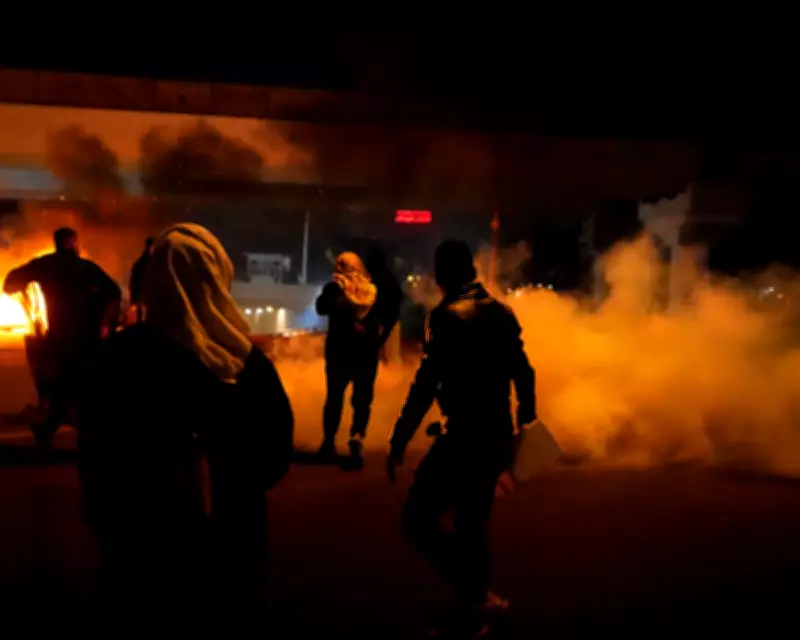
The conflict has already expanded beyond direct US-Iran engagements. Iranian forces have targeted Bahrain, Kuwait, Saudi Arabia, Qatar, and the United Arab Emirates—all nations hosting American military facilities. Retaliatory missile strikes against Israel further demonstrate the war's broadening scope.
Potential Iranian escalation could include blocking the Strait of Hormuz, through which approximately twenty percent of global oil supplies transit annually. Such action would create worldwide economic shockwaves, affecting energy markets and international stability.
Internal Dynamics and Strategic Calculations
The Trump administration anticipates mass popular uprising against Iran's government, similar to January's nationwide protests. However, historical patterns suggest security forces would respond with increased ferocity when facing existential threats. While significant segments of Iranian society oppose the current government, assuming complete lack of popular support would be dangerously simplistic.
American and Israeli strategy relies heavily on air and missile campaigns rather than ground troop deployment. This approach effectively expects unarmed Iranian civilians to serve as proxy ground forces through mass rebellion—a risky proposition with uncertain outcomes.
Historical Precedents and Future Uncertainties
Previous American regime change operations in Iraq, Libya, and Afghanistan resulted not in stability or democracy but prolonged chaos, internal violence, refugee crises, and transnational terrorism. Iran presents even greater challenges due to its larger population, strategic location spanning vital energy corridors, and complex ethnic and political diversity.
With territory exceeding France, Germany, and Spain combined, and ninety-three million citizens holding competing visions for their nation's future, sudden power vacuum in Iran could generate unprecedented regional instability. The consequences would likely extend beyond Middle Eastern borders, disrupting global energy markets and international security architectures.
Ultimately, neither American nor Israeli policymakers can accurately predict this conflict's trajectory. Military action, once initiated, frequently produces unintended consequences that prove both uncontrollable and enduring, creating ripple effects that outlast initial strategic calculations.




