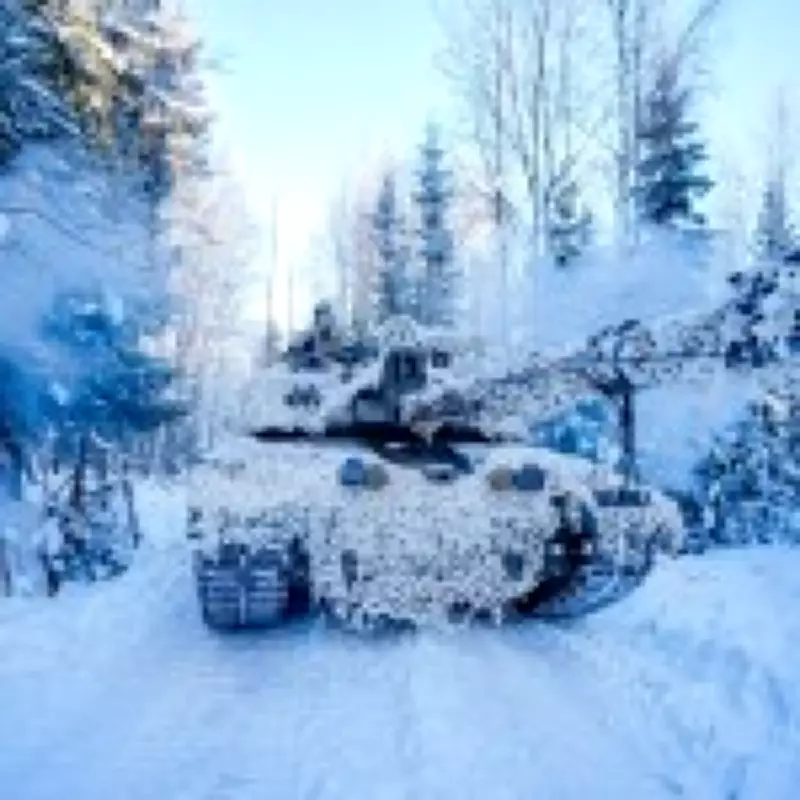
British Forces Conduct NATO Winter Training in Estonia Amid Alliance Tensions
A British commanding officer has declared that NATO feels stronger than ever as soldiers from multiple nations gather for a rigorous training exercise in the snowy landscapes of Estonia. Lieutenant Colonel Mark Luson, commanding officer of the Royal Tank Regiment, emphasised that the exercise at the Tapa military base, involving approximately 1,250 troops, serves as a clear demonstration of the alliance's robust health and operational readiness.
Operation Cabrit and Forward Land Forces Deployment
British forces are currently deployed to Estonia and Poland under Operation Cabrit, which represents the United Kingdom's contribution to NATO's Forward Land Forces in these key Eastern European nations. This deployment comes at a time when political tensions within NATO have escalated in recent weeks, largely due to controversial statements from former US President Donald Trump regarding potential territorial annexations. However, Lt Col Luson reported that these broader concerns have not dampened the morale or focus of the troops on the ground.
He stated, 'Right now, on this training area, we have got a US tank company part of the exercise, we've got the French company as part of the Forward Land Force battle group, and operating alongside Estonian partners as well. So NATO here feels stronger than ever.' This multinational collaboration underscores the alliance's commitment to collective defence and interoperability.
Exercise Winter Camp: Adapting to Extreme Cold
The Royal Tank Regiment has been stationed in Estonia since September of the previous year, and troops are now actively engaged in Exercise Winter Camp. This exercise is specifically designed to ensure that NATO forces are fully accustomed to operating in severe cold weather conditions, which are critical for defence preparedness in Northern European climates. This year's training has been particularly challenging due to an exceptionally harsh Estonian winter, with nighttime temperatures plummeting as low as -30°C.
Lt Col Luson added, 'This year is colder than it's been for the last couple of years. Things are still working, and so far, so good.' His comments highlight the resilience and adaptability of the troops and their equipment under extreme environmental stress.
Estonian Perspective on Multinational Training
Janek Baiduza, a company commander in the Estonian Defence Forces, praised the exercise for its effectiveness in helping foreign troops acclimatise to the region's demanding climate. He explained, 'This winter camp is perfect... It's colder than usual, challenging. The main reason is to exchange experiences, maybe for foreign and other countries who are participating in the winter camp, they can get a lot of experience, fighting in these conditions.' This exchange of expertise is vital for enhancing the overall capability and cohesion of NATO forces.
Future NATO Leadership and Special Operations
Looking ahead, the United Kingdom is poised to take a leading role in NATO's operational structures. After two years of intensive preparation and training, which included the construction of a new NATO Joint Operations Headquarters, the UK will lead the NATO Allied Reaction Force (ARF) Special Operations Component. Exercise Hyperion Storm serves as a validation exercise for the Task Groups that will operate under the command of the Special Operations Command Centre (SOCC).
The Ministry of Defence commented on this development, stating, 'Growing in complexity, the rigorous training has built on the skills required for Special Operations to ensure they are fully interoperable with NATO partners.' This focus on advanced special operations capabilities further reinforces the UK's commitment to strengthening NATO's defensive and responsive capacities in an increasingly uncertain geopolitical landscape.
The ongoing exercises in Estonia not only test military prowess in extreme conditions but also symbolise the enduring solidarity and strategic importance of the NATO alliance, even as it navigates internal political challenges and external threats.