UK Navy Foils Russian Submarine Surveillance of Undersea Cables
In a significant defence operation, the UK Royal Navy successfully thwarted Russian submarines attempting to survey vital undersea cables and pipelines in the North Atlantic. Defence Secretary John Healey announced that a month-long mission forced the Russian vessels to abandon their activities and retreat from the area.
Operation Details and Strategic Response
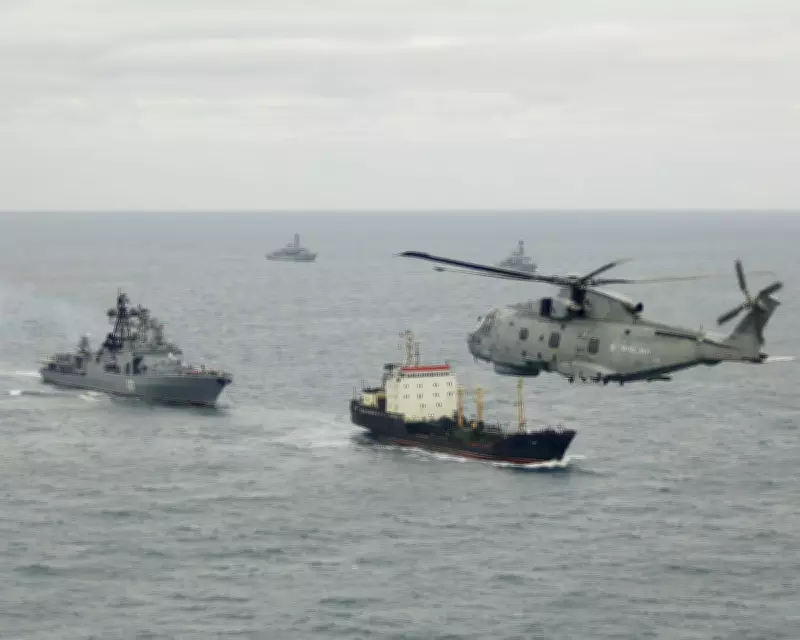
Speaking at a Downing Street press conference, Healey detailed that the operation involved a Royal Navy warship and a P8 marine patrol aircraft, which tracked and monitored three Russian submarines for over a month. The submarines included an Akula class nuclear-powered vessel and two deep-sea submarines from Russia's directorate for deep sea research, known as Gugi.
The operation did not occur in UK territorial waters but within the exclusive economic zone, extending up to 200 nautical miles from the coastline. Healey emphasized that this activity took place while global attention was focused on the Middle East, due to recent US-Israeli actions against Iran.
Direct Message to President Putin
Healey issued a stern warning to Russian President Vladimir Putin, stating, "We see you. We see your activity over our cables and our pipelines, and you should know that any attempt to damage them will not be tolerated and will have serious consequences." He confirmed there is no evidence of damage to the infrastructure but noted that UK forces, alongside allies, are verifying this.
Describing the operational tactics, Healey explained that the UK forces ensured 24/7 monitoring of the submarines. The Akula submarine retreated to Russia after being closely tracked, while the two Gugi submarines were monitored in and around UK waters before eventually heading north. The operation involved approximately 500 UK personnel.
Broader Implications and NATO Concerns
The Ministry of Defence highlighted that Gugi vessels are capable of both surveying and damaging underwater infrastructure, raising alarms about Moscow's intentions amid heightened tensions following the invasion of Ukraine. This incident underscores growing NATO concerns about the security of undersea cables and pipelines, which are critical for global communications and energy supplies.
Healey asserted that the operation demonstrates the UK's capability to detect, deter, and respond to threats, reinforcing the need for robust defence spending. When questioned about recent remarks from Donald Trump regarding European NATO contributions, Healey declined to comment on social media but affirmed ongoing discussions with US officials, emphasizing a shared commitment to NATO's article 5.
This event marks a pivotal moment in UK-Russia relations, showcasing the Royal Navy's vigilance in protecting national and allied interests against covert maritime threats.