
UK Government Coordinates Return of Stranded Citizens from Middle East
As the conflict between the United States, Israel, and Iran enters its fifth day, the British government has initiated efforts to repatriate thousands of stranded nationals from affected regions. Prime Minister Sir Keir Starmer confirmed that more than 1,000 British citizens have already returned to the United Kingdom via commercial flights from the Middle East.
Current Travel Restrictions and Flight Operations
The Foreign, Commonwealth & Development Office has issued strict travel advisories, recommending against all but essential travel to Bahrain, Kuwait, Qatar, and the United Arab Emirates. Complete travel prohibitions are in effect for Israel and Palestine. British nationals in these regions are urged to consult the official government website for real-time updates.
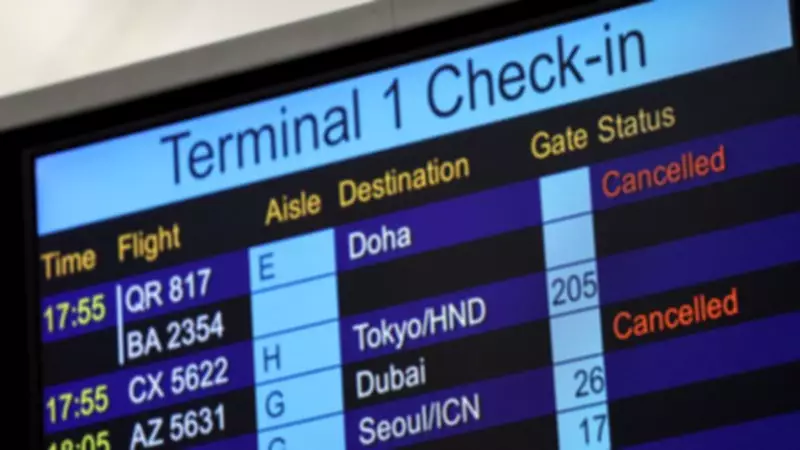
Following days of widespread flight cancellations, airlines are gradually restoring services from the Middle East to Britain. Emirates operated seven flights from Dubai to the UK on Wednesday, while Etihad scheduled two departures from Abu Dhabi. Virgin Atlantic confirmed a flight from Dubai to London Heathrow, and British Airways announced operations from Muscat International Airport in Oman.
British Airways has established a dedicated phone line (+44 203 467 3854) for customers with existing bookings in Oman or the UAE seeking seats on flights scheduled for March 6 and 7.
Government-Chartered Flights and Priority Evacuation
The first government-chartered flight departed from Muscat International Airport at 11 PM local time on Wednesday, with priority given to vulnerable individuals. These flights are available to British nationals, their partners, and children under 18 possessing valid travel documents. Non-British dependents must have valid visas or permission to enter the UK for stays exceeding three months.
Authorities have explicitly instructed people not to travel to airports unless directly contacted by officials, ensuring orderly processing and avoiding overcrowding at departure points.
Cruise Industry Disruptions and Regional Impact
The conflict has significantly disrupted maritime travel, with thousands of cruise passengers stranded in Dubai and Doha. At least six cruise ships operated by MSC Cruises, TUI Cruises, and Celestyal Cruises have been ordered to remain in secure areas until new shipping routes can be established, according to travel portal Hosteltur.
Registration Requirements and Mass Evacuation Planning
With US President Donald Trump indicating that attacks may continue for four to five weeks, the Foreign Office is strongly urging British nationals in Middle Eastern countries to register their presence. Foreign Secretary Yvette Cooper reported that 130,000 individuals have already registered across Bahrain, Israel, Kuwait, Palestine, Qatar, and the United Arab Emirates.
UK officials are developing contingency plans for potential mass evacuation scenarios should Gulf airspace remain inaccessible. Urban Coningham, a research fellow at the Royal United Services Institute, warned that such an operation would represent "the biggest evacuation since the Second World War" and would be among the most complex consular efforts in British history.
Prime Minister Starmer emphasized that the government is "working at speed with our partners in the region to take whatever measures we can to ensure that our people can return as safely and as swiftly as possible." Officials continue to explore all available options while preparing for worst-case scenarios.




