UK Foreign Secretary Dismisses Claims of Escalating Middle East Conflict
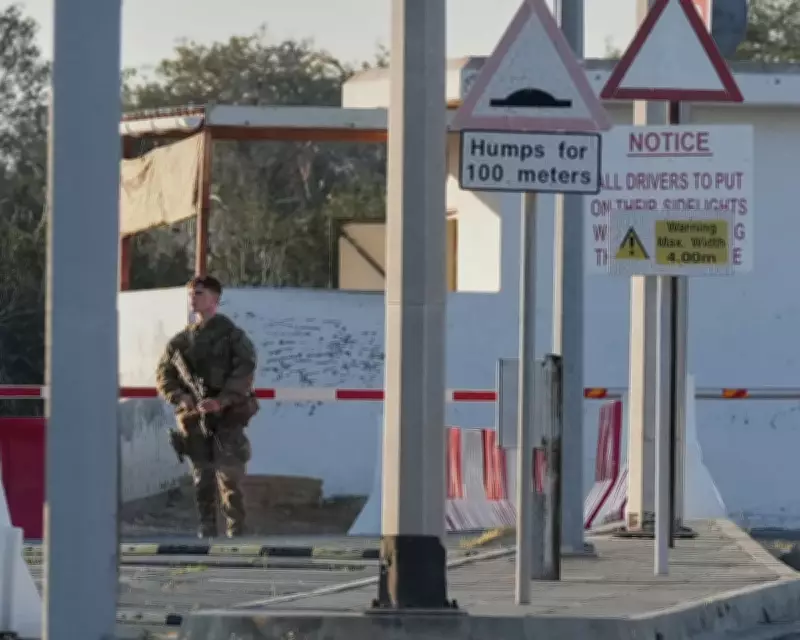
Foreign Secretary Yvette Cooper has firmly rejected assertions that the United Kingdom is being drawn into another Iraq-style conflict in the Middle East, following a drone strike on a British military base in Cyprus. The incident occurred early Monday when an Iranian drone targeted RAF Akrotiri, part of a broader series of retaliatory strikes by Tehran across the region.
Diplomatic Tensions and Military Response
The attack on the Cyprus base came in response to a US-Israeli operation on Saturday that resulted in the death of Iran's supreme leader, Ayatollah Ali Khamenei. While the UK had no involvement in the initial strike, Prime Minister Keir Starmer announced late Sunday that he had granted the United States permission to utilize British military bases for defensive actions against Iranian missile sites. This decision aims to mitigate the impact of further Iranian aggression.
Cooper emphasized the UK's commitment to a diplomatic resolution during an interview with Sky News on Monday. "We took a very specific decision not to provide support for strikes that were taking place over this weekend," she stated. "We have been clear that we believe there should be a diplomatic process, negotiations process."
Evacuation Plans for British Nationals
In light of the escalating hostilities, the UK government is actively considering plans to evacuate approximately 300,000 British citizens from the Middle East. Cooper acknowledged the precarious situation, noting that Iranian missiles and drones have already caused significant damage and casualties in the Gulf region, Israel, and Cyprus.
"We're working on every possible option," Cooper said regarding the safety of UK nationals. "What we want, obviously, is for a resolution and for airspace to be reopened so people can get normal flights back again. But of course, we are looking at a wide range of options, working with the travel industry and with government evacuation if necessary."
Defensive Measures and Legal Justifications
The agreement to allow US use of British bases is framed as a limited defensive action. Cooper clarified that the move is specifically aimed at protecting Gulf nations and British interests in the region, rather than endorsing broader offensive operations. "It's a specific, limited agreement about the defence of Gulf countries," she explained, highlighting that many of these nations were not involved in the strikes against Iran.
Prime Minister Starmer's statement underscored the defensive nature of the decision: "The only way to stop the threat is to destroy the missiles at source in their storage depots or the launchers which are used to fire the missiles. The US has requested permission to use British bases for that specific and limited defensive purpose."
The government has also released a legal summary justifying its actions under the principle of collective self-defence, asserting that the UK is responding to requests for support from regional allies.
Political Reactions and Security Precautions
The decision has sparked concern among opposition parties, with the Liberal Democrats calling for a parliamentary vote on the matter. Meanwhile, the Ministry of Defence has taken precautionary measures at RAF Akrotiri, relocating personnel to nearby accommodations on Cyprus following the drone strike. Cooper described the incident as an "unmanned drone strike specifically on the airport runway," though further details remain undisclosed.
As tensions continue to mount, the UK government maintains that its actions are focused on de-escalation and protection, rather than entanglement in a prolonged conflict. The situation remains fluid, with ongoing assessments of evacuation needs and diplomatic efforts to stabilize the region.