
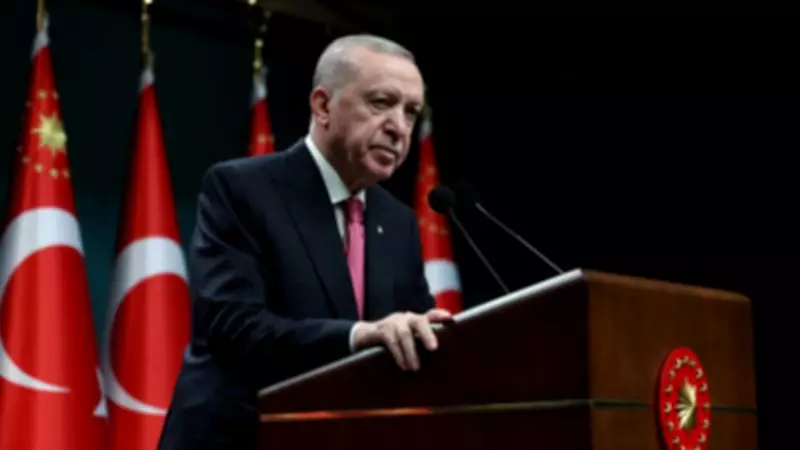
Turkey's President Erdogan Issues Clear Warning Against Regional War Escalation
Turkish President Recep Tayyip Erdogan, known for his tough and no-nonsense reputation, delivered an unequivocal message during a cabinet meeting in Ankara on Monday. He firmly stated that Turkey must not be drawn into the ongoing conflict with Iran, emphasizing national security as the top priority for the country's 86 million citizens.
"Our primary goal is to keep our country clear of this fire. Ensuring Turkey's security and the peace of its 86 million citizens is our greatest priority," Erdogan declared to his ministers.
NATO Defenses Intercept Second Iranian Ballistic Missile
The president's statement came on the same day that NATO defense systems successfully intercepted a second ballistic missile fired from Iran toward Turkey. Debris from the interception landed in a field in Gaziantep, a southern Turkish city. This follows a similar incident days earlier when another missile headed toward Turkish airspace was neutralized.
Turkish Foreign Minister Hakan Fidan issued a cautious warning to Iran following the first interception, urging their neighbors not to test Turkey's patience. "We are not a country that gets provoked easily," Fidan stated, adding that clear warnings were delivered to Iranian officials about the missile incidents.
Erdogan's Diplomatic Efforts to De-escalate Tensions
At a Monday Iftar dinner for ambassadors in Ankara, President Erdogan expanded on his position, rejecting historical patterns of conflict in the region. "We do not accept the Middle East geography to be put on the operating table just like a century ago," he asserted.
The Turkish leader revealed he has been actively working to reduce tensions through diplomatic channels, conducting talks with more than a dozen world leaders to find a peaceful resolution to the crisis. On Monday evening, it emerged that Erdogan had a phone conversation with Iranian President Masoud Pezeshkian at Iran's request.
According to Turkish social media posts, Erdogan told his Iranian counterpart that Turkey "doesn't approve of unlawful interventions against Iran and Iran's targeting of the brotherly countries in the region." The Turkish president emphasized that targeting neighboring countries benefits no one and must cease immediately.
Heightened Security Measures and Border Restrictions
In response to the escalating situation, Turkey has significantly tightened security along its extensive border with Iran. Sky News journalists monitoring the border reported minimal movement from Iran into Turkey, despite normally visa-free travel between the two countries through three border gates.
Currently, Iran is only permitting Iranian citizens to enter, leading to limited cross-border activity. Observers noted higher numbers of Iranians attempting to return to their homeland to check on relatives than those departing.
The missile incidents prompted Turkey to summon Iran's ambassador in Ankara to the foreign ministry for explanations. In a further demonstration of heightened security concerns, Turkey has deployed six F-16 fighter jets to the Turkish Republic of Northern Cyprus as part of a phased approach to enhancing regional security.
International Response and Travel Advisories
The United States has raised its travel advisory for Turkey to Level Four, urging Americans to avoid travel to southeast Turkey and ordering non-emergency government personnel and their families to leave the Consulate General in Adana due to security risks. American citizens in southeast Turkey have been strongly encouraged to depart immediately.
Despite hosting American forces at Incirlik airbase in southern Adana Province, Turkey has maintained its position of not allowing its bases or airspace to be used in military operations against Iran.
The situation remains fluid as diplomatic efforts continue amid concerns that the conflict could spill across European borders, with all parties emphasizing the need for de-escalation and peaceful resolution.




