Legal Experts Condemn Trump Administration's Iran Military Actions as Illegal War
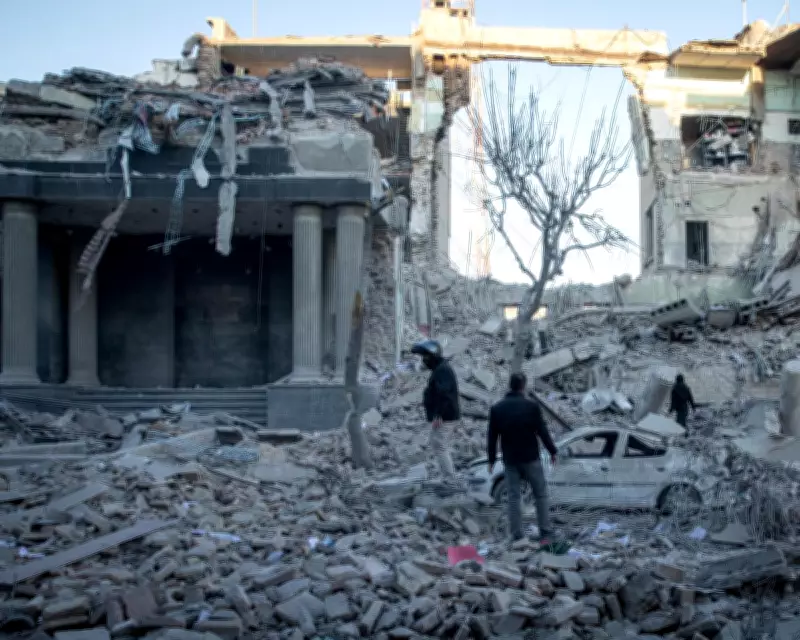
The Trump administration is currently engaged in what numerous legal scholars and bipartisan lawmakers characterize as an illegal war against Iran, a conflict that directly violates both the United States Constitution and established international armed conflict laws. This military offensive, initiated on February 28th, has resulted in hundreds of casualties across multiple nations, including six American personnel, with the conflict expanding into Lebanon, Syria, Iraq, Israel, and the Persian Gulf region.
Shifting Justifications and Constitutional Concerns
The administration has presented evolving explanations for launching attacks against Iran, vacillating between describing a pre-emptive war of choice aimed at degrading Iran's offensive and nuclear capabilities, and asserting that Iran showed unwillingness to renounce nuclear ambitions. Additional justifications have included claims that the United States joined the attack to protect American interests after Israel committed to launching its own military offensive.
President Trump declared in his first public remarks from Washington, "An Iranian regime armed with long-range missiles and nuclear weapons would be a dire threat to every American. We cannot allow a nation that raises terrorist armies to possess such weapons." The president has outlined broader wartime objectives involving eliminating threats from the Iranian regime and their regional proxy forces, though without establishing a clear timeline for achieving these various goals.
Legal Scholars Challenge Administration's Rationale
Several prominent legal experts have challenged the legal foundation supporting the administration's wide-ranging explanations for waging war. Wells Dixon, a senior attorney at the Center for Constitutional Rights, stated after reviewing Trump's rationale, "Those are military policy objectives. They are not a legal basis to launch an armed attack against another country."
Marko Milanovic, a professor of International Law at the University of Reading, acknowledged that Iran may pose a threat but emphasized, "Using force would require a basis in self defense." He noted there are numerous alternative ways to respond to perceived threats without resorting to military force.
Congressional Oversight and War Powers Violations
The Senate is scheduled to vote on whether to halt Donald Trump's military offensive against Iran, with several lawmakers expressing serious concerns about constitutional violations. After the Vietnam War, the United States adopted new constitutional provisions requiring the president to consult with Congress before committing troops to hostilities. However, Secretary of State Marco Rubio only briefed the bipartisan Gang of Eight about U.S. plans to attack Iran, a group of lawmakers with access to classified intelligence regarding covert actions.
Senator Tim Kaine criticized this approach, stating, "Their pattern, thus far, seems to be to take action, and then give [us] a briefing afterwards. They're trying to consign Congress to the role of a spectator, but that's not the role that Article 1 of the constitution assigns to us."
Dixon noted there is "a little bit of flexibility" regarding whether the president may commit troops without first consulting Congress, but emphasized that "certainly he has to notify them within 48 hours." The White House submitted a War Powers report to Congress on Monday night, but a separate requirement under the War Powers Act mandates that troops must be withdrawn from hostilities within 60 to 90 days unless Congress votes to authorize the operation.
Questionable Legal Concepts and Expert Analysis
Rubio's statements invoked two legal concepts that could potentially justify waging war abroad: the concept of an "imminent threat" to American lives, and the concept of launching preemptive strikes as an act of self-defense. International law does contain carve-outs permitting states to act in self-defense, with the concept of an "imminent threat" measured against evidence of a clear, visible, and impending risk.
However, experts argue that neither criteria was present in the case of Iran. Brian Finucane, a former State Department lawyer, explained, "For something to be lawful self defense, it has to be necessary – in the sense that there's no alternative. That's not the situation here. There was another option: the US could have restrained Israel from attacking in the first place."
Several lawmakers shared this assessment of Iran's potential threat. Mark Warner, the Democratic vice-chair of the Senate intelligence committee, stated, "There was no imminent threat to the United States of America by the Iranians. There was a threat to Israel. If we equate a threat to Israel as the equivalent of an imminent threat to the United States, then we are in uncharted territory."
Potential Impact of Congressional Action
This week's war powers vote may significantly influence how Trump proceeds with military action against Iran, even if it ultimately cannot sustain enough support to override a likely presidential veto. Finucane observed, "I think it can be an important political signal if there's sufficient bipartisan support."
Previous congressional votes have demonstrated their ability to deter further U.S. aggression. Kaine, who has introduced similar legislation to govern U.S. engagements in the Caribbean Sea and Venezuela, noted, "The president announced after one of our previous votes that he was scrapping a second wave of strikes on Venezuela. The mere fact of the vote, even if it's unsuccessful, can have an impact."
The Trump administration has previously touted its success in "obliterating" Iran's nuclear facilities, yet Trump revived concerns about an Iranian threat in his State of the Union address, claiming Iran was "working to build missiles that will soon reach the United States of America." Notably, the president has not provided public evidence supporting this specific threat assessment.