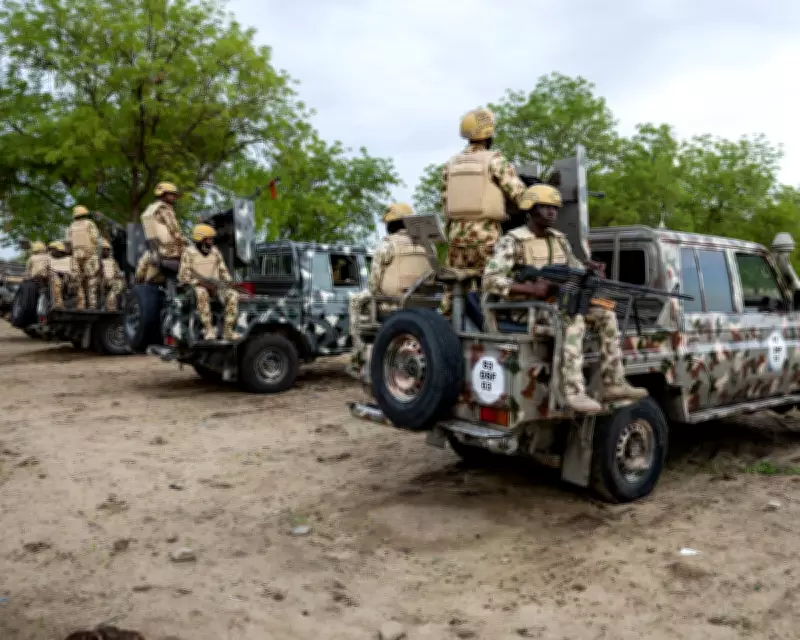
President Donald Trump announced on Friday that US and Nigerian forces have killed Abu-Bilal al-Minuki, described as the global second-in-command of the Islamic State (ISIS). The operation, which Trump called a 'very complex mission,' was carried out at his direction.
Details of the Operation
In a post on his Truth Social platform, Trump stated: 'Tonight, at my direction, brave American forces and the Armed Forces of Nigeria flawlessly executed a meticulously planned and very complex mission to eliminate the most active terrorist in the world from the battlefield.' He identified the target as Abu-Bilal al-Minuki, 'second in command of ISIS globally,' and claimed that al-Minuki believed he could hide in Africa but was tracked through intelligence sources.
Trump thanked the Nigerian government for its partnership but did not disclose the exact location or method of the attack. Al-Minuki, a Nigerian national, was designated a 'specially designated global terrorist' by the Biden administration in 2023. The US State Department at the time described him as a Sahel-based ISIS senior leader within the group's general directorate of provinces, which provides operational guidance and funding globally.
Context of US-Nigerian Cooperation
The operation follows US airstrikes targeting ISIS-linked militants in Nigeria in December. Since then, Washington has deployed drones and 200 troops to provide training and intelligence support to the Nigerian military against ISIS and al Qaeda-linked insurgencies spreading across West Africa. Nigerian officials have emphasized that US forces operate strictly in a non-combat role.
Trump has previously criticized Nigeria for failing to protect Christians from Islamist militants, though Nigeria denies religious discrimination, stating its security forces target all armed groups attacking both Christians and Muslims.
With the removal of al-Minuki, Trump asserted that 'ISIS's global operation is greatly diminished.' The operation highlights ongoing US counterterrorism efforts in Africa, where militant groups continue to pose threats.