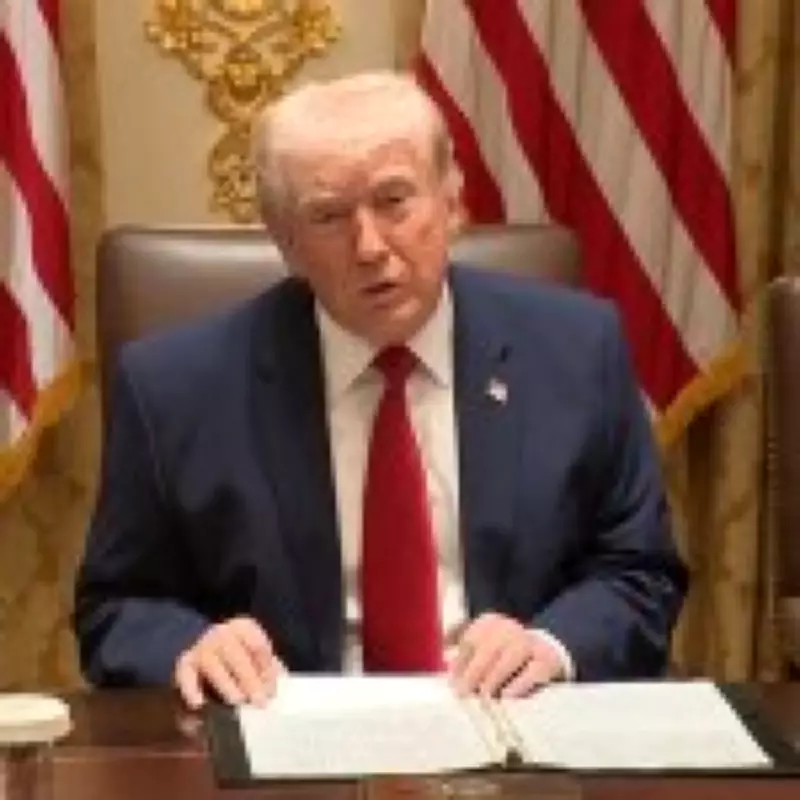
Trump Dismisses UK's Aircraft Carriers as Mere 'Toys' in Scathing Remarks
Former United States President Donald Trump has launched a verbal assault on the United Kingdom's flagship aircraft carriers, derisively labeling HMS Queen Elizabeth and HMS Prince of Wales as "toys" when compared to American naval assets. In a recent statement, Trump expressed frustration over what he perceives as inadequate support from NATO allies during ongoing Middle Eastern conflicts.
NATO's Delayed Involvement Draws Presidential Ire
Trump specifically criticized NATO nations for offering assistance only after conflicts had subsided, rather than providing support during active hostilities. "They all want to help when they're annihilated, the other side is annihilated," Trump remarked sarcastically. "Actually made a statement, a couple of them, that 'we want to get involved when the war is over'. No, it's supposed to get involved with the war's beginning, or even before it begins."
The former president referenced Britain's recent offer to deploy naval support, responding with mock gratitude: "'We'll send our aircraft carrier when the war is over'. I said 'oh that's wonderful, thank you very much. Don't bother. We don't need it'."
British Naval Deployments Amid Regional Tensions
This diplomatic friction emerges against a backdrop of heightened military activity in the Eastern Mediterranean. The British destroyer HMS Dragon recently arrived in the region to support Cyprus operations, three weeks following an Iranian drone strike on RAF Akrotiri. Naval forces expedited the ship's deployment, completing a typically six-week refit in just six days amid escalating Middle Eastern tensions.
While French, Greek, and Italian vessels have participated in Cyprus protection efforts, Britain has faced scrutiny regarding its preparedness to defend overseas bases following the drone attack and broader regional escalation. Defense officials attribute deployment delays to increasingly fragile geopolitics and multiple concurrent security threats that complicate strategic decisions.
International Diplomacy and Security Complexities
Trump's comments coincide with his assertion that Iran is eager to negotiate, a claim promptly rejected by Iranian Foreign Minister Abbas Araghchi. "We do not plan on any negotiations," Araghchi stated definitively on Iranian state television, emphasizing Tehran's commitment to self-defense through intermediary channels.
Potential US-Iran negotiations would encounter significant obstacles, particularly concerning Iran's ballistic missile and nuclear programs. Meanwhile, American allies globally are navigating delicate diplomatic terrain to avoid direct conflict entanglement, as regional instability threatens international security, trade networks, and travel corridors.
The verbal exchange highlights ongoing tensions within Western military alliances and raises questions about burden-sharing in multinational security operations. As geopolitical landscapes evolve, such public criticisms from influential political figures may impact diplomatic relations and defense cooperation frameworks moving forward.