
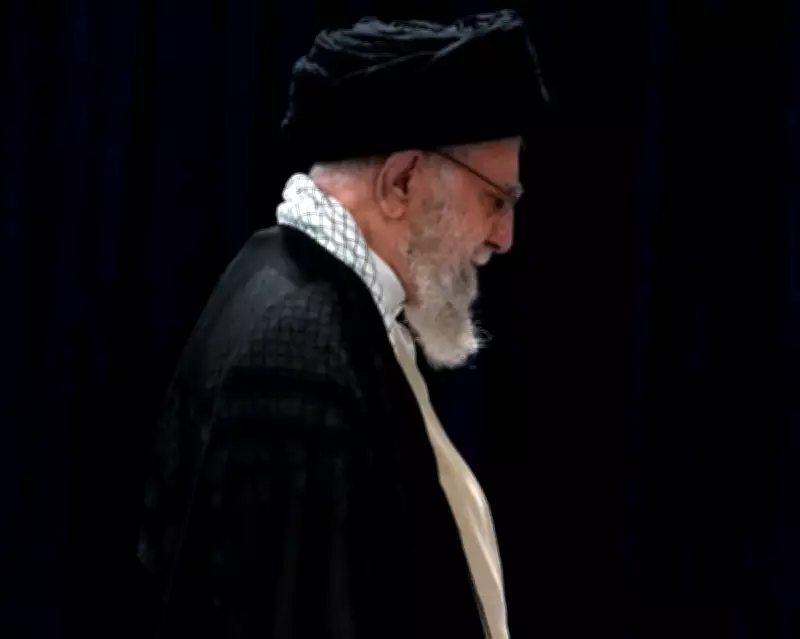
Trump Announces Death of Iran's Supreme Leader in US-Israel Military Operation
In a dramatic escalation of tensions in the Middle East, former US President Donald Trump has claimed that Ayatollah Ali Khamenei, Iran's supreme leader, has been killed in a missile strike. Trump made the announcement via a post on his Truth Social platform, declaring the death of what he called "one of the most evil people in History."
Regime Change Operation Launched
The alleged killing occurred during the opening phase of a joint US-Israeli military campaign that began on Saturday morning. According to Trump, the operation involved a barrage of missiles and airstrikes targeting Iranian leadership and infrastructure. The stated goal of the campaign is regime change in Iran, with Trump asserting this presents "the single greatest chance for the Iranian people to take back their Country."
Trump claimed that Khamenei was unable to evade "our Intelligence and Highly Sophisticated Tracking Systems" working in coordination with Israel. He further suggested that many members of Iran's Islamic Revolutionary Guard Corps (IRGC), military, and security forces were no longer willing to fight and were seeking immunity.
Conflicting Reports and Regional Fallout
Israeli Prime Minister Benjamin Netanyahu had earlier indicated there were "many signs" Khamenei was deceased, with Israeli officials briefing media that his body had been recovered. However, Iranian Foreign Minister Abbas Araghchi contradicted these claims, stating to NBC News that both Khamenei and President Masoud Pezeshkian were alive "as far as I know."
The alleged death of Iran's supreme leader represents a potentially significant development in the rapidly escalating conflict. Khamenei has wielded unparalleled political authority in Iran since assuming the position of supreme leader in 1989, making his reported demise a major blow to the country's leadership structure.
Military Campaign and Iranian Response
The US-Israeli operation, which Trump has dubbed "Operation Epic Fury," began with waves of air attacks across Iran. Satellite imagery reportedly shows Khamenei's secure compound sustained heavy damage during the initial barrage. Netanyahu announced that Israeli strikes had also eliminated "several leaders" involved in Iran's nuclear program, with plans to continue targeting related sites in coming days.
In response to the attacks, Iran has launched retaliatory missile and drone strikes against multiple targets, including:
- US military bases and interests throughout the region
- The headquarters of the US Navy's Fifth Fleet in Bahrain
- Israeli residential areas
- The Fairmont hotel in Dubai
- A high-rise building in Bahrain
Iranian media reports indicate that 201 people have been killed and 747 injured in the initial US-Israeli attacks, including more than 80 children at a school.
Administration Justification and Regional Implications
A senior Trump administration official explained the decision to launch strikes, citing Iran's ballistic missile program as presenting an "intolerable" threat to US forces and regional allies. The official claimed the US had intelligence suggesting Iran was considering a pre-emptive strike.
"The threat from Iran is ultimately their ambition to acquire nuclear weapons, but in the short term, it is the conventional weapon, the conventional missile capability, that they have, particularly in the southern belt, that poses a threat to the United States and our allies in the region," the official stated.
US Central Command (CENTCOM) reported successfully defending against hundreds of Iranian missiles and drones with no US casualties reported. Meanwhile, Iran's Revolutionary Guards have threatened all US bases and interests in the region, vowing to continue retaliation until "the enemy is decisively defeated."
Leadership Vacuum and Political Uncertainty
With Khamenei reportedly killed and not heard from since the strikes began, attention turns to Iran's political future. According to Iranian constitutional procedures, the Assembly of Experts—a council of religious leaders—should convene to select a new supreme leader. However, analysts suggest the ultraconservative IRGC may be better positioned to consolidate power in the current chaotic circumstances.
Trump told NBC earlier on Saturday that "the people that make all the decisions, most of them are gone," adding that "a large amount of leadership" in Iran had been eliminated. Netanyahu echoed calls for regime change in his evening address, urging Iranians to "flood the streets and finish the job."
Iranian officials maintain they were not surprised by the US attacks and warned that consequences would be "long-lasting and extensive," with "all scenarios on the table including ones that were not previously considered." The conflict has plunged the Middle East into a new regional war with no certain timeline or outcome, potentially reshaping the geopolitical landscape for years to come.




