
Trump Rejects Claims Israel Pressured US into Iran Military Action
President Donald Trump has forcefully denied allegations that Israel compelled the United States to launch military strikes against Iran, attempting to counter a growing backlash within Congress and among his own political supporters. The controversy erupted following comments from Secretary of State Marco Rubio that fueled suspicions about the decision-making process behind Saturday's coordinated attacks.
Contradictory Explanations and Political Fallout
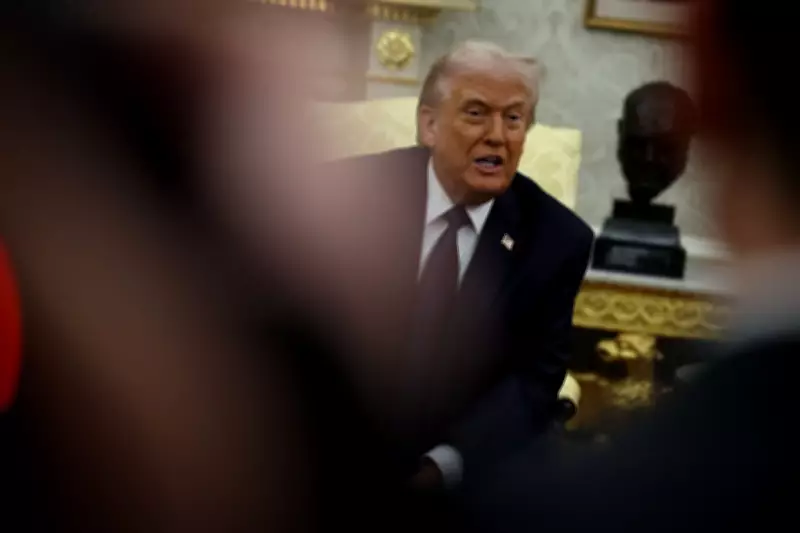
During a tense exchange with reporters, Trump directly contradicted suggestions that Israel had pushed the US into military action. "No. I might have forced their hand," the president declared, offering his own rationale for the preemptive strikes. "We were having negotiations with these lunatics, and it was my opinion that they were going to attack first. They were going to attack. If we didn't do it, they were going to attack first. I felt strongly about that."
This explanation stands in stark contrast to Rubio's account, delivered after a classified briefing with intelligence and military officials. The Secretary of State suggested the strikes were necessary to preempt Iranian retaliation against US interests following anticipated Israeli actions. "We knew that there was going to be an Israeli action," Rubio told reporters. "We knew that that would precipitate an attack against American forces, and we knew that if we didn't preemptively go after them before they launched those attacks, we would suffer higher casualties."
Democratic Outrage and Constitutional Concerns
Senate Democrats reacted with fury to Rubio's explanation, viewing it as evidence that Israeli interests rather than American priorities dictated the decision to engage in open warfare. Mark Warner, the ranking Democrat on the Senate Intelligence Committee, expressed grave concerns about the precedent being set. "There was no imminent threat to the United States of America by the Iranians. There was a threat to Israel. If we equate a threat to Israel as the equivalent of an imminent threat to the United States, then we are in uncharted territory."
Jeff Merkley, a Democratic senator from Oregon, posed a more fundamental question during a Senate speech: "Are we now such an enfeebled nation that Israel decides when we go to war?" Even Chuck Schumer, typically one of Israel's strongest supporters in Congress, called the administration's explanations "completely and totally insufficient," noting they "raised many more questions than they answered."
Growing Skepticism Among Conservative Voices
The controversy has extended beyond Democratic criticism, reaching into Trump's own political base. Prominent conservative voices have expressed skepticism about the administration's shifting justifications. Mike Cernovich, a influential pro-Trump social media figure, described Rubio's comments as "a record scratch moment" that represented "a sea change in foreign policy."
Matt Walsh of the right-wing Daily Wire magazine posted bluntly: "So he's flat out telling us that we're in a war with Iran because Israel forced our hand. This is basically the worst possible thing he could have said." Steve Bannon, Trump's former White House aide, questioned the strategic coordination on his War Room podcast: "If we knew Israel would strike and Iran would retaliate against us, where was the coordination? We need a strategic explanation."
Broader Context and Regional Implications
The debate over Israel's influence on US foreign policy comes amid shifting American public opinion regarding the Middle Eastern nation. Recent opinion polls show a sharp decline in support among Americans following Israel's military offensive in Gaza, which has resulted in approximately 70,000 Palestinian deaths since October 2023. This military campaign was launched in response to Hamas attacks that killed 1,200 people, primarily civilians, in Israel.
Israeli Prime Minister Benjamin Netanyahu has visited Trump multiple times in recent months to advocate for action against Iran's theocratic regime. Following the coordinated strikes, Netanyahu declared: "This coalition of forces allows us to do what I have yearned to do for 40 years: smite the terror regime hip and thigh. This is what I promised – and this is what we shall do."
The confusion extends to Trump's own statements about potential escalation. The president has sent mixed signals about whether he would deploy US ground forces in a "boots on the ground" capacity, a decision that would likely intensify domestic criticism. In his initial statement about Saturday's strikes, Trump claimed the goal was to "defend the American people by eliminating imminent threats from the Iranian regime."
Conservative journalist Megyn Kelly articulated the concerns of many Americans during her online broadcast, referencing the first four US casualties of Iranian retaliation: "My own feeling is that no one should have to die for a foreign country. I don't think those four service members died for the United States, I think they died for Iran or for Israel... this feels very much to me like it is clearly Israel's war. It would explain perfectly why President Trump is having so much difficulty explaining why we are doing this."
As Congress prepares to vote on war powers resolutions asserting the constitutional requirement for presidential consultation before waging war, the administration faces mounting pressure to provide consistent explanations for its foreign policy decisions. The controversy highlights deepening questions about the alignment of US and Israeli interests and the transparency of decision-making processes at the highest levels of government.




