
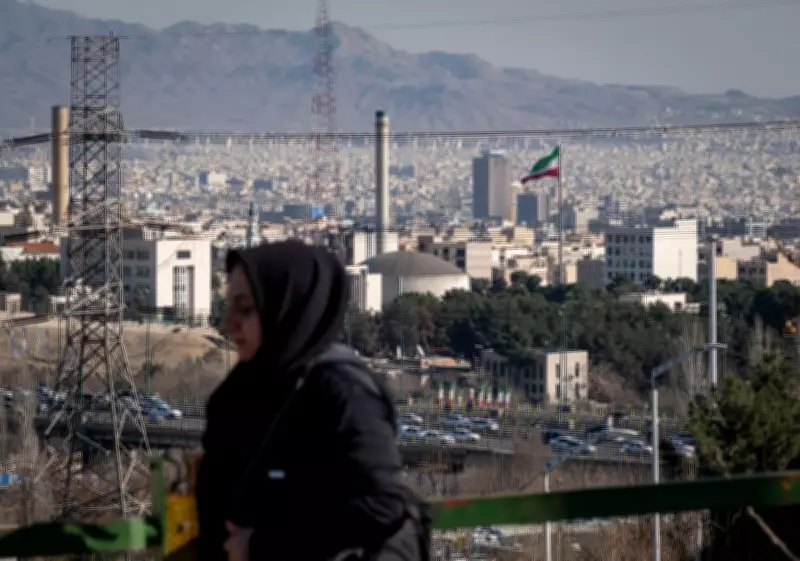
Trump Administration Faces Contradictions in Push for Iran Military Action
As tensions escalate between the United States and Iran, advisers to former President Donald Trump are scrambling to justify a potential large-scale military intervention that would mark the most significant U.S. engagement since the Iraq war. The White House's rationale for action appears fraught with contradictions, particularly regarding Iran's nuclear capabilities and ballistic missile program.
Questionable Claims About Iran's Missile Capabilities
During his recent State of the Union address, Trump asserted that Iran poses a direct threat to the United States, claiming the country was "working to build missiles that will soon reach the United States of America." However, this declaration lacks supporting evidence from either the White House or Pentagon. Current U.S. intelligence assessments suggest Iran remains years away from developing intercontinental ballistic missiles capable of reaching American soil.
A public defense intelligence agency report from 2025 indicates Iran could potentially develop a militarily viable ICBM by 2035 if Tehran decides to pursue that capability. Yet this projected threat pales in comparison to existing dangers from Russia, China, and North Korea. Notably, the annual threat assessment released by the director of national intelligence in March failed to address any direct military threat to the U.S. homeland from Iran's ballistic missile program.
Administration Officials Attempt to Square the Circle
U.S. Secretary of State and National Security Adviser Marco Rubio attempted to reconcile Trump's statements with intelligence realities during recent press remarks. "They are trying to achieve intercontinental ballistic missiles," Rubio stated, while declining to speculate on timelines. He pointed to Iran's satellite launches and increasing missile ranges as evidence of progress toward eventually developing weapons that could reach the continental United States.
The Iranian foreign minister has dismissed Trump's claims about ballistic missiles and nuclear programs as "big lies," while Tehran maintains its missile program represents a non-negotiable "red line" in ongoing diplomatic talks meant to prevent open conflict.
Conflicting Narratives on Nuclear Program Status
Further contradictions emerge regarding Iran's nuclear ambitions. Middle East envoy Steve Witkoff, a real-estate developer and longtime Trump associate, recently claimed Iran was "probably a week away from having industrial-grade bomb-making material" during an interview with Lara Trump. This assertion directly conflicts with Trump's previous declaration that U.S. military action had "obliterated" Iran's nuclear program during last summer's bombing campaigns.
White House Press Secretary Karoline Leavitt attempted to reconcile these positions, stating: "Operation Midnight Hammer was an overwhelmingly successful mission that did, in fact, obliterate Iran's nuclear facilities. However, this does not mean Iran may never try again to establish a nuclear programme that could directly threaten the United States and our allies abroad; that is what the president wants to ensure can never happen again."
Regional Threats and Strategic Considerations
While Iran's missiles may not threaten the U.S. homeland, they do represent significant regional dangers. U.S. intelligence estimates indicate Iran possesses the largest missile stockpile in the Middle East, capable of targeting Israel and American bases throughout the region, including Al Udeid airbase in Qatar. During recent conflicts, Iran launched over 550 ballistic missiles and 1,000 attack drones, with approximately 43 penetrating defense systems to reach their targets.
General Dan Caine, chair of the joint chiefs of staff, has warned Trump that renewed conflict with Iran could further deplete U.S. interceptor missile stockpiles needed for future threats, including those from China. Israeli officials estimate Iran maintains approximately 1,500 ballistic missiles and 200 launchers, with numbers likely increasing as Tehran replenishes its arsenal.
Analysts note that Iranian leadership views these weapons as essential deterrents against U.S. or Israeli attacks. Benjamin Jensen, director of the Futures Lab at the Center for Strategic and International Studies, observed: "Iran sees its ballistic missiles as a key bargaining chip and essential for deterrence, implying a need to preserve the force for future standoffs."
As diplomatic efforts continue in Geneva, the Trump administration faces mounting challenges in presenting a coherent justification for military intervention while navigating contradictory intelligence assessments and Iran's steadfast commitment to its missile program as a national security priority.




