Eyewitness Report from Tehran: A City Under Siege
Leaving Tehran, we carried a heavy sense that innocent civilians are bracing for a prolonged war, facing terrifying uncertainty daily. Iran appears to have anticipated this conflict for years, with a leadership that is hydra-headed and adept at self-replacement. Despite enemy claims of decapitation, it has demonstrated surprising speed and strategic response to attacks.
Living in Fear: The Reality of Bombardment
Life under the constant threat of bombardment is utterly terrifying. In Tehran, explosions echo almost hourly, leaving no place feeling safe. Our team moved swiftly, avoiding prolonged stays in any location as police stations and checkpoints became targets. Nights were illuminated by explosions and air defence fire, a grim routine Iranians endure day and night.
As one of only two international news teams permitted into Iran since the war began, we spent a week there, joining a handful of others. Entry was difficult, reaching Tehran a challenge, and operating within the city proved hazardous. We took these risks to address two critical questions: How are Israel and America's air strikes affecting Iran's people? And what are the plans of its battered yet resilient government?
Civilian Suffering: The Human Cost of Airstrikes
At multiple airstrike sites, the answer to the first question was tragically evident. Innocent civilians are increasingly bearing the brunt of the campaign. For instance, a pensioner shared his anguish as his daughter perished in a missile strike that demolished her apartment block, along with neighboring buildings. The concept of precision targeting loses meaning amidst such destruction, where a paramilitary center was hit but entire city blocks were also obliterated.
In a hospital, we witnessed heart-wrenching scenes. Four-year-old Anita lay in intensive care with severe head injuries from an airstrike, her mother Zeebar pleading by her side. Doctors held little hope for her recovery. Nearby, Fatima tended to her son, injured by shrapnel from another strike, emphasizing that civilians are the ones suffering. Regardless of targets, bombs in densely populated areas inevitably cause civilian casualties.
Government Control and Public Sentiment
The tension in Tehran traces back to January's crackdown on protests, where security forces reportedly killed thousands. Government supporters often blamed foreign agents for the unrest. While filming was restricted to permitted areas, off-camera conversations revealed contempt for the authorities' extremism and hopes for post-war change.
Addressing the second question, Iran's leadership appears confidently in control, at least for now. War conditions facilitate suppression of dissent, and many Iranians perceive the air campaign as an attack on their nation, not just the state. For example, strikes on the South Pars gas field were condemned as an assault on all Iranians, regardless of politics.
Defiance and Resilience: Iran's Response
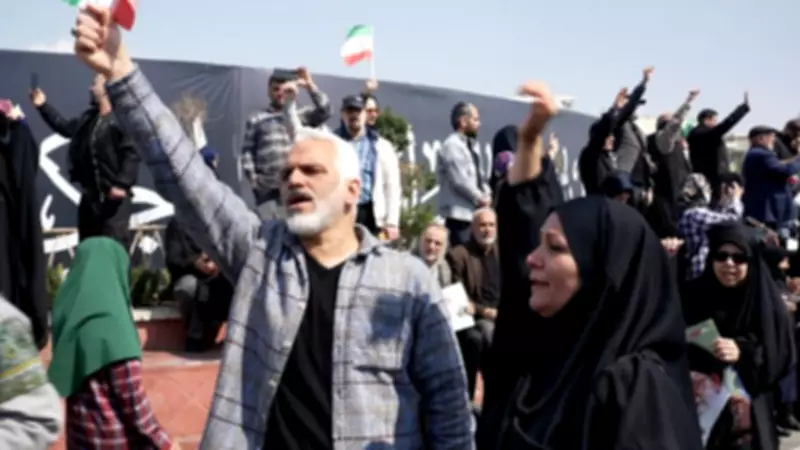
The government enjoys fervent support, evidenced by tens of thousands attending the funeral of top figure Ali Larijani. This highlights the limitations of foreign ambitions; targeting leaders in a culture that venerates martyrdom only strengthens resolve. Iran draws on a long tradition of resistance and narratives of foreign treachery to bolster its position.
We departed with the impression that Iran is preparing for a protracted conflict. For ordinary people, this means weeks or months of uncertainty, with ongoing risks of death and injury. For leaders, it involves projecting defiance, fortifying defenses, and outlasting adversaries.