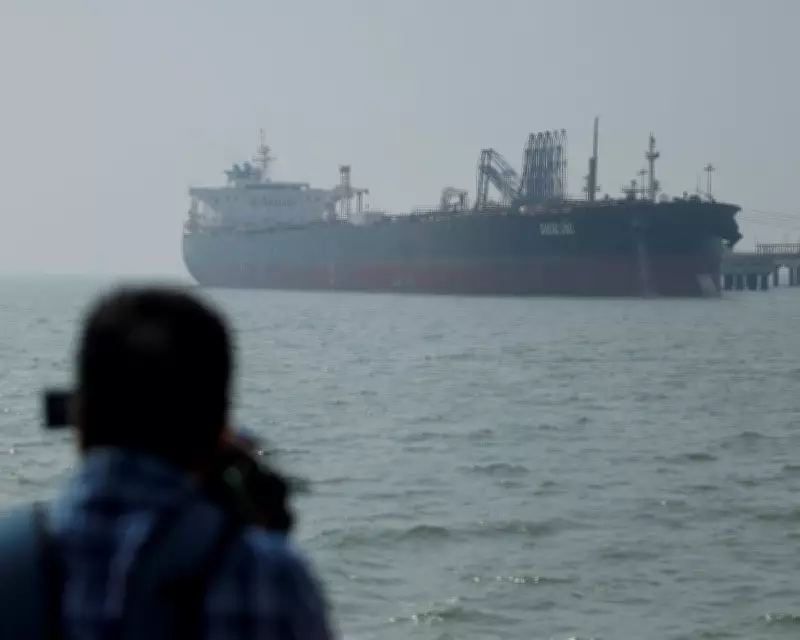
The Strategic Importance of the Strait of Hormuz
The Strait of Hormuz, a narrow maritime chokepoint between the Persian Gulf and the Gulf of Oman, stands as one of the world's most critical waterways for global energy security. Approximately one-fifth of the world's oil supply, translating to around 21 million barrels per day, flows through this 21-mile-wide passage. Its geopolitical significance is immense, with Iran controlling the northern coastline and Oman the southern shore, making it a focal point for international tensions, particularly between Iran and the United States.
Iran's Capabilities to Disrupt Shipping
Iran possesses a range of asymmetric military assets that could be deployed to block or harass shipping in the Strait. These include a substantial arsenal of anti-ship missiles, such as the Noor and Ghadir variants, which can target vessels from coastal batteries or fast attack craft. Additionally, Iran maintains a fleet of small boats capable of swarming tactics, naval mines that could be laid covertly, and submarines that pose a stealth threat. In a conflict scenario, Iran might also leverage its influence over proxy groups in the region to conduct attacks, further complicating maritime security.
Historical precedents, such as the Tanker War during the 1980s Iran-Iraq conflict, demonstrate Iran's willingness to target commercial shipping. More recently, incidents like the 2019 attacks on oil tankers and the 2021 seizure of a South Korean vessel underscore ongoing risks. Experts note that while a full-scale, permanent blockade is unlikely due to Iran's reliance on the strait for its own oil exports, temporary disruptions or targeted harassment could spike oil prices and destabilize markets.
US Military Response and Deterrence Strategies
The United States maintains a robust military presence in the region, centered around the US Navy's Fifth Fleet based in Bahrain. Key assets include aircraft carriers like the USS Dwight D. Eisenhower, guided-missile destroyers equipped with Aegis combat systems, and patrol aircraft such as the P-8 Poseidon for surveillance. The US strategy focuses on deterrence through visible force projection, with regular freedom of navigation operations and joint exercises with allies like the UK and France.
In the event of an Iranian blockade, the US could employ several tactics: deploying naval escorts for commercial convoys, using mine-countermeasure vessels to clear hazards, and conducting precision strikes on Iranian military installations. However, challenges exist, including the risk of escalation into a broader conflict, the difficulty of defending against swarming boat attacks in confined waters, and potential collateral damage to global oil supplies. The US also coordinates with international partners through mechanisms like the Combined Maritime Forces to enhance collective security.
Global Implications and Economic Impact
A disruption in the Strait of Hormuz would have immediate and severe consequences for the global economy. Oil prices could surge by 50% or more, triggering inflation and slowing economic growth worldwide. Countries heavily dependent on Gulf oil, such as China, India, and Japan, would face energy shortages, while alternative shipping routes, like the longer passage around Africa, would increase costs and transit times.
Diplomatic efforts play a crucial role in mitigating risks. The US engages in backchannel communications with Iran to de-escalate tensions, while international bodies like the United Nations advocate for peaceful resolution. Sanctions and economic pressures are also tools to deter Iranian aggression, though their effectiveness is debated. Ultimately, the stability of the Strait of Hormuz remains a linchpin for global energy security, with ongoing military and diplomatic maneuvers shaping its future.