
Prime Minister Keir Starmer has said that the trial of two Russian-linked arsonists who targeted property connected to him shows the UK is under attack from bad actors who want to “exploit division” and “destabilise our democracy”.
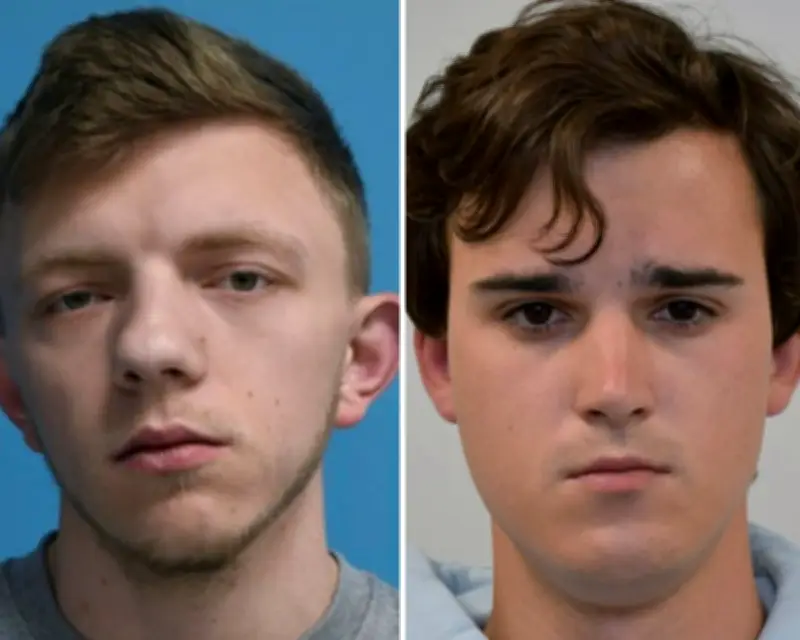
Roman Lavrynovych, 22, from Ukraine, and Stanislav Carpiuc, 27, from Romania, were found guilty on Monday of conspiring to carry out arson attacks on property linked to the prime minister. They appear to have operated under the instruction of an online handler with ties to Russia.
Impact on Starmer’s family
Speaking at the G7 summit in Évian-les-Bains, France, on Wednesday, Starmer said the attack on the house had “clearly impacted and affected my family”.
Lavrynovych and Carpiuc will be sentenced on Friday. Their co-defendant, Petro Pochynok, 35, was cleared. Lavrynovych was also convicted of damaging two properties by fire, being reckless as to whether life was endangered, on 11 and 12 May last year.
Heightened tensions with Russia
The sentencing comes during a period of heightened tension between Russia and the UK. On Sunday, a Russian shadow fleet vessel containing 98,000 tonnes of oil was intercepted by British troops in the Channel, and on Tuesday a Russian warship fired warning shots at a British-flagged yacht.
Starmer described the warning shots as “deeply concerning and reckless”, adding that the UK is dealing with proxy attacks from Russia “every single day”.
The role of a Russian-speaking handler
Central to the arson case was a Russian-speaking Telegram contact using the pseudonym “El Money”, who allegedly ordered the attacks and communicated in Russian with Lavrynovych as early as September 2024.
James Scobie KC, representing Lavrynovych, told the court in closing remarks: “There’s one winner in this case: the anonymous devil who manipulated, used and won.” Saying little was known about him, Scobie added: “But Russia – let’s call it out – Russia are interested in what this country does in support of Ukraine. This person, or people, spoke excellent Russian.”
Conspiracy theories and far-right links
Some security sources suggested that an outlandish false theory that emerged after the attack – that the defendants were aggrieved sex workers who torched Starmer’s home because they had not been paid – could have been created by far-right figures in the UK and amplified by hostile Russian agents.
Asked if he was concerned that the conspiracy theory, spread by figures such as Tommy Robinson, suggested that some elements of the far right were acting as de-facto Russian agents, Starmer said: “There are many actors who want to divide our country and to cause conflict in our country.”
“Some of the evidence that came out of trial speaks for itself, but there are wider issues here,” he added. “We see this the whole time.”
He accused politicians and other “actors” in the UK of being “more than happy to indulge in tearing our country apart”, adding that there were also “those from outside our country who are trying to find ways to exploit division in our country to destabilise our democracy”.
Starmer added: “[W]e need to be really clear in relation to that and we need to fight it at every twist and every turn.”
Broader context of Russia’s war in Ukraine
Earlier at the summit, Starmer said the attack on the property needed to be seen in the “broader context” of Russia’s war in Ukraine. The prime minister, who announced new sanctions on Russia to target finance networks and expand the number of vessels targeted as part of Moscow’s shadow fleet carrying oil or liquified natural gas to more than 600, said there was a “mood change” in the debate about Ukraine.
Investigations by the BBC and the Financial Times have linked Russia to the arson attacks on the house connected to the prime minister. The FT found that Telegram archives, cryptocurrency wallets, court evidence and interviews with western officials established that El Money was located in Russia and was closely aligned with NoName057(16), a pro-Kremlin hacktivist group that the US has called a Russian “state-sanctioned project”.
Explore more on these topics: Keir Starmer, Crime, Russia, UK security and counter-terrorism.




