Starmer Emphasizes UK Role in Reopening Strait of Hormuz During Gulf Visit
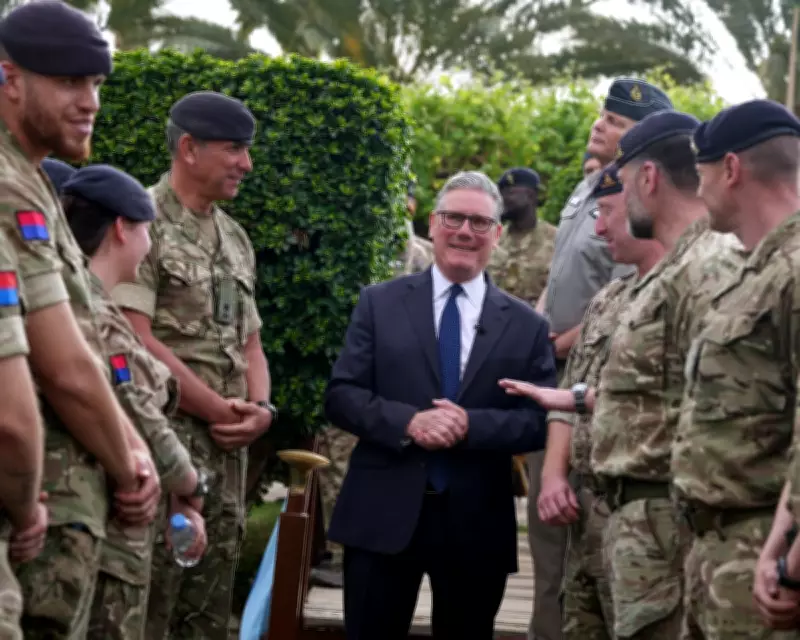
Prime Minister Keir Starmer has declared that the United Kingdom has a critical "job" to assist in reopening the Strait of Hormuz, a vital shipping route, following reports of its closure shortly after a ceasefire agreement between the US and Iran. During a visit to an airbase in Taif, Saudi Arabia, Starmer met with British and local military personnel, reiterating that the UK is not being "drawn into this war" but is focused on protecting national interests and stabilizing energy prices.
Ceasefire Fragility and Regional Diplomacy
The ceasefire, agreed just before a US deadline, aimed to reopen the strait, but Iranian news agency Fars reported renewed blockades due to alleged breaches by Israel. Starmer's trip, mirroring his efforts in Ukraine peace plans, is seen as complementary to US-Iran talks brokered by Pakistan. Gulf allies may view Starmer as a more predictable partner compared to a potential US administration under Donald Trump, especially given past tensions over UK support in the conflict.
Meeting with Saudi Leadership
On Wednesday night, Starmer met Crown Prince Mohammed bin Salman in Jeddah, where he welcomed the ceasefire and stressed the need to uphold it for lasting peace. A Downing Street statement highlighted discussions on deepening defence cooperation, including the deployment of the Sky Sabre air defence system, and growing trade relations. The prime minister emphasized practical steps to ensure shipping confidence through the strait, addressing issues like Iranian mines and tanker insurance.
Practical Challenges and UK Stance
UK officials noted that reopening the strait involves complex logistics, with one stating, "This isn't the sort of thing that happens at the flick of a switch." Starmer, speaking at King Fahd airbase, acknowledged relief at the ceasefire but called it "early days" in restoring full traffic. He linked the strait's closure to rising energy prices, affecting the UK economy over 39 days, and affirmed the UK's role in working with regional partners to secure a permanent solution.
Broader Implications and Future Plans
Starmer's visit, which may include other Gulf countries, aims to reinforce UK alliances and support stability in the region. A government source compared his role to convening a coalition for Ukraine peace, highlighting the importance of showing solidarity with allies. The prime minister has faced criticism from Trump for limited UK involvement in the conflict, but maintains a stance of acting in collective self-defence while avoiding deeper entanglement.
As the situation evolves, Starmer's efforts focus on turning the ceasefire into a durable peace and ensuring the Strait of Hormuz remains open to mitigate global energy market impacts.