
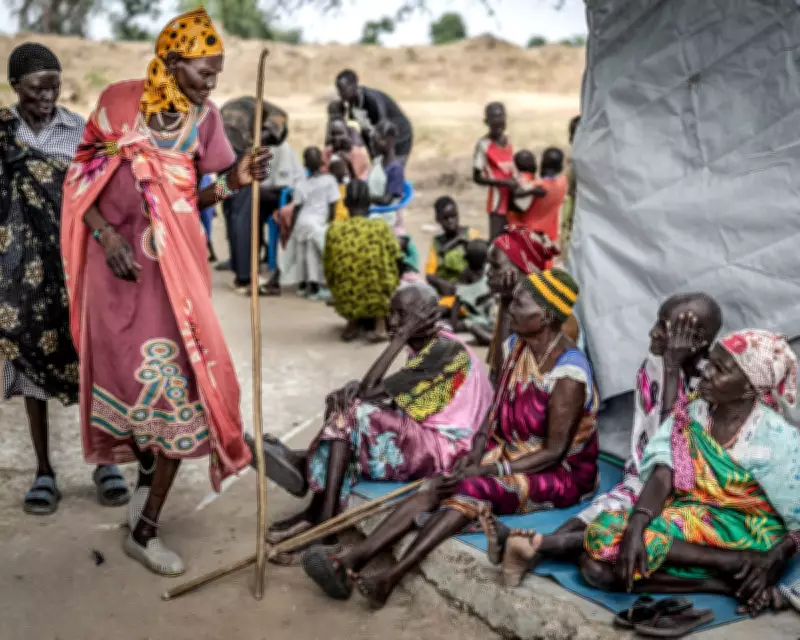
South Sudan Confronts Escalating Conflict with Civil War Fears Rising
South Sudan, the world's youngest nation, is grappling with a rapidly intensifying conflict between government-aligned military forces and opposition groups, sparking grave concerns about a potential return to full-blown civil war. Observers warn that the escalating violence threatens to unravel the fragile peace established in 2018, plunging the country back into widespread bloodshed and displacement.
Deadly Raid Near Sudan Border Claims 169 Lives
In a devastating incident on Sunday, armed youth from Mayom county in northern South Sudan launched a brutal raid on a village in neighboring Abiemnom county, located near the Sudan border. The attack resulted in the deaths of at least 169 people, including vulnerable women, children, and members of government security forces. James Monyluak Majok, the information minister for the Ruweng administrative area where Abiemnom is situated, confirmed the tragic toll.
The United Nations mission in South Sudan reported that it is currently sheltering more than 1,000 civilians in its base within the affected region and providing critical medical care to approximately 23 individuals wounded in the assault. This humanitarian response underscores the severe impact of the violence on local communities.
Militia Involvement and Denials Heighten Tensions
Stephano Wieu de Mialek, the chief administrator of Ruweng, attributed the assault to forces linked to the White Army, a militia historically allied with suspended Vice-President Riek Machar during the civil war. According to de Mialek, these attackers were accompanied by affiliates of Machar's political party and rebel group, the Sudan People's Liberation Movement-in-Opposition (SPLM-IO). However, the SPLM-IO has firmly denied any responsibility for the attack, asserting that it maintains no military presence in the area, further complicating the conflict's dynamics.
Humanitarian Crisis Deepens with Medical Staff Missing
The violence has severely disrupted humanitarian operations across South Sudan. Doctors Without Borders (MSF) revealed on Monday that 26 of its staff members are unaccounted for following recent clashes in parts of Jonglei state, which has experienced intense fighting between government and opposition forces since December. The organization expressed deep concern, stating, "We have lost contact with them amid ongoing insecurity."
MSF also reported that its hospital in Lankien was struck by an airstrike from government forces on February 3, subsequently being burned and looted, while its health facility in Pieri suffered looting. As a result, the organization has been forced to suspend medical activities in both locations, exacerbating the healthcare crisis for displaced and vulnerable populations.
Historical Context: From Independence to Renewed Conflict
The roots of the current turmoil trace back to South Sudan's independence from Sudan in 2011, achieved after a long struggle by the Sudanese People's Liberation Army guerrilla movement, which included both President Salva Kiir and Riek Machar. Kiir assumed the presidency, with Machar serving as first vice-president, but tensions erupted into a bloody civil war in 2013 after Kiir dismissed Machar and accused him of plotting a coup.
Machar founded the SPLM-IO, leading to years of fighting that resulted in over 400,000 deaths and displaced nearly half of South Sudan's population, largely along ethnic lines between Kiir's Dinka community and Machar's Nuer group. A peace agreement signed in 2018 ended the civil war, establishing a unity government and reinstating Machar as vice-president. However, implementation has stalled due to persistent power-sharing disputes between the two parties.
Political Prosecution Inflames Tensions
In September, Machar was charged with murder, treason, and other serious crimes related to a deadly attack by the White Army on a government army garrison in Nasir county. Kiir subsequently suspended him from office, and Machar is currently under house arrest as his trial proceeds. His supporters argue that the charges are politically motivated, and analysts warn that the prosecution could jeopardize the peace agreement.
Daniel Akech, a senior analyst for South Sudan at the International Crisis Group, noted that the government's targeting of Machar has unexpectedly unified the opposition. Akech explained that not only have rebel groups loyal to Machar been involved in the latest fighting, but factions that previously split from him now view him as a "symbolic unifying figure," even while he is detained. "Even if he's detained or is incommunicado or cannot issue orders, he has become very effective," Akech stated.
Escalating Violence Displaces Hundreds of Thousands
Machar's prosecution and removal from office have coincided with a dramatic surge in violence, particularly in Jonglei state, an opposition stronghold. Since December, opposition forces have captured government outposts, prompting a government counteroffensive in January. The resulting clashes have displaced an estimated 280,000 people over the past two months, highlighting the severe humanitarian toll.
Volker Türk, the UN's high commissioner for human rights, issued a stark warning last Friday, calling for urgent action to preserve the peace agreement and prevent a return to all-out civil war. "We are at a dangerous point, when rising violence is combined with deepening uncertainty over South Sudan's political trajectory, as the peace agreement comes under severe strain," Türk told the UN Human Rights Council.
As South Sudan teeters on the brink, the international community watches closely, hoping to avert another devastating conflict in a region already scarred by years of war and suffering.




