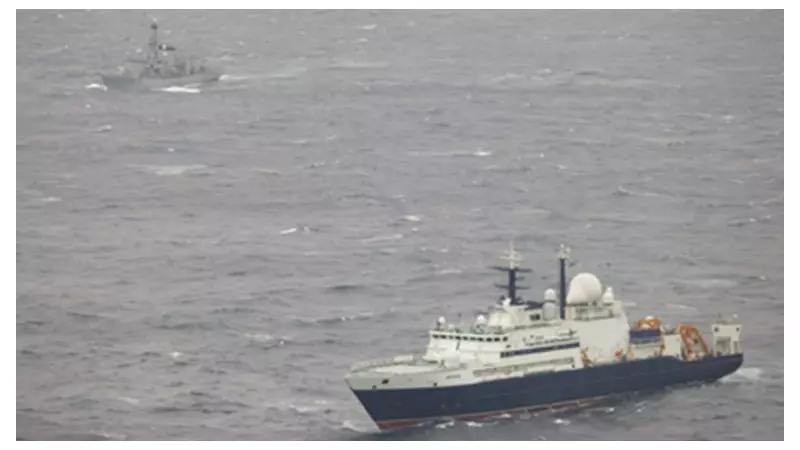
The unassuming appearance of the Russian ship Yantar belies a formidable and clandestine capability that has Western security officials on high alert. Operating in waters near the UK, this vessel possesses the kind of advanced technology one might expect from a James Bond antagonist, posing a direct threat to the submerged networks that underpin modern Western society.
A Covert Vessel with Sinister Capabilities
Beneath its scruffy exterior, the Yantar is a hub of high-tech espionage. Hidden in its hangars are two Consul Class manned mini-submarines, reminiscent of those featured in the Bond film Thunderball, alongside a fleet of remotely operated submersibles. According to Britain's Defence Secretary, John Healey, the ship is designed to "undertake surveillance in peacetime and sabotage in conflict."
Its arsenal includes specialised cable-cutting equipment and sophisticated surveillance systems, making it a significant maritime threat. The situation escalated notably when, during a recent encounter, the Yantar deployed a laser to distract and dazzle a British RAF pilot who had been sent to monitor its movements. This aggressive act occurred on Wednesday 19 November 2025.
The West's Exposed Underbelly
The primary mission of the Yantar is believed to be the detailed mapping of the West's critical undersea infrastructure. This vast network includes the fibre-optic cables that carry the world's internet data and the pipelines that supply essential fuel and gas. These assets are the vital nervous system of Western civilisation, yet they stretch for thousands of miles across the seabed, largely exposed and undefended.
This vulnerability is a strategic weakness that Russia is keenly aware of and is actively exploiting. The sophisticated equipment aboard the Yantar, currently used for intelligence gathering, could be repurposed in a future conflict to sever these crucial lines of communication and energy, an act that would have a disastrous impact on Western economies.
A Doomsday Scenario the West is Unprepared For
Security experts warn that the West remains ill-prepared for a "kinetic conflict" targeting this soft underwater underbelly. While the UK government has put the Yantar and its Russian operators on watch, monitoring its activities is one thing; preventing potential sabotage in a time of war is an entirely different and more daunting challenge. Russia has already been blamed for mysterious underwater attacks in the past, lending credence to these fears.
The presence of the Yantar in proximate waters is a stark reminder of this looming threat. Putting a stop to its mission to ready for such a doomsday outcome is a pressing security concern that demands a robust and immediate response.