Nato Responds to Unprecedented Daytime Airspace Violation
Nato fighter jets were urgently scrambled on Tuesday after two Russian drones crossed into Romanian airspace, marking the deepest and first daytime incursion since Russia's full-scale invasion of Ukraine began. The incident represents the 13th violation of Romanian territory by Russian drones and the third such occurrence within the past week alone.
Emergency Response and Tracking Operations
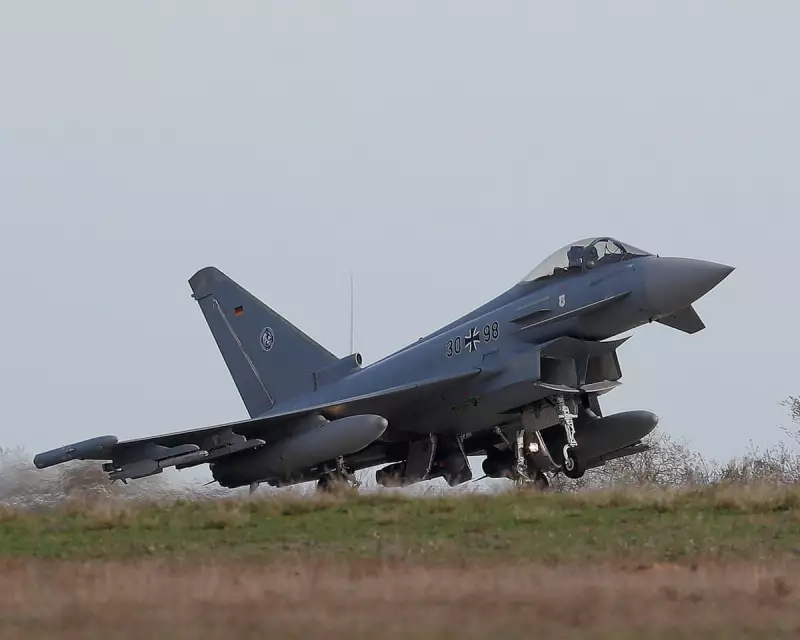
The Romanian defence ministry confirmed that the first drone was detected at 6:28am local time (0428 GMT), with a second appearing at 7:50am. In response, pairs of German Typhoon and Romanian F-16 fighter jets took off to track the unmanned aircraft. Authorities immediately issued shelter-in-place warnings to residents across three border counties until the situation could be resolved.
Romanian Defence Minister Ionuț Moşteanu revealed that German pilots received orders to shoot down the second drone if conditions permitted. "It could have been destroyed if all the conditions had been met," Moşteanu explained. "The pilots needed to see it, to engage it, to lock it on radar and to be able to fire a missile at it."
Aftermath and Regional Implications
While the first drone returned to Ukrainian airspace, the second was later discovered crashed near Puieşti, approximately 70 miles from the Ukrainian border. Examination of the wreckage determined the drone was unarmed, with officials suggesting it likely crashed due to fuel exhaustion rather than military action.
The incident occurred against a backdrop of heightened regional tensions. Just last week, villagers on the Romanian side of the border required evacuation when a liquefied petroleum gas tanker was struck and caught fire at the nearby Ukrainian port of Izmail across the Danube.
Simultaneously, Moldova reported six drones crossing its airspace overnight. One distinctive delta-wing model, bearing a Russian Z symbol spray-painted on the tailfin, landed on a roof in Cuhureştii de Jos village, about 15 miles from the Ukrainian border. Moldovan police identified it as an unarmed Gerbera decoy drone, commonly used by Russian forces to overwhelm Ukrainian air defences.
Strengthening Regional Defences
This pattern of airspace violations mirrors an incident in September when 21 unarmed Gerbera drones crossed into Poland, prompting Nato to establish the Eastern Sentry mission with enhanced fighter jet patrols along the alliance's eastern flank.
General Christopher Donahue, commander of US army forces in Europe and Africa, announced during a visit to Romania's Mihail Kogǎlniceanu airbase that new anti-drone capabilities would soon be deployed to the region. "We have tested and it is in the final stages of being employed," Donahue stated. "Romanian soldiers and other alliance soldiers have been trained on this capability and I know you're going to see this capability in the delta very soon."
The development comes as military strategists recognise the impracticality of using expensive fighter jets to counter drone threats, particularly when bringing down unidentified aircraft over populated areas presents significant safety concerns.