
Exclusive Interview with Robert Malley on Iran Conflict Escalation
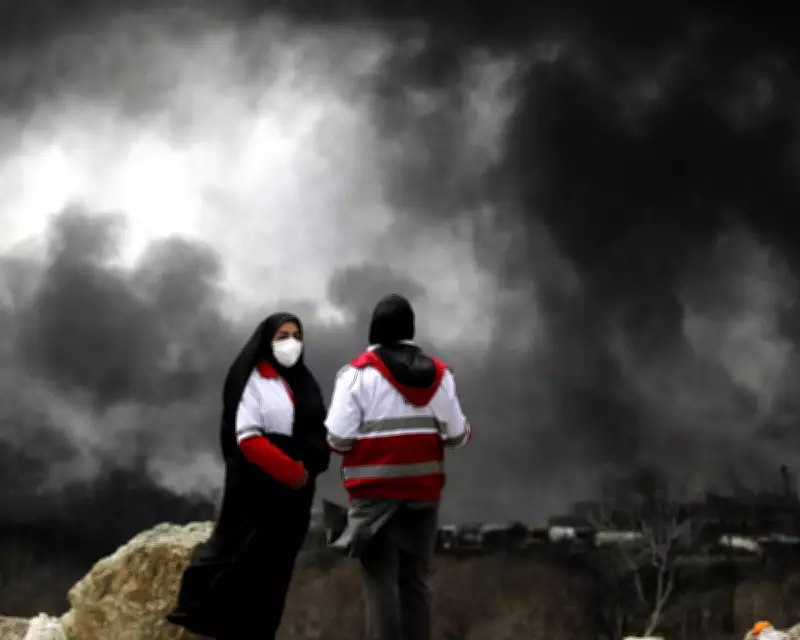
Black smoke billowed from an oil depot in Tehran targeted by the United States and Israel on March 8, marking a dramatic escalation in the ongoing conflict. This attack has plunged the Middle East into unprecedented instability, with global implications ranging from oil price spikes to drone assaults on once-secure cities like Doha and Dubai. The world is grappling with a rapidly unfolding crisis, compounded by a severe lack of accurate information from Iran, where journalists are scarce and the government remains scattered following the assassination of Supreme Leader Ali Khamenei and his senior aides.
Robert Malley's Insights on the Nuclear Deal and Trump's Impact
To provide clarity amid the chaos, we spoke with Robert Malley, the US special envoy to Iran during the Biden administration and lead negotiator for the 2015 Iran nuclear deal, known as the Joint Comprehensive Plan of Action (JCPOA). Under the Obama presidency, this agreement brought Iran and the US closer to normalization, with Iran agreeing to reduce its enriched uranium stockpile, limit enrichment purity, cut centrifuge numbers, and allow enhanced inspections by the International Atomic Energy Agency. In return, sanctions were lifted, granting Iran access to global oil markets.
However, Donald Trump dismantled the deal in 2018, reinstating sanctions and pushing Iran back into pariah status. Malley notes that during renewed negotiations under Biden, progress stalled due to Iranian distrust of Trump's potential return to power. "One of the big problems we had," Malley explains, "was that every time we would get a message from the Iranians saying, 'What guarantee do we have that Biden’s successor is not going to tear it up?' We’d say: 'None. Either you go for it, or you don’t.'" He believes the supreme leader's refusal to engage may stem from Trump's prior actions, including the killing of Qassem Suleimani in 2020 and recent bombings.
Trump's Psychology and Escalatory Path in the Conflict
Malley admits that understanding Trump's motivations is key to predicting future moves, yet he finds this challenging. "Being an expert in the Middle East ... doesn’t help all that much," he says. "It helps to be an expert on Trump’s psychology, and I confess I’m a real amateur when it comes to that." He points to clues from Trump's first term, such as moving the US embassy to Jerusalem, and current support for Israel's actions, suggesting this conflict is a logical escalation. Democratic congressman Pat Ryan has warned that this mirrors past conflicts like Vietnam, where incremental steps led to deeper involvement.
Malley highlights how Trump's desire to be a historical figure, encouraged by allies like Benjamin Netanyahu, drives the conflict. "He sees himself as a historical figure," Malley notes. "If he could be the president on whose watch not one, not two, but three traditionally 'anti-American' regimes start doing business with America – Venezuela yesterday, Iran today, maybe Cuba tomorrow ... I’m sure people like Netanyahu have really fed this image." This unpredictability, combined with immense power, raises concerns about civilian casualties and long-term consequences.
Divergent Priorities Between US and Israel in the War
While Trump's motivations remain murky, Malley sees Israel's goals as more transparent. Prime Minister Benjamin Netanyahu has long sought to neutralize Iran as a threat and now enjoys unprecedented US support. "When Trump was elected, we heard all these reports about how Trump hates Netanyahu," Malley says. "But this is the first time I can remember the US and Israel had openly, overtly, entered a war hand and glove." This alliance shifts regional dynamics, as the US traditionally kept Israel at arm's length to avoid appearing conspiratorial against the Arab world.
Netanyahu's strategy may involve destabilizing Iran, even at the risk of chaos or civil war, but this could clash with US interests. Rising oil prices threaten the global economy and Republican electoral prospects, while Gulf allies feel betrayed. Malley explains, "[The Gulf Cooperation Council] really are between a rock and a hard place ... they still want this to end sooner rather than later, even though they feel extraordinarily betrayed by Iran." Despite this, he doubts it will irreparably damage US-Gulf relations, as years of investment in Iran have not paid off.
Nuclear Risks and Potential Endgame Scenarios
A critical issue is Iran's stockpile of over 400kg of enriched uranium. Malley questions whether the US or Israel can secure these deposits, given their likely dispersal across Iran's vast territory. "I had assumed that part of the Israeli-American plan was to send special forces to try to dig up Iran," he admits. "If killing [Ali Khamenei] wasn’t enough for the president to take care of victory, I think getting the 400kg might well be his exit plan. I just don’t know physically how possible it is."
Despite attacks on nuclear infrastructure, Malley is skeptical about setting back Iran's bomb-making capabilities. "An expert once told me before the 12-day war and the strike on Fordow [nuclear plant last year] that Iran was about six to nine months away [from developing a bomb]. After the 12-day war, that same expert told me Iran is about six to nine months away," he reveals. Knowledge retention means Iran could potentially dash for a bomb if undetected.
As for an off-ramp, Malley suggests Trump's unpredictability could lead to a sudden declaration of victory. "The only good news about a president who’s unpredictable is that he could surprise us and decide tomorrow [to end it]," he says. "He’s given maybe 20 different objectives. It is possible that at one point he declares victory and says he’s accomplished everything he aimed to accomplish." However, the long-term repercussions, including heightened hatred and instability, may persist for generations.




