Police AI Chief Acknowledges Bias in Crime-Fighting Technology, Pledges Mitigation Efforts
A senior police official has openly admitted that artificial intelligence systems deployed to enhance crime-fighting capabilities inherently contain biases, while simultaneously committing to comprehensive strategies to address these critical risks. The revelation comes as law enforcement agencies increasingly integrate AI tools into their operations, raising significant concerns about fairness and accuracy in policing practices.
National AI Center to Address Systemic Issues
Alex Murray, the National Crime Agency's director of threat leadership and national lead for artificial intelligence, emphasized that a newly established £115 million national police AI center will prioritize identifying and minimizing algorithmic biases. "Once you've recognized and minimized bias, how do you train officers to deal with outputs to ensure that it is further minimized?" Murray questioned during an exclusive interview.
He elaborated on the practical challenges: "If you talk about live facial recognition or predictive policing, there will be bias, and you need to get in the data scientists and the data engineers to clean the data, to train the model appropriately, and then to test it. There is no point releasing something to policing that has bias in it that's not recognized, and everything should be done to minimize it to a level where it can be understood and mitigated."
Documented Cases of Algorithmic Discrimination
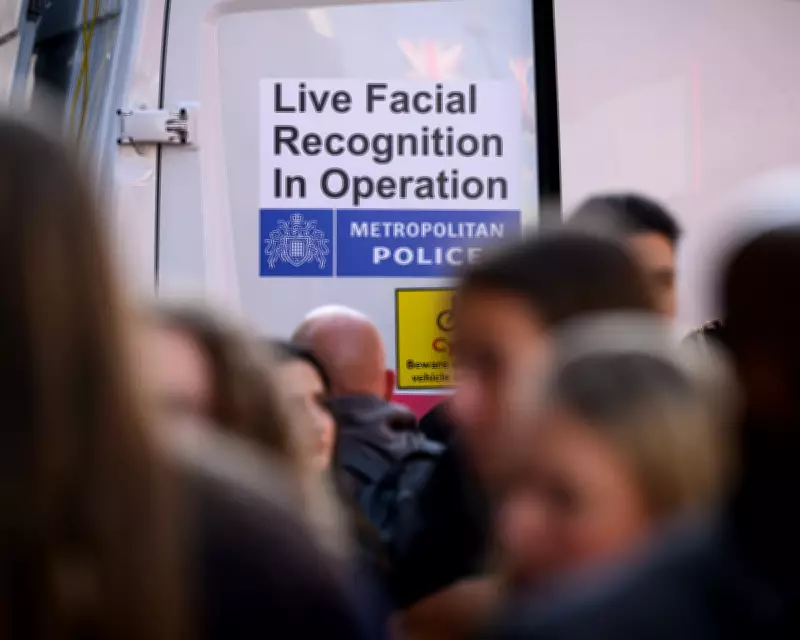
Concrete examples of bias have already emerged within police applications of retrospective facial recognition technology, which utilizes artificial intelligence to compare suspect images against existing databases following criminal incidents. More controversial live facial recognition systems, which actively search for suspects in real-time environments, similarly demonstrate inherent biases that require urgent attention.
A December investigative report revealed that retrospective facial recognition systems employed by police forces operated with insufficient safeguards, while the Association of Police and Crime Commissioners acknowledged that systemic failures had been recognized for some time without proper disclosure to affected communities or key stakeholders.
Darryl Preston, forensic science lead for the APCC and police commissioner for Cambridgeshire, stated unequivocally: "The discovery of an in-built bias in the police national database's retrospective facial recognition system, even if only in limited circumstances, demonstrates the need for independent oversight of these powerful tools. It is not acceptable for technology to be used unless and until it has been thoroughly tested to eliminate bias. That clearly was not the case in this instance."
Practical Applications and Transformative Potential
Despite these challenges, Murray highlighted numerous practical applications where artificial intelligence demonstrates transformative potential for modern policing. He described how AI capabilities extend far beyond predictive policing clichés, offering tangible benefits across diverse criminal investigations.
In one notable case involving four Luton-based suspects accused of attacking and stealing from cash machines, artificial intelligence dramatically accelerated the investigative process. Police downloaded data from the suspects' mobile devices, and AI systems scoured through Romanian-language content, translated materials, identified crime-related information, categorized offenses, and packaged everything for detectives. This process resulted in guilty pleas within weeks rather than months.
Trevor Rodenhurst, chief constable of Bedfordshire Police, confirmed the transformative impact: "This allowed us to draw evidence from lots of devices with a vast quantity of data, which we would otherwise not have been able to do. As officers use AI and see its benefits, it is changing the view of the frontline. They are no longer suspicious, they are asking when they can have it. That capability is transformative."
Balancing Innovation with Ethical Responsibility
Murray emphasized that police forces find themselves in a technological "arms race" with criminals who increasingly utilize artificial intelligence for illicit purposes. He cited a disturbing case where a paedophile attempted to dismiss incriminating images as deepfakes, requiring police to disprove this defense through technological means.
The national AI center aims to centralize decision-making regarding private supplier products, addressing current inefficiencies where individual police forces make separate purchasing decisions. Murray stressed that while AI can significantly enhance investigative capabilities—from accelerating CCTV analysis to streamlining digital device examinations—human officers must retain ultimate decision-making authority regarding AI-generated results.
Looking forward, Murray envisions AI assisting with complex manhunts, vehicle identification linked to suspects, and countering political agitators who disseminate fake images on social media to incite violence. "What took days, weeks, sometimes months can potentially take hours," he noted, underscoring the efficiency gains possible through responsible AI implementation.
As Labour advocates for expanded police use of artificial intelligence across England and Wales, and police chiefs recognize the technology's potential to address evolving criminal threats, the central challenge remains ensuring these powerful tools operate fairly, transparently, and effectively while minimizing discriminatory outcomes that could undermine public trust in law enforcement institutions.