
Pakistan Launches Major Airstrikes on Afghan Cities, Declares 'Open War'
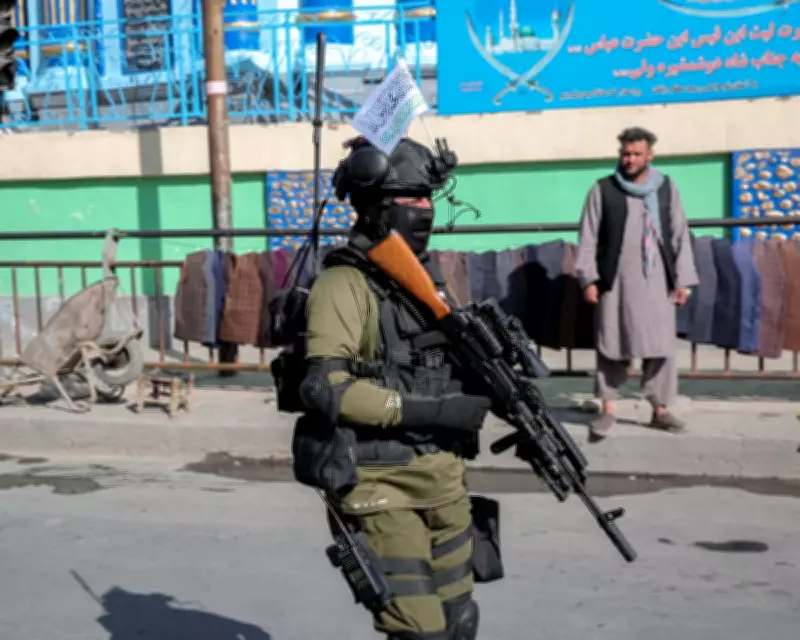
Pakistan has bombed major cities across Afghanistan including the capital Kabul, with Islamabad's defence minister declaring that the hostile neighbours are now in a state of "open war" as a cycle of retaliatory attacks escalates dramatically. The operation represents Pakistan's most widespread bombardment of the Afghan capital and its first airstrikes on Kandahar, the southern power base of the Taliban movement that returned to power in 2021.
Escalating Border Violence and Civilian Impact
Witnesses in Kabul and Kandahar reported explosions and jets overhead until dawn, while the Taliban government confirmed that Pakistani surveillance aircraft continued flying over Afghanistan following the attacks. The wave of strikes came after Afghan forces attacked Pakistani border troops on Thursday night, which itself followed earlier airstrikes by Islamabad.
Afghan authorities in eastern Nangarhar province reported ongoing fighting in the Torkham border area on Friday morning, with Pakistani mortar fire hitting civilian areas including a refugee camp. In response, Afghanistan targeted Pakistani army posts across the border, resulting in dozens of casualties including at least twelve confirmed fatalities.
A resident of Kabul's affluent Wazir Akbar Khan neighbourhood, adjacent to Taliban headquarters where Pakistan struck, described hearing a huge blast near his house. "The blast was followed by firing and we remained in the house under fear," he said, requesting anonymity due to concerns about Taliban reprisals. "It is clear even after the withdrawal of American forces, the war never ends in Afghanistan. We just need to live in peace. Sadly, the civilians always suffer anywhere, particularly in Afghanistan."
Official Statements and Conflicting Claims
Pakistan's federal minister for information and broadcasting, Attaullah Tarar, claimed the strikes in Kabul, Paktia, and Kandahar killed 133 Afghan Taliban officials and wounded more than 200, with further possible casualties. Pakistan's prime minister, Shehbaz Sharif, declared on Friday that his country's armed forces could "crush" aggressors.
In a social media post, defence minister Khawaja Mohammad Asif stated that Pakistan had hoped for peace in Afghanistan after NATO's withdrawal and expected the Taliban to focus on Afghan welfare and regional stability. Instead, he alleged, the Taliban had gathered militants from around the world and begun "exporting terrorism." "Our patience has now run out. Now it is open war between us," he declared.
Afghanistan's defence ministry countered with claims that 55 Pakistani soldiers had been killed in Thursday's border clashes, with some bodies taken into Afghanistan and several soldiers "captured alive." The ministry reported eight Afghan soldiers killed, eleven wounded, and the destruction of 19 Pakistani army posts and two bases. Mosharraf Ali Zaidi, spokesperson for Pakistan's prime minister, previously denied that any Pakistani soldiers had been captured.
Historical Context and Regional Tensions
Tensions have been dangerously high between the hostile neighbours for months, with border clashes in October killing dozens of soldiers, civilians, and suspected militants. Pakistan accuses Afghanistan's Taliban government of harbouring militant groups that stage attacks across the border and of allying with its historic enemy and regional rival, India.
Islamabad frequently blames its western neighbour for surging militant violence in Pakistan, specifically accusing Afghanistan of supporting the Pakistani Taliban (TTP) and outlawed Baloch separatist groups. Pakistan maintains that the TTP—separate from but closely allied with Afghanistan's Taliban—operates from inside Afghanistan, a charge both the group and Kabul deny.
The border clashes began after 8pm on Thursday night when Afghan Taliban forces attacked various border posts in several districts of Pakistan's northwestern Khyber Pakhtunkhwa province. The volatile districts of Bajaur and Kurram bordering Afghanistan were worst affected by Taliban firings and mortar shells.
A resident in Bajaur district reported mortar shells hitting Bara Lagharai village in neighbouring Mahmund district, killing at least two civilians and injuring at least six others. "The village is on the border and mortar shells directly landed at people's houses," the local resident explained. Local deputy commissioner Shahid Ali confirmed the death toll and injuries, noting that five rounds of artillery were fired by Afghan Taliban across the border hitting civilian houses.
Failed Diplomacy and Border Disputes
Efforts to produce a lasting agreement between the two nations have repeatedly failed. A Qatari-mediated ceasefire ended fighting last year, but several rounds of peace talks in Istanbul in November failed to produce a formal agreement. The tensions between Afghanistan and Pakistan have risen steeply in recent months, with land border crossings largely shut since deadly fighting in October that killed more than 70 people on both sides.
Pakistan and Afghanistan share a 2,611-kilometer-long border known as the Durand Line, which Afghanistan has never formally recognized. This historical dispute continues to fuel tensions between the neighbouring countries, complicating diplomatic efforts and security arrangements along the volatile frontier.
The current escalation represents a significant deterioration in relations between the two countries, with both sides making increasingly bellicose statements and engaging in direct military action against urban centers. The situation remains fluid, with both governments preparing their populations for continued conflict while civilians bear the brunt of the violence on both sides of the disputed border.




